*Please note that this is an unaltered BreakPoint article by John Stonestreet and Shane Morris. My purpose in sharing this article is to give you access to their ministry and to inform you on a topic not enough Jesus followers realize they have. Please check out the ministry of breakpoint.org. and avail yourself of the rich contribution they make to our faith. Blessings, Ed
New Atheist icon and Oxford biologist Richard Dawkins recently asked a surprising question on X. Referring to his most famous book published 18 years ago, Dawkins wrote: “What do religious people think I got wrong in The God Delusion?”
The replies were insightful. One person pointed out that Dawkins depended on methodological naturalism, the belief that only material explanations are valid, but which is, itself, a belief that can’t be proven by material explanations. Another pointed out: “[You] spent the majority of the book making a moral case against religion; [but] you state in other works that there isn’t objective morality.”
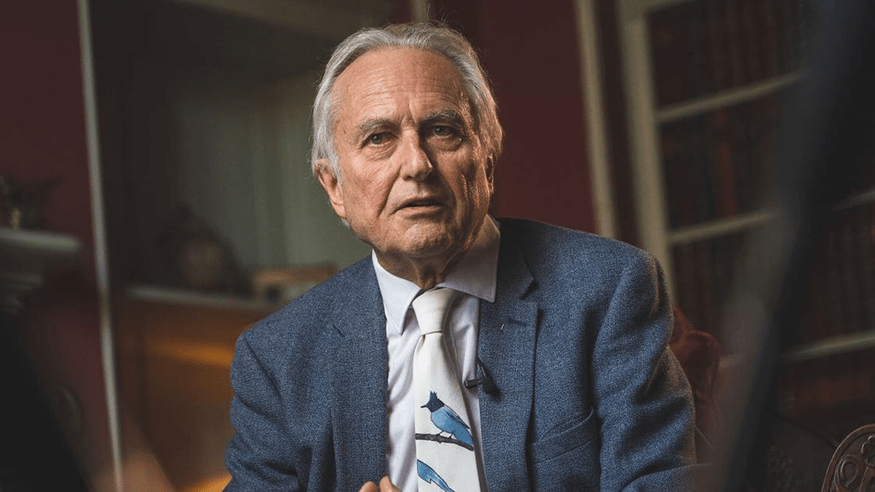
In fact, Dawkins’ “moral case against religion” is central to The God Delusion. He wrote:
“The God of the Old Testament is arguably the most unpleasant character in all fiction: jealous and proud of it; a petty, unjust, unforgiving control-freak; a vindictive, bloodthirsty ethnic cleanser; a … capriciously malevolent bully.”
These are strange words from a man who wrote elsewhere that:
“The universe that we observe has precisely the properties we should expect if there is, at bottom, no design, no purpose, no evil, no good, nothing but pitiless indifference.”
So, which is it? Is the God of the Bible not worth believing in because He’s evil, or is evil an illusion? Dawkins seems to have wanted to have his moral indignation and eat it too.
Still, a more fundamental mistake in his bestselling book is one which virtually every prominent New Atheist copied. As Susannah Roberts pointed out in her reply to Dawkins, the main thing he got wrong was the meaning of the word “God.” Dawkins wrote as if God is just a bigger and stronger human, a being like the rest of us who merely happens to be very powerful. The god he described was like the polytheistic gods worshipped by the Greeks, Norse, and Egyptians. Dawkins confirmed this was his view in a famous line from the book: “We are all atheists about most of the gods that humanity has ever believed in. Some of us just go one god further.”
Years ago, I met a woman on a plane who challenged me to prove that God exists. I asked, “Well, what do you mean by ‘God?’” She replied, “A grumpy old man with a beard in the sky who can’t wait for you to do something wrong so he can strike you with a lightning bolt.”
“I don’t believe in that god, either” I said. Her definition of God was far more like Zeus than the Almighty Maker of Heaven and Earth and Father of Jesus Christ.
The God of Scripture isn’t a bigger and stronger human, a petty and selfish being like the pagan gods, nor even like a really powerful angel. God is a category by Himself. He is the ground of being, the “unmoved mover,” timeless, spaceless, omniscient, unchangeable, not subject to passions or tantrums, and not fully describable with human language. His character is not answerable to a higher moral law, but is itself the source of that moral law. He is, as James put it, “the Father of lights, with whom there is no variation or shadow due to change,” and as Daniel wrote, “none can stay his hand or say to him, ‘What have you done?’”
When Dawkins condemned God as a “petty, unjust, unforgiving” bully, he was suggesting God doesn’t live up to a moral standard of fairness and mercy. But where did he get that standard to begin with, if not from God?
As C.S. Lewis put it in Mere Christianity:
“[T]here is a difficulty about disagreeing with God. He is the source from which all your reasoning power comes: you could not be right and He wrong any more than a stream can rise higher than its own source. When you are arguing against Him you are arguing against the very power that makes you able to argue at all: it is like cutting off the branch you are sitting on.”
It’s refreshing and encouraging to see Richard Dawkins ask a question like this, with this much apparent humility. After all, in the last year or so, he has called himself a “cultural Christian,” rebuked unscientific gender ideology, admitted he really likes Christmas carols, and showed genuine curiosity about why his friend and former atheist Ayaan Hirsi Ali converted to Christianity. Perhaps, God willing, Dawkins, is on the verge of a similar change. We can and should pray as much.
Still, it’s worth noting that the straw-man god that Dawkins and his fellow New Atheists spent two decades denying and denouncing looks nothing like the God of the Christian worldview. Atheist authors could and should realize this, but like philosopher Thomas Nagle famously admitted, a major motivation is the hope that there is no God. So much so, in fact, that Nagle also admitted how unsettling it was that some of the most well-informed and intelligent people he knew believed in God.
For both atheists and believers, it’s important to make sure our understanding of God is correct. Thank God for those willing to correct their bad theology.
This Breakpoint was co-authored by Shane Morris. If you’re a fan of Breakpoint, leave a review on your favorite podcast app. For more resources to live like a Christian in this cultural moment, go to breakpoint.org.
 Walking With Jesus
““[You] spent the majority of the book making a moral case against religion; [but] you state in other works that there isn’t objective morality.”“
yep, no objective morality. So? We still have morality, and unsurprisingly, it is always subjective, no matter how theists try to lie that they and only they have objective morality.
For example, Christian morality is demonstrably subjective, with each inventing a list of morals they claim their god wants, and yet the poor dears can’t show that their god merely exists, much less agrees with them. They also have the problem that they must insist that their god doesn’t have to follow these supposedly “objective” morals since they have to invent excuses why it is okay for this god to commit genocide, to kill people for the actions of others, etc. This makes their morality subjective to who someone is. it also shows their morality is little more than might equals right.
BTW, your god never gave humans morality. Eve took it, and your god threw a tantrum.
““[T]here is a difficulty about disagreeing with God. He is the source from which all your reasoning power comes: you could not be right and He wrong any more than a stream can rise higher than its own source. When you are arguing against Him you are arguing against the very power that makes you able to argue at all: it is like cutting off the branch you are sitting on.”“
lovely baseless presupposition and curious how Christians can’t agree on what their god wants for morality. No evidence for your god at all, and when it comes to morals, Lewis is quite an interesting one, since he recommends Christians lie to potential converts when it comes to how splintered and contradictory Christianity is. A lie of omission is still a lie.
“And secondly, I think we must admit that the discussion of these disputed points has no tendency at all to bring an outsider into the Christian fold. So long as we write and talk about them we are much more likely to deter him from entering any Christian communion than to draw him into our own. Our divisions should never be discussed except VII MERE CHRISTIANITY in the presence of those who have already come to believe that there is one God and that Jesus Christ is His only Son.” preface, Mere Christianity.
LikeLiked by 1 person
In other responses you mentioned that you were a Cristian for thirty years, then turned from God. Can we take our “Atheist” and “Theist” hats off for a minute and just be two old guys having a conversation? Something obviously happened that hurt you deeply. Whatever that was, I’m truly sorry. The hardest moments in my life were when my wife of twenty years walked out, and the second thing was when my teenaged son was diagnosed with leukemia. I’m not telling you these things to elicit pity or to get you to feel sorry for me, but to illustrate that if we live long enough painful and hurtful things happen in our lives. Whatever happened in your life, there is a sense in which we can share one another’s pain. It may not make us believe any differently, but it gives us common ground on which to build a friendship. It may not mean anything to you, but I’m wondering how your life is now? Are you angry, sad, disappointed? I’m not trying to get your psychological profile, but simply let you know I care what you’ve been through and can identify. I was recently diagnosed with Alzheimer’s and it’s shaken me. I’m not going to lie, it’s frightening as I ponder what’s coming. My dad died of Parkinson’s disease and didn’t know anyone in the end. Is that my future? The point of all of this is simply to ask if we could share not only conversations regarding our differences, but maybe have some conversations about things we have in common? Ways we may actually support one another in this season of our lives. I can assure you nothing you say will ever convince me to turn from my faith in God, and I’m pretty certain you feel the same way about what you believe. Can we set all of that aside and just be friends? Can we at least try. I’m too old to make more enemies. What do you think? May I introduce myself? I’m Ed and I look forward to hearing from you. 😃
LikeLike
I’m not an old guy, Ed, I’m a gal in my late 50s. And nope, nothing hurt me to get me to leave christianity, but it’s a shame that Christians have to keep trying to convince themselves of that, since it allows you to try to make believe no one can leave the religion for factual reasons.
So no need to be sorry. Yep, painful and hurtful things happen, and this is in direct contradiction to the rather silly promises in your bible.
I have a great life. Been with the same wonderful guy for 35 years, have good health, my parents are still alive and in good health for being in their 80s, have house, a garden and a bunch of cats. I have a pleasant job and my husband is an IT guy so we want for nothing. There have been some hard patches but I worked through them.
I’m sure it is very scary to have alzheimers, that had to be an awful thing to hear. I’m lucky in that my family is absurdly healthy and we don’t have much in inheritable diseases.
It doesn’t surprise me that you say nothing will change your mind about your religion. I would change if there was evidence. This isn’t about making enemies, it is about standing up for the truth, and not allowing Christians to make false claims about myself and others like me.
LikeLike
Thank you, young lady 😃 for your thoughtful reply. I appreciate your insights, and though we disagree on our conclusions, I respect your decision and applaud your passion to pursue what you believe. That’s all I’m trying to do in what may well prove to be the closing chapter of my life. I wish you well. Ed 😃
LikeLike
Ed, you’ve intentionally parroted false claims about atheists. Your god doesn’t like lies and liars.
LikeLike
you can call me Vel
LikeLike