By John Stonestreet and Abdu Murray
*This timely message from the Colson Center is just too helpful not to share. Please read it carefully and prayerfully. Blessings, Ed 😊
Today on Breakpoint, apologist Abdu Murray, author of the new book Fake ID, describes how the war in Iran has exposed two blind spots—one diplomatic, one technological—that share a common root. Here’s Abdu Murray:
On February 28, 2026—the first day of U.S.-Israeli strikes on Iran—a Tomahawk cruise missile hit the Shajareh Tayyebeh girls’ elementary school in Minab, killing at least 165 people. Most of them were girls between the ages of 7 and 12.
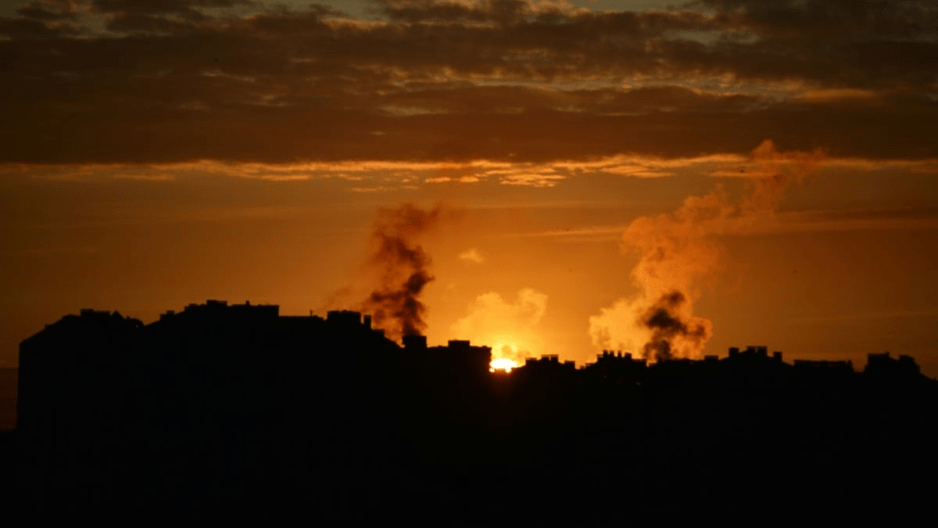
Ironically, women and girls spearheaded Iran’s most significant recent uprisings—and the regime killed thousands in response. Now, in the effort to strike that regime, it was girls in a classroom who paid the price—not deliberately, but tragically. The regime denies its women dignity. The fog of war, made foggier by automation, did the same.
As a former Shi’ite Muslim, I understand the weight these deaths carry in the souls of Tehran’s hardliners. I fear our leaders’ ignorance of that weight fosters a critical misunderstanding of how and when this conflict might end.
In AD 680, Hussein—Muhammad’s grandson and the third Shi’ite Imam—chose death for himself and his family over submission to the unjust Umayyad caliph Yazid at the Battle of Karbala. For Shi’ites, this isn’t ancient history. It’s a living moral code. Suffering at the hands of a vastly superior force doesn’t signal defeat; it confirms righteousness.
This is why some Shi’ite Muslims self-flagellate during Ashura, drawing blood in visceral identification with Hussein’s sacrifice. The practice is controversial, with notable clerics condemning it. But the theology of willing, redemptive suffering remains etched in Shi’ite Islam, coloring the hardliners’ approach to this conflict. Not every Shi’ite leader reads Karbala the way Tehran does. Yet the hardliners and their allied militias see this war as “the new Battle of Karbala” where even catastrophic losses can be endured.
For example, after Iran’s Supreme Leader Khamenei was killed in the opening strikes, the Axis of Resistance didn’t collapse. They declared “victory or martyrdom” as equally desirable outcomes. Khamenei himself had framed the coming conflict as “confrontation through the lens of Karbala.” His son Mojtaba, now Supreme Leader, represents an even more radical, apocalyptic wing—one that views all casualties as sacred martyrdom.
This creates a paradox that neither practical negotiations nor “shock and awe” can resolve. The regime will grieve the children of Minab. But like the zealous Muslims who draw their own blood to identify with Hussein’s suffering, the hardliners will frame those deaths as blood spilled to galvanize resistance. Overwhelming force doesn’t quench this ideology. It stokes it.
Western nations resolve conflicts through the cost-benefit analysis of casualty thresholds, economic pressure, negotiated surrender. The hardliners calculate through religious ideology, even if it means letting the nation burn in the process. Ayatollah Khomeini called the ceasefire ending the Iran-Iraq war worse than “drinking from a poisoned chalice.” That mindset diverges widely from that of despots like Muammar Gaddafi or Saddam Hussein whose motivations were mere power and self-interest. Viewing the Axis of Resistance through purely secular lenses will leave us perpetually misreading their moves. All of us, Americans and Iranians alike, will live with the consequences.
That the Minab school strike resulted from over-reliance on soulless AI punctuates the point. Preliminary investigations suggest the Defense Intelligence Agency still classified the school as part of an adjacent military compound—a classification not updated since the school was walled off and repurposed around 2016. The Pentagon’s AI-assisted Maven Smart System processed those outdated coordinates at machine speed. The U.S. struck over 1,000 targets in the first 24 hours.
If humans struggle to grasp the spiritual realities driving this conflict, a machine has no chance. It has no understanding of the soul of the enemy—because it has no soul of its own. It processed stale intelligence at a speed that outpaced moral discernment. Speed without understanding is not efficiency. It’s recklessness.
The hardliners’ ideology is not shared by most Iranians. The protests—led by women, fueled by a hunger for dignity—prove that. The Iranian people deserve better than a regime that would leverage their suffering for its theology. And the decisions about who lives and who dies should never be outsourced to a machine that cannot tell the difference between a military base and a classroom.
That the conflict has begun is immutable. What can be changed is our understanding of our adversary and how that informs our leaders’ decisions going forward.
Surprisingly, the Shi’ite conviction that willing suffering for a righteous cause has cosmic significance echoes something deep in the Christian story—creating an unexpected bridge for genuine conversations with our Shi’ite Muslim friends and neighbors.
Christ’s redemptive suffering runs deeper. At Calvary, Jesus suffered to defeat sin and death—enemies no earthly regime can resist and no algorithm can target. The Cross’s victory is not over political adversaries but over the very condition that makes us adversaries in the first place. The risen Christ did not leverage anyone else’s death for his cause. He offered his own.
Amid this conflict, we need more than threat assessments, better firepower, and smarter yet soulless machines. We need the wisdom to understand the soul of a conflict. And that requires having one.
ADDITIONAL RESOURCES
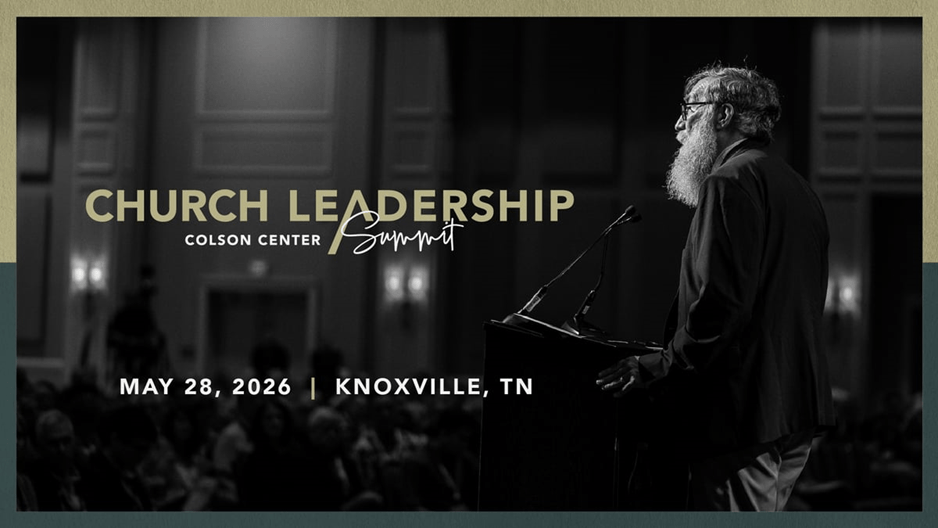
Registration includes:
- 1-day conference admission
- Breakfast & lunch on Thursday
- $200 travel voucher provided at conference check-in
- One night’s complimentary hotel stay for Wednesday night only
This summit precedes the Colson Center National Conference (May 29–31, 2026). For full event details and registration, learn more by tapping this link.
 Walking With Jesus