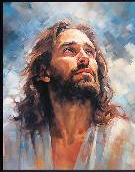
Our Life in Christ

“You can enter God’s Kingdom only through the narrow gate. The highway to hell is broad, and its gate is wide for the many who choose that way. But the gateway to life is very narrow and the road is difficult, and only a few ever find it.” (Matthew 7:13-14 NLT)

Our life in Christ, while simple and straightforward in many ways is often clouded by doubts, even despair at times. But why? What is it about our life in Jesus that seems at times to be so uncertain? Why do we question ourselves, our faith, our trust, the validity of our commitment, if our faith even exists?

My sense is, because we shift our focus from the Lord to ourselves, but I also understand it’s deeper than that. If the road to hell is so broad, who are we to have missed it? Why, among the billions of lost people on the planet, do we have the privilege of knowing, loving, and serving the Lord Jesus? The only explanation is grace! All glory, honor and praise belong to the Lord alone; however, that leaves us with a huge responsibility.

Imagine you’re on a ship in the middle of the ocean and you get the alert that the ship has been damaged and is going to sink. Over the loudspeakers you hear instructions to make your way to the area where the lifeboats are being lowered into the water. “Stay calm” you’re told, but you’re in the midst of a frantic effort to find your way to safety and security on one of those lifeboats, pushing and shoving to make sure there’s room for you. But what about those with disabilities, elderly, or with small children? What about their safety? What if they need assistance?

How like us in our walk with the Lord. We’re so focused on ourselves, as a rule we give little to no concern to those who may not have found the “narrow way” we’ve been blessed to have found. Can we be so content to be safe and secure in Jesus there’s no room in our heart for anyone else? My sense is most, if not each one who reads this blog would have the attitude: “Of course there is! I pray for my family and lost loved ones every day! Why would you even suggest such a thing?”

Because like passengers on a sinking ship, our every instinct is for self-preservation. It’s not that we don’t care about others, we just care about ourselves more. Yes, of course, if we stumble over someone, we’ll likely help them, but we’re not going searching on the lower levels of the ship and risk missing getting off ourselves. But why? If our security is in Jesus, we have a home in heaven when we die. Doesn’t it stand to reason that we would give our life in seeking to save another?

If the issue in our walk with Jesus is life or death, how does that translate in terms of how we order our daily life? We pray for lost loved ones, friends, and others, but what are we DOING about their lostness? Prayer is as much listening as speaking, but for what are we listening? Aren’t we eager to hear the Lord’s voice? But what are we expecting to hear? Shouldn’t we be eager to hear His instructions for us? Instructions as to who to reach and how to reach them?

I’m finding I’m spending more and more time during my conversations with the Lord sending texts or writing myself notes to call or write someone the Lord lays on my heart. It may be family or friends or someone I haven’t thought about in a long time. It could be a neighbor I need to reach out to or take to lunch or a lost family member to whom I need to send a letter. Perhaps it’s a friend at school or a coworker I need to invite to church or out for coffee. Whatever it is, if we’re not listening, we certainly won’t hear Him.

Our life in Christ is a grace gift given to be shared, not to be hoarded. We need to be holding signs at the entrance to the broad way of hell imploring people to think about where they’re headed. Most don’t have a clue and won’t have unless and until we warn them or they die and discover for themselves, but then it will be eternally too late.

Food for thought.

Blessings, Ed 😊

Mental Health and Christian Hope

By:  John Stonestreet and Dr. Timothy D. Padgett

*This enlightening article on mental health, especially among young people, while being very frightening, is also encouraging and informative. Please read and share with someone. Blessings, Ed 😊

Back in April, a Psychology Today article noted how some people today, especially younger people, are finding identity in their psychological struggles. For those who do, the point is not overcoming their struggles or achieving personal growth. Rather, it’s about belonging. As the writer put it: 

We are living in an age where psychological explanations are prioritized above all others. Indeed, therapy speak has permeated everyday life. It has taken over conversations and relationships, leading people to claim boundary violations, accuse others of gaslighting, or see narcissists everywhere they go. 

Between the rise of a hyper-therapeutic culture and the critical theory mood, a quick way to achieve social status is to have a condition, preferably one that can’t be challenged. There are, of course real, pressing psychological issues facing many, especially in the rising generation. While such people deserve to be taken seriously, as Abigail Shrier observed in her book Bad Therapy, the mental health industry incentivizes mental health struggle. It has normalized the need to therapize even basic tasks of childhood—like making friends. The result has not been better health, only greater dependency.  

The cultural drift to valorize victimhood and medicate most behavior is not providing a generation with hope. In fact, it’s the opposite. Despite greater mental health awareness and increased access to care than at any other time in human history, rates of suicide and psychological distress are up while rates of healing are down

We ought not be surprised when young people believe what they are told: that they are victims and that the world has no ultimate meaning, so they must make up their own reality to be their “true, authentic” selves. Essentially, we’ve placed the weight of making the world on their shoulders and are surprised when they stumble under the weight of the task. Kids are told to “live their truth,” “be themselves,” and “follow their heart.” In school they learn that the entire cosmos is one big accident. From social media they learn that they can’t stack up to the experiences of others. From their favorite Disney movie they learn that the hero is a villain and the villain is misunderstood. Without any fixed reference points for knowing who they are, why they exist, and how they should live, the therapist assuring them that to be a victim is compelling indeed. 

Nearly a century ago, the Austrian psychiatrist Victor Frankl wrote that the key factor in human survival—even basic physical and mental health—was hope. After spending years in a Nazi concentration camp, seeing the worst a fallen world could be, he argued in Man’s Search for Meaning that people need to believe in something bigger than themselves to endure even the greatest of horrors. From those insights, Frankl developed a style of therapy built on the idea that people could get better. He didn’t deny suffering, but he did insist that suffering wasn’t meaningless. His

goal was not to keep people dependent on therapy or medication. He wanted to help people find restoration and healing.

Hope is at the core of the Christian message. Though the Biblical view of sin rejects entertaining optimism about the human condition or unrealistic wishful thinking about the future, it presents the Creator putting Himself at the center of this fallen world in order to renew it and reconcile us. Christ is making all things new, and that includes those who are lost and hurting.  

If Frankl was correct, if there can be no healing without hope, God’s people are uniquely positioned to offer a way forward in this cultural moment.  For those who don’t know who they are, or why they are, or how to live, there is hope. In fact, we know Him by name . . . Jesus, the Christ. 

*TO REGISTER CLICK HERE

Are You Enjoying His Love?

“Jesus replied, ‘You must love the Lord your God with all your heart, all your soul, and all your mind.’ This is the first and greatest commandment.” (Matthew 22:37-38 NLT)

Why do you think the first of God’s Commandments is to love Him? This is obviously something Jesus believed and taught, but why? What is so critical about loving our Creator?

Loving God supremely is critical because it is the foundation of a life that honors Him, reflects His character, and aligns with His purposes. Scripture makes it clear that God’s love is not just an attribute —it is His very nature (1 John 4:8), perfect, unconditional, and eternal. When we love Him supremely, we respond to His grace, not as a human achievement, but as a heart reaction to His first love for us (1 John 4:19).

Photo by JEREMYHANN on Pexels.com

God’s love doesn’t obligate us to do anything, rather it opens to us a view of Him we’d never seen before. It’s the difference between seeing pictures of the Grand Canyon and taking a helicopter tour of it or sitting on the edge of a huge boulder looking down at people who look like ants or watching the sun set over its awesome presence.

We can content ourselves to know the Lord loves us and is for us or we can immerse ourselves in His compassion and care so personally it changes everything else. I’m reminded of C.S. Lewis’ quote: “I believe in Christianity as I believe that the sun has risen: not only because I see it, but because by it I see everything else.” The Lord’s love permeates every cell of our heart, mind, soul, and body and when we personally experience the grandeur of His vast love, everything else is influenced by its brilliance.

Andrew Murray understood this as reflected in his words: “It is the wholehearted surrender in everything to do His will, that gives access to a life in the abiding enjoyment of His love. Obey and abide.” In some ways it’s like watching a movie with two people who really love one another and thoroughly enjoy being together, then viewing your own life and wondering what’s missing. God’s love is fulfilling, complete, all-inclusive.

We see others who seem to have such intimacy with the Lord, such closeness and satisfaction in their walk with Him, but we just don’t get it! “What’s their secret? Why can’t I have that same intimacy with my heavenly Father?” There is no secret, it just involves a willingness to put Him first in everything, to give Him “wholehearted surrender in everything to do His will.”

The reason many professing believers in Jesus don’t have closeness with Him is because they still have their own agenda. What they want often or always takes priority over what the Lord clearly teaches in His Word. We want to rule our own life, but still go to heaven, never stopping to realize heaven is filled with the loving presence of the God we want to ignore on earth. There is no appeal to heaven if not Him. He IS Heaven’s draw!

Heaven for too many is simply the escape plan from hell. “I don’t want to go to hell, so I’ll jump through a few religious hoops so I can go to heaven”, but that’s not how it works. We trade our life for His, our will for His, our love of ourselves and this world for love of Him. He becomes our everything, or He’s nothing, there’s no in between. We’re either sold out to the Lord or we’re still struggling in our sin.

There’s no joy in God’s love without surrender to His will. It’s not simply about saying a “sinner’s prayer”, it’s about exchanging our sin for His forgiveness; our life for His; our future in hell for a new future with Him in heaven and the only thing that costs is … EVERYTHING WE ARE OR EVER HOPE TO BE OR HAVE, FROM THIS MOMENT ONWARD!

If you’re willing to pay the price, your joy in Jesus will know no bounds!

Food for thought.

Blessings, Ed 😊    

The Right Thing

“But when they arrived at the threshing floor of Nacon, the oxen stumbled, and Uzzah reached out his hand to steady the Ark. Then the Lord’s anger was aroused against Uzzah, and He struck him dead because he had laid his hand on the Ark. So Uzzah died there in the presence of God.” (1 Chronicles 13:9-10 NLT)

Sometimes, with best intentions, we do what we believe to be the right thing, but it ends very badly. Uzzah was a man of God who believed he was honoring the Lord by not allowing the Ark to fall, so instinctively, he reached out his hand to balance it. It’s likely exactly what any of us would have done in that circumstance, so, why was the Lord so angry?

The Lord had clearly warned them in Numbers 4:15: “But they must not touch the sacred objects, or they will die.” So, true to His word, God did exactly what He promised to do. But why did Uzzah have to pay such a high price for following his instincts? This is pure conjecture, but my guess, had I been in his shoes, I would have been more concerned about what King David would have done to me if I hadn’t steadied it. On some levels, my sense is the Lord actually had mercy on Uzzah.

The Lord’s decision did several things that reinforce to us our need to listen carefully and obey completely what the Lord tells us to do, be, say, and think. Carrying out God’s plans isn’t only about doing what He says but doing it HOW and WHEN He says. Obedience is multidimensional. I’m reminded of the young boy whose mom told him to sit down. For several minutes the little guy refused to sit, but upon further threats, finally lowered himself into the chair. His mom tried to encourage him with affirmation saying, “Now, was that so hard?” To which the little guy responded: “My body might be sitting, but in my mind, I’m still standing!”

We need to know the Lord knows our heart, so, doing the right thing isn’t always the right thing. Joshua Harris reminds us: “The right thing at the wrong time is the wrong thing.” Uzzah did what he believed to be the right thing, just at the wrong time. We can do that also with the best intentions. One of the clearest examples to me is sharing our faith with someone. Obviously, we’re commanded to do that; yet, if done at the wrong time or with the wrong attitude or in the wrong setting it could have disastrous results.

My most vivid remembrance of that was a time I was sharing with a young man with whom I’d had several brief conversations. On this occasion I was standing in my driveway and he was finally opening up and our conversation was going in a direction I’d been praying for months it would go. Then suddenly a salesman with whom I’d discussed buying a sweeper, in an attempt to show me how spiritual he was, began to badger my friend in ways that immediately shut him down. Before I could redirect the salesman, my friend was gone.

The salesman may have thought his intentions were right and good, but they were not prompted by the Lord and though I reached out to the young man with whom I’d been speaking many other times, I never had opportunity to speak with him again about the Lord. We must seek the Lord, not just in generalities about His will, but specifics.

His timing is always perfect, and His ways are above our ways. There are times He gives us the “go” at a second’s notice and sometimes He says to hit the brakes. Doing the right thing in the right way at the right time demands our sensitivity to His Spirit moment by moment. Please be attentive to His leading!

Food for thought.

Blessings, Ed 😊

America Flirts with Democratic Socialism

By:  John Stonestreet and Dr. Eric Patterson

*As always, the Colson Center gives us helpful guidance in understanding how to navigate the political world in which we live in light of our faith in Jesus. Blessings, Ed 😊

Recently, in primary elections in both New York and Colorado, self-professed Communist and Democratic Socialist candidates beat even progressive-wing candidates to claim Democratic nominations for office. The political wave is moving through the States. Today on Breakpoint, Eric Patterson, president of the Victims of Communism Museum and Memorial Foundation, discusses how a Marxist worldview operates and why it matters that one of America’s political parties is being pushed in this direction. Here’s Dr. Patterson:

Today’s so-called Democratic Socialists like New York City Mayor Zohran Mamdani have recognized some real problems in the bureaucracy: things like inefficiency, red tape, lack of accountability, and other problems in urban environments such as in Baltimore, New York, and Chicago. But they fail to recognize that it was their own progressive party’s imposition of bigger and bigger government, restrictions on private property and innovation, and efforts to create a class of citizens dependent on government that has caused the problems of bad government and high prices.

Should Americans be worried, or is this all just youthful enthusiasm? True, there is a faddish “pop Marxism” among many young adults and teens. It is cool to “rage against the machine” and even cooler to have government subsidize your college degree, housing, groceries, and transportation.

But there is something much more sinister going on. Americans should always ask three questions when considering any political candidate, platform, or party: Do we want statism or individual liberty with limited government? Do we want to buttress American institutions or attack them? And can we justify or denounce political violence?

Considering the first question, are the policies that Democratic Socialists advocate for designed to protect religious freedom, freedom of conscience, private property, the family, and private enterprise? Or do they rely on increasing state power to regulate social, economic, and political life? Remember, Marx said that control of the economy (Socialism) was the first step toward control of everything (Communism). It’s noteworthy that Democratic Socialists attack private property, an innovative business environment, and often call freedoms of religion and conscience smokescreens for superstition and intolerance of their progressive agenda.

Second, do Democratic Socialists defend our American constitutional order and its institutions, or do they attack them? Look out for those who call into question our Constitution, who advocate Supreme Court packing, and those who call outdated or illegitimate our modes of government (federalism, separation of powers, checks and balances, democratic processes).

Third, do they justify violence or advocate violence? Radical socialism is always an “ends justify the means” worldview. Look at the environment we are in with multiple assassination attempts against a sitting president, violence and threats targeting Supreme Court justices, and all the destructiveness, from Occupy Wall Street to Seattle’s “Capital Hill Autonomous Zone”to anti-Semitism on American college

campuses. So often, Democratic Socialists like Mamdani, NY’s Andrea Ocasio-Cortez, Colorado’s Melat Kiros, and Seattle’s mayor have justified such extremism.

The official Democratic Socialists of America website suggests major taxation and redistribution of wealth by unaccountable government bureaucrats to fund “universal public systems for healthcare, college, and housing.” It undermines America’s constitutional order by calling for dramatic changes to the Supreme Court and Congress and the elimination of the Electoral College.

Perhaps even more stunning? DSA calls for full voting rights for non-citizens, punitive taxation on “the richest earners,” and statehood for the city of Washington, DC.

What most of the candidates who call themselves Democratic Socialists also have in common is a fealty not to ecological conservation, but to the philosophically radical, budget-busting, so-called Green New Deal. Moreover, since the grotesque attacks of October 7, many have squarely sided with Hamas’ murderers rather than the only democracy in the Middle East, Israel. This latter movement has produced the return of an ugly anti-Semitism to American public life from the hard Left.

This year, we celebrate America’s 250th birthday, best expressed in the ideals of the Declaration of Independence. As Martin Luther King, Jr. noted, the Declaration was not fully realized in 1776 but was a promissory note to future generations that we must all be working to fulfill. The great American story is one of scars and triumphs in the general motion toward greater individual liberty and the full recognition of our common human dignity.

The Founders knew that unrestrained government power was the first enemy of freedom. The British government kept changing the social contract by waving trial by jury goodbye, quartering troops in their own home, appropriating personal land and business, revoking the colonial charter, etc. etc. etc. Then, after a decade of losing more and more rights, the British killed colonists at Lexington and Concord, marking the start of the American Revolutionary War.

So, the Founders were determined to buttress individual rights, our federal system, private property, and other fundamental liberties. Today, we too must be on the lookout for those who advocate for a massive, unaccountable state, undermine our fundamental rights and institutions, and are willing to justify violence.

That was Eric Patterson, president of the Victims of Communism Museum and Memorial Foundation, Learn more about their work at vocmuseum.org.

The Bridge to Forgiveness (Part 2)

“Then Peter came to Him and asked, ‘Lord, how often should I forgive someone who sins against me? Seven times?’ ‘No, not seven times,’ Jesus replied, ‘but seventy times seven.’” (Matthew 18:21-22 NLT)

The number seven in the Bible symbolizes completion, perfection, and divine order. When Peter asked Jesus if he could forgive someone seven times, in his mind he must have been thinking: “Surely, that should be enough!” But when Jesus responded “seventy times seven” the clear implication to Peter, and to us, is infinity…no end to our forgiveness of another, just as there’s no end of the Lord’s forgiveness of us.

How many times have you asked the Lord to forgive you? Yeh, I thought so. Me, too. That’s why we can’t be restrictive when we forgive someone else. However, there are some things forgiveness doesn’t mean. The first issue is, who has sinned against us? Who do we need to forgive? A friend? A stranger? An acquaintance? And please understand, they may never ask to be forgiven, but as a Jesus follower, we must forgive. But why? Because our forgiveness is dependent upon our forgiveness of another. How do I know that? As we saw in Matthew 6 in yesterday’s post: “…if you refuse to forgive others, your Father will not forgive your sins.”

Photo by Pavel Danilyuk on Pexels.com

We forgive in order to be forgiven, not because the one who sins against us deserves forgiveness. Friendships aren’t necessarily healed when we forgive; accounts aren’t automatically paid in full when we forgive; wounds aren’t automatically healed when we forgive; our hearts and minds aren’t freed from the pain of the tragedy or transgression because we forgive.

Forgiveness isn’t a cure-all for what ails us emotionally, but it’s a vital step in the right direction. John Irving reminds us: “The man who refuses to forgive destroys the bridge over which he himself must cross.” We don’t forgive to let anyone but ourselves off the proverbial “hook”. Forgiveness keeps the lines of communication open with the Lord, which is vital, not necessarily with the one who sins against us. When someone wrongs us, sometimes the best and only thing to do is to walk away.

Obviously, in a marriage or business relationship, it depends on the specific circumstance or situation, but forgiveness is always the first order of business. Healing often can mend a relationship to be stronger than ever if both parties are willing to own their part in the situation and seek ways to make things right. But if one or both aren’t willing to work to make it better and to allow healing, it’s an uphill battle that may not be worth fighting.

One thing we cannot, under any circumstance do, is take matters into our own hands. Retribution is clearly not in line with God’s will for us. Paul writes in Romans 12:19: “Dear friends, never take revenge. Leave that to the righteous anger of God. For the Scriptures say, ‘I will take revenge; I will pay them back,’ says the Lord.”

Someone said “Unforgiveness is like drinking a glass of poison and expecting the other person to die.” It’s spiritual suicide! Forgiveness is our willingness to let go of the offense and commit it into the care of the Lord. We should follow the example of John and Sharon Echaniz who are the parents who publicly forgave the man who murdered their 23‑year‑old son, Michael Echaniz, in March 2022.

At Mathew Wiessing’s 2024 sentencing, the man who murdered their son, the victim’s father, John delivered a victim impact statement in which he said, “I forgive you for what you’ve done. I earnestly desire for you to be with Michael, my son, in paradise one day. And I mean that from the bottom of my heart.” Sharon, the victim’s mother, also wrote, “I want you to know, Mathew Wiessing, that despite all this, I forgive you. I wish no evil upon you”

Forgiveness at its heart is caring more for the spiritual wellbeing of another than our own healing from the offense. It’s only possible by an act of God and the empowering of the Holy Spirit.

Food for thought.

Blessings, Ed 😊

The Bridge to Forgiveness

“If you forgive those who sin against you, your heavenly Father will forgive you. But if you refuse to forgive others, your Father will not forgive your sins.” (Matthew 6:14-15 NLT)

The bridge to forgiveness is wide and inclusive, but when we refuse to forgive others the way onto that bridge is blocked to us. Why is the cost of unforgiveness so high? Largely because it goes against everything the Lord taught us from the Cross.

Jesus not only paid the penalty for all sin for all time, He illustrated its application by forgiving the very men who nailed Him to the Cross. To not forgive others is to slap our Savior in His holy face, daring to imply the violation against us is more severe than the weight of the sin of all mankind. That’s an arrogance above forgiveness, the result of sin too deep to ignore.

Photo by Martin Pu00e9chy on Pexels.com

So, what does forgiveness entail? Does it mean we forgive and forget? Not at all. The word used exclusively in the King James Version for the translation of the word “forgiveness” is the Greek term “aphesis” and it can be translated: “remission, forgiveness, deliverance, or liberty” and means “release from bondage or imprisonment; forgiveness or pardon, of sins (letting them go as if they had never been committed), remission of the penalty.” (Strong’s Concordance)

Think of the forgiveness the Lord gives me and you when we’re born-again. When I see the word “Justified” I think of “just as if I’d never sinned” because that’s exactly what it means. Jesus took the punishment for our sin on the Cross, freeing us of its death penalty we rightfully owed apart from His sacrifice on our behalf. That’s the beauty of regeneration and new life in the Lord Jesus, but it’s not the end of the story.

We’re not set free simply to continue to sin and disobey the Lord, we’re freed to stay free in the liberty of the Spirit, following His commands, living by His directives, seeking to walk in continued obedience that allowed our freedom to be purchased in the first place. Paul reminds us in Galatians 5:1: “So Christ has truly set us free. Now make sure that you stay free, and don’t get tied up again in slavery to the law.” The law binds and constricts, but the Son sets us free to become all He created us to become. Sin entangles us, but the Spirit of God gives us wings to fly in obedience to our Savior’s directives.

So, how does that apply when forgiving someone who sins against us? We forgive one another as we’ve been forgiven! Completely and without punishment or self-imposed restrictions. What does that mean? We commit our transgressor into the capable hands of the Lord. Does that mean we just forget about it and move on? Yes, and no. But what if they keep sinning against me? Keep on forgiving!

Of course, there are some practical implications to this principle. If every time I walk through a door a bucket of water falls on my head, I’m going to stop walking through that door. If someone continues to sin against me in the same way I’m going to put separation between me and that person or that circumstance. Forgiveness isn’t ignorance of reality; it’s making judgments based on what we can or must do.

Jesus forgives us, but salvation in Christ is a commitment on our part to live a life of obedience to His commands and directives. But what if we fail? We do and when we seek His forgiveness, if we’re sincere and earnestly seek to turn from our disobedience, He’ll continue to forgive; however, if we persist in our sin and will not repent, there’s no forgiveness to be had. The Lord will not force us to obey Him and we can’t make another person repent of their sin against us, but we can forgive them when they do and move on. There’s so much more here, let’s continue this in tomorrow’s post.

Blessings, Ed 😊

Your Bible Version Matters

By: John Stonestreet and Andrew Carico

*In the frightening world in which we find ourselves, reading the Bible isn’t enough, we must now be careful WHICH BIBLE we read. I found this article helpful and I pray you do also. Blessings, Ed 😊

Two recent news stories point to the crisis of biblical literacy, not only of knowing the biblical text but in properly understanding it. An editorial published at the Washington Post by Princeton professor Gregory Conti (a self-professed “non-believer”) explained how common it is for college students to not know the basics of Christianity:

(They) seldom recognize the allusions to the Bible that appear in Shakespeare’s work or in Lincoln’s second inaugural address (or in Obama’s first, for that matter) . . . their ignorance of religious ideas means they struggle to understand a wide array of Western art, literature, and philosophy.

In short, the lack of Biblical knowledge means they are unable to understand American history and culture.

Another New York Times story profiled the pastor and the church of Texas Democratic Senate candidate James Talarico. According to the article, Pastor Jim Rigby of St. Andrews’s Presbyterian Church in Austin, Texas, welcomes new members by:

…handing them a new copy of the Inclusive Bible, an unusual feminist translation St. Andrew’s has used since the 1990s. In Genesis, instead of saying that God created a man, Adam, the translation first refers to an “earth creature.” It often uses the term “kindom” of God in place of “kingdom,” which it deems classist.

The Inclusive Bible is promoted as “the first egalitarian translation.” In addition to replacing the male pronouns for God and humankind, it purports to “re-imagin(e) . . . the [S]criptures and our relationship to them.” The innovative version promotes progressive Christianity and includes a strong postmodern emphasis, rejecting absolute “truth” in favor of a newly created narrative.

Those who only read the Inclusive Bible will not really know the truth of Scripture, any more than those who never read any version. Nor can they understand a culture inspired by and built from, mostly, the King James Version. And yet, that is actually the point of the postmodern way of approaching reality: there is no truth to be known or revealed, only that which is constructed.

Among the exhibits and experiences at the Museum of the Bible in Washington, D.C. is a virtual flying tour called “Washington Revelations.” Visitors are taken throughout the nation’s capital, to find the biblical and Christian references inscribed on various monuments and buildings. The sheer amount of the references is impressive, but even more so when you consider how many more there are across the city, not to mention across the country.

Vishal Mangalwadi book, The Book That Made Your World and Daniel Dreisbach’s Reading the Bible with the Founding Fathers both trace the influence of the Bible on Western culture, including American culture. Put simply, cultural literacy requires biblical literacy. Inversely, as our biblical literacy has diminished, so has our cultural literacy.

Moreover, those who do not read the Bible are far more susceptible to whatever claims people make about it. Not only will they be unable to distinguish between an inventive, ideologically loaded translation and the actual text of God’s inspired, infallible and inerrant Word, they will become subject to those who speak on their own authority rather than relying on the authority inherent to the text. The Inclusive Bible is another example of making the Bible say something that it does not say. We must put ourselves under the text of Scripture and not above it as the ultimate authors.

The older meaning of the word “crisis” means “turning point.” If the recent emergence of theism in America turns into greater openness to Christianity specifically, proper guidance on how to read the Bible will be desperately needed. With God’s help, this could mean a turning, or returning, to the Bible as our ultimate authority.

In A Practical Guide to Culture, Brett Kunkle and I described how to approach the Bible as if it is true. Not only is what It contains true, but the Bible presents to us the true account of reality. It frames for us the truth about God, the truth about the cosmos, the truth about God’s image bearers, and the truth about Jesus Christ, and His work in the world. Thus, we can and should read the Bible as it was written, to avoid imposing moralistic and therapeutic applications, whether they are sourced in critical theory, cultural power, or legalism.

The Bible is God’s revealed Word to us, not our word to make say what we want. As Jewish theologian Abraham Joshua Heschel put it,

The great challenge to those of us who wish to take the Bible seriously is to let it teach us its own essential categories; and then for us to think with them, instead of just about them.

“Carnal” Christian?

“Those who are dominated by the sinful nature think about sinful things, but those who are controlled by the Holy Spirit think about things that please the Spirit. So letting your sinful nature control your mind leads to death. But letting the Spirit control your mind leads to life and peace. For the sinful nature is always hostile to God. It never did obey God’s laws, and it never will. That’s why those who are still under the control of their sinful nature can never please God.” (Romans 8:5-8 NLT)

Every human being has a carnal nature. We were born with it and will die with it. That’s the issue with which Paul was wrestling in Romans 7:24, but one over which he found victory in Jesus. Without that victory our end is death – eternal separation from the One who died to free us from bondage to ourselves.

On the one hand, the expression “Carnal Christian” describes every person who has ever begun a faith journey with the Lord Jesus; however, it must not and cannot be the end of our story. To be devoted to Jesus and to self is like trying to ride a bike in two directions at the same time. When the Lord called Peter, James, and John, He made a simple, yet all consuming command: “Follow Me!” And the words immediately following His invitation are these: “And they left their nets at once and followed Him.”

Photo by Quang Nguyen Vinh on Pexels.com

“Nets” has reference to their livelihood, as they were fishermen. Jesus asked them, as He asks us, “Leave it all behind and follow Me wherever I lead!” Jesus’ invitation demands a decision. We can’t stay where we are and follow Him; we can’t follow Him and not obey Him; we can’t continually disobey Him, choosing rather a life of sinful disobedience and still be in a healthy, growing relationship with Him.

So, what am I saying? The term “carnal” is used 10 times in the King James Version of the Bible and in 8 usages, including Romans 7, it has reference to our literal flesh, related to the condition of our birth and life before Christ. In the other 2 verses, including verse 7 above and the other in Hebrews 9:10, the word is contrasted with the new nature we’re given when we’re born again. What are the implications?

Obviously, we die with the sinful nature with which we were born, so, the journey for us, as it was for the first followers of Jesus, is one of transformation which is instantaneous, yet progressive. What does that mean? It means we’re immediately saved, filled with the Spirit and set on a new course in our lives; however, the reality is, the only One who knows our heart is the Lord. He alone knows who is truly “born again” and who is trying to play a part.

Perhaps a clarifying question is: “Can you love Jesus and not obey Him?” In John 14:15 Jesus clearly states: “If you love Me, obey My commandments.” A common phrase when I was growing up was: “The proof is in the pudding!” You can brag all day about how good your pudding is or your life in Christ is, but the proof is in the product – how does your pudding taste? What is your life speaking?

My sense is many who use the term “Carnal Christian” are either trying to justify their sinful behavior or to distinguish themselves from those they don’t perceive as “spiritual” as they are. In either case, it’s motivated by sin and indicative of someone who is or very well may be walking in disobedience to the clear commands of the Lord.

Here’s the bottom line as I understand it: if our carnality is more evident than the life of the Spirit moving and living in and through us, we’re not living pleasingly before the Lord and should spend some extended time with the Lord allowing Him to clarify whether we’re walking in the Spirit, thus filled with His life, or walking in the flesh, separated from Him and heading to a Christless eternity.

Food for thought.

Blessings, Ed 😊

The Church and the Gospel

“Since God in His wisdom saw to it that the world would never know Him through human wisdom, He has used our foolish preaching to save those who believe.” (1 Corinthians 1:21 NLT)

What comes to mind when you think of “preaching”? The word Paul used above that is translated “preaching” means: “that which is proclaimed by a herald or public crier, a proclamation by heralds of God or Christ.” Remember, originally, especially as new converts were being made and Jewish resistance continued to increase, much of Paul’s and other’s preaching was public or one on one.

Like today’s “street preachers”, they “proclaimed” the Gospel message to whomever would listen, often, as today, at the risk of injury or death. Why would they put their own health and safety at risk to share with others the message of the Cross? Because His message is life or death; heaven or hell! There are literally eternal implications for those who need to hear the Gospel message.

The most compelling reason for anyone to “preach”, to share our faith in Jesus is because the Lord Jesus asks us to share. Paul Washer had it right when he wrote: “Saving fallen humanity through the preaching of the gospel is not just a calculated strategy of God, but His supreme delight.” And please don’t misunderstand, preaching saves no one! However, hearing is the vehicle, as without hearing the Gospel, how can anyone believe? Paul wrote in Romans 10:17: “So faith comes from hearing, that is, hearing the Good News about Christ.”

Another misconception when someone hears the term “preaching” is that only “Preachers” preach, but as Paul used the term, he had reference to everyone who was a believer. Every saved person has a responsibility to share their new life, but the sad truth is, even many so-called “preachers” today don’t share the true Gospel of salvation in Christ alone by faith alone.  Mark Dever nailed it when he wrote: “A church confused about the gospel is worse than worthless. It is a blocked emergency exit. It’s an elevator to hell. 

It can’t be stressed enough that sharing our love for and faith in the Lord Jesus isn’t simply “a nice thing to do,” it’s as critical as throwing a life preserver to a drowning person. People who are lost, unsaved, still trapped in their sin and shame, who have no hope of eternal life in Jesus are destined to a Christless eternity in hell unless and until someone like me or you gets over ourselves and shares the Good News of Christ’s loving sacrifice on their behalf with them.

Who in your spheres of influence is lost? They’re not hard to spot, the tricky part is, sometimes they shield their lostness in a cloak of confidence. When I was in high school one of the most popular boys in the school asked me to give him a ride. He was at least a grade or two ahead of me, so I was almost in awe of the opportunity to be of service to him.

He was friendly, but aloof, went into the store, came out and I dropped him off with the usual courtesies. The next day he drove his parents’ car into the river and drowned himself! What if I’d been able to get over myself and ask him if he was doing okay? What if I’d been less concerned about myself and more concerned as to whether he knew Jesus?

Lord of Heaven’s Armies, please give me/us sensitivity to the needs of those around us. Open our hearts to You and build into us a greater longing to be Your instruments of life to those who are walking in death. Enable us by Your grace, to open our mouths that You might fill them with words of life for those who are perishing. We love You and we want to honor and please You by obeying Your directives to reach those in our spheres of influence to Your honor and their eternal good. In Jesus’ Name I pray. Amen!”

Blessings, Ed 😊