Can We Trust the Bible?

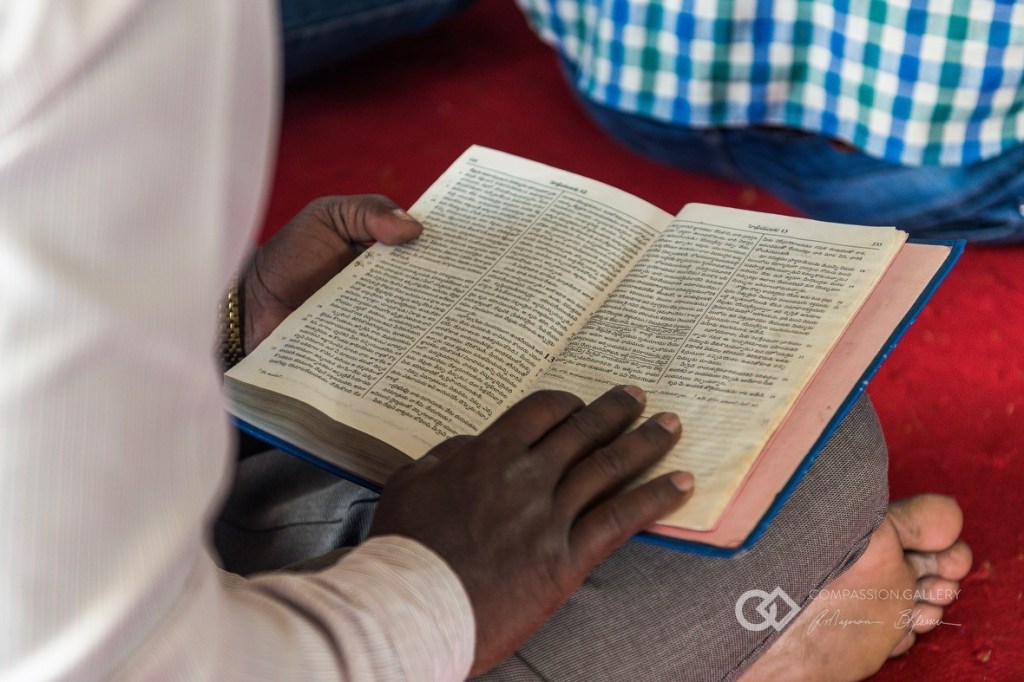
“All Scripture is inspired by God and is useful to teach us what is true and to make us realize what is wrong in our lives. It corrects us when we are wrong and teaches us to do what is right. God uses it to prepare and equip His people to do every good work.” (2 Timothy 3:16-17 NLT)

In light of my last few posts, I thought the question might arise: “If we can’t place our full trust in any man’s understanding of Scripture, can we even trust the men who wrote the Bible?” And the short answer is – with unlimited confidence. How can I be so certain?

The NIV translates the first part of the verse above “God-breathed.” What’s my point? The easiest way for me to think of this is that the Spirit of God “dictated” what He ultimately wanted us to read. Yes, of course He used human instruments, but He gave them words upon which we could build a faith that was based on truth. Yes, I realize that some of the New Testament books hadn’t yet been written, but the same principle applies to both Old and New Testaments. Let’s look more closely at the verse above.

Why did God give us His written Word? First, to use it as the basis of sound teaching. Teaching to what end? So that we would “do what is right.” The purpose of the Bible isn’t simply information, it’s transformation. We can memorize the entire Bible, but if that knowledge doesn’t lead to God’s Spirit having full access to our lives, it’s for all intent and purpose, useless. We have to know what is true, not only in a general sense, but what is true about us.

Photo by Pixabay on Pexels.com

Paul wrote in 2 Corinthians 5::17: “This means that anyone who belongs to Christ has become a new person. The old life is gone; a new life has begun!” Learning requires more than knowledge. Wisdom is the application of knowledge to how we think and live. Truth defines how we should think and live.

Part of that process is not only understanding what the right way is to live but understanding what needs to be corrected. We must gain insight into what changes need to be made in our conduct, especially as it relates to how we love God and each other.

Why is it so vital that we learn truth and apply that truth to how we live? Because the ultimate purpose is to equip us to carry out God’s mission on this earth – to point people to Him! To help others to understand the basis of our faith, so they can have faith of their own, not based simply on our ideas, but foundationally on what the Bible teaches.

This is scary on some levels because Scripture taken out of context can easily become a pretext. What does that mean? It means we can essentially use the Bible to “prove” almost anything. So, what do we do?

Paul wrote in Romans 8:16: “For His Spirit joins with our spirit to affirm that we are God’s children.” I know that God’s Spirit indwells me because He bears witness with my spirit that I’m His. I believe the same principle can be applied to what is true – i.e. what is of God. How so?

When I’m reading a book or listening to someone teach/preach, I have at least two avenues to follow to understand whether what I’m reading, or hearing is of God. The first is the Bible. Is what the person is saying consistent with the whole of Scripture? The second is the Spirit’s confirmation. Am I sensing in my spirit affirmation from God or is He raising the proverbial “red flag.”  

Ultimately, you must decide whether you want to believe the Bible or not. If you don’t, that will be to your peril. But if you do want to learn and follow the dictates of Scripture, you’ll have to put in the effort to learn what it says by reading and studying it for yourself.  To entrust your eternal destiny to someone who seems to know the Bible is very dangerous.

As for me, I trust the Bible without reservation, because I have an intimate and personal love relationship with its Author.

Blessings, Ed 😊

Does Truth Divide?

“Don’t let your hearts be troubled. Trust in God, and trust also in Me.” (John 14:1 NLT)

Trusting in the words of God alone can heal, help, and unify. Trusting in the words of men alone can hurt, damage, and divide. How do you know what to believe? It must be measured by what is true.

Chuck Colson wrote: “The task of this generation—as it will be in every generation—is to understand Christianity as a complete view of the world and humankind’s place in it, that is, as the truth. If Christianity is not the truth, it is nothing, and our faith mere sentimentality.” 

What’s prompting all this concern to seek out and know the truth? Because in these last days there are numerous people who profess to speak truth, which in fact, is their understanding of truth at best. At worst, it’s the enemy in disguise deliberately seeking to get you to believe a lie.

It doesn’t matter if something sounds good. That’s not the point. Is it true? Does it line up with what the Bible teaches? And yes, of course, that’s subject to opinion, and you ultimately have to decide whose opinion you’re going to trust. But do your own research. Find tools that will enable you to understand what the Bible is saying.

In Matthew 7:22-23 are some of the most frightening words in the Bible. Jesus said: “On judgment day many will say to Me, ‘Lord! Lord! We prophesied (preached) in Your name and cast out demons in Your name and performed many miracles in Your name.’ But I will reply, ‘I never knew you. Get away from Me, you who break God’s laws.’”

To which “laws” is He referring? Jesus said in Mark 12:29-30: “The most important commandment is this: ‘Listen, O Israel! The Lord our God is the one and only Lord. And you must love the Lord your God with all your heart, all your soul, all you mind, and all your strength.’ The second is equally important: ‘Love your neighbor as yourself.’ No other commandment is greater than these.”

My goal as a believer in Jesus is to fulfill these commands to the best of my ability and understanding. The plot thickens when God’s heart is for His family, the Body of Christ, the Church, to dwell in unity and love, but when we love our beliefs, our doctrines more than we love our brothers and sisters, there’s a problem. What do I mean?

If I’m so busy seeking to “correct” my brother or sister because they don’t believe like me, I’m not going to embrace them, I’m going to push them away. Why? What are we making the basis of our unity? Our beliefs, not Jesus.

Photo by Rodolfo Quiru00f3s on Pexels.com

Friends, please hear my heart. We can’t build our oneness on doctrine – on the sinking sand of what we believe is true. We must build our unity on Truth alone – on JESUS, the Rock! How do we do that? By focusing on what we know to be true about Him. He is God! He came to live a perfect, sinless life on earth in order to be a suitable sacrifice for our sin, because sin demands a payment.

He died on the Cross, not because He deserved to be there, but because His love demanded a sacrifice for our sin to be paid. He arose from the tomb to give us victory over sin and death. We can have our sins forgiven and be given a new life in Him. We walk with Him by faith and grow in our faith as we invest ourselves in His eternal Kingdom. There are others, but hopefully you get the point.

There’s so much we have to agree on, we don’t have to argue and separate because we don’t agree on every single issue. I don’t expect everyone to believe like me. God gave me an insight a long time ago that has guided me as I’ve learned to walk more closely with my Savior. He told me that it’s no accident that there are people who are a lot smarter than me who believe differently than I do. He told me to listen to what they say, see if it is consistent with Scripture, then decide if I might need to shift what I believe about Him.

It’s not simply a matter of who’s right or who’s wrong. It’s more a matter of who’s understanding is most in line with what the Bible teaches. And, honestly, we won’t get that exactly right until Jesus returns or calls us home.

Here’s my takeaway. I’m going to love you as a brother or sister in Christ, not based on that upon which we disagree, but upon that about which we do agree – JESUS! He’s the focal point. If we miss Him, we’ve missed everything.

Does Truth divide? No. People do when we think what we believe is the only way to see the Truth.

Food for thought.

Blessings, Ed 😊

Who Is Truth?

“Jesus told him, ‘I am the way, the truth, and the life. No one can come to the Father except through Me.” (John 14:6 NLT)

God’s heart is that we know Him. His love is so great that He devised a strategy to make Himself known to us that would be undeniable. God poured Himself into a human body in order that we might see a living, breathing example of what the embodiment of Truth would look like. Yet, we’re so divided, even in the Body of Christ, we struggle even to identify who Jesus is.

Today’s post is an effort to share my heart and thoughts regarding Truth. I capitalize that word because Truth is a Person. His name is Jesus. How do I know that? Because that’s what He said about Himself, and He doesn’t lie.

Tim Keller said of Jesus: “Jesus is one of the following: Lord, Lunatic, Liar, or a Legend. Only four possibilities.” What you decide about Jesus has enormous potential for good or bad, but that’s the topic of another post. Foundationally, I believe Jesus is exactly who He claimed to be – God in human flesh.

My point is two-fold. First, we can never, this side of eternity, know the whole Truth, in the sense that we can know everything there is to know about Jesus. John Wesley said: “Bring me a worm that can comprehend a man, and I will show you a man that can comprehend the Triune God.”

But secondly, we each formulate a flawed system of belief that will guide us through this life. No one, living or dead, can know everything about God, thus, to follow the findings of a mere man in our search for understanding God is going to lead to frustration and futility. So, am I apposed to studying the ideas of godly men across the years? No, of course not, but they are fallible men, just like me.

The Reason for My Hope “Used by permission, © Ray Majoran, GlimpseOfInfinity.com

Where am I going with this. The term “Theology,” literally means “words about God.” The premier book that God has given us to help us in our understanding of who He is, is the Bible. Millions of books have been written across the centuries seeking to give expression to the understanding that men have as to what the Bible says and means. And that’s a wonderful thing.

Problems arise when we take the ideas of men and make them dogma, or a term we may better recognize – doctrine. Men have built their theology on a system of beliefs that made sense to them, and, unfortunately, to many others. Why is it unfortunate? Because rather than creating an avenue to more unity and harmony in the Church, it’s served as the basis of much division. We don’t simply follow Jesus, we follow the ideas of men about Jesus.

Our unity MUST be in Jesus, not in doctrine. My Mentor said: “We let the tail wag the dog when we put doctrine ahead of Christ.”

So, what is the alternative? Read, study, pray, meditate upon, contemplate, discuss with others, but draw your own conclusions, based on your own study. Don’t take what ANYONE says at face value, except Jesus.

Chuck Colson said: “Why does truth matter so much? Because the Church simply can’t be the Church without being on the side of truth. Jesus came as the champion of the truth and of those on the side of the truth. Without understanding this, the Church cannot even present the Gospel. Without truth, it resorts to therapy and has patients, not disciples.”  

Let’s continue to look at this vital subject in tomorrow’s post.

Blessings, Ed 😊

A Closer Look at Self-Control

“By His divine power, God has given us everything we need for living a godly life.” (2 Peter 1:3 NLT)

Self-control, or lack thereof, is at the root of a lot of wrong that is done in the name of Jesus. The word that is translated “self-control” in the New Living Translation is translated “temperance” in the King James Version. Temperance is defined as “habitual moderation in the indulgence of the appetites or passions; moderation in or abstinence from the use of intoxicating drink.”

Think about what you just read. What’s the first word? “Habitual.” One of the primary ways God enables us to control our behavior is through the development of godly habits. If you became a Christ follower as an adult, think of all the habits you had that were negative or distracted you from your efforts to be a person of God.

Usually, one of the first things with which God must deal is our bad habits. What is the most effective way to break an unhealthy habit? By forming new, godly habits to take their place. Nature abhors a vacuum. To stop one habit without replacing it with a better one is a formula for disaster.

On some levels this whole conversation about “self” control, is misleading. Yes, of course, over time, as the Holy Spirit enables us to formulate godly habits, they become a great means of “self-control,” but we can’t lose sight of the fact that apart from Jesus we can do nothing, and apart from Jesus we are nothing.

Jesus IS our life, so to the extent we yield ourselves to Him, to that extent our life will come under control – His control. That’s why Paul urges us in Romans 12:1: “to give your bodies to God because of all He has done for you. Let them be a living and holy sacrifice – the kind He will find acceptable.”

Taming the body is the pathway to taming our soul. Without getting the outward manifestations of our “indulgence of the appetites or passions,” under control, we’ll be fighting a losing battle trying to tame our thoughts. We’re so prone to follow our feelings – i.e. “if it feels good, do it!” But if we learn to DO the right thing – i.e. stop whatever we’re struggling with – we’ll FEEL the right way about it.

Honestly, thoughts and behavior, on many levels, go hand in hand. Our thoughts feed our behavior and our behavior feeds our thoughts. It’s a vicious cycle. It’s almost like trying to figure out “which came first, the chicken or the egg?”

Photo by Tobi on Pexels.com

Obviously, as a child of God, we nurture and train our thoughts through prayer, meditation, and contemplation of the truths of God found in Scripture. But right thinking alone won’t release us from the captivity of our “appetites and passions.” It’s like learning to drive. You can memorize the manual, but until you get behind the wheel, you will never know how to drive.

Lust, in whatever form it entangles us – from porn to possessions – demands repentance. A spiritual change of mind, realizing a change is required, and a dynamic change of direction from our way to God’s way. But it’s not simply a rugged self-determination that brings about the needed change. It’s a cooperative effort between us and God.

It’s what Jesus was alluding to when He said in Matthew 11:29: “Take My yoke upon you. Let Me teach you, because I am humble and gentle at heart, and you will find rest for your souls. For My yoke is easy to bear, and the burden I give you is light.” Another way to think of that is – what’s impossible for us, is possible with God. He can do in, and on our behalf what we can never do for ourselves.

The most effective means of learning self-control is by giving the Holy Spirit permission to exercise His control. And the straightest course to follow in the development of a godly life is to follow Jesus.

Blessings, Ed 😊

A Closer Look at Gentleness

“Seek the Lord, all who are humble, and follow His commands. Seek to do what is right and to live humbly. Perhaps even yet the Lord will protect you – protect you from His anger on that day of destruction.” (Zephaniah 2:3 NLT)

What picture comes to mind when you hear the word “gentleness?” This word is translated “meekness” in the KJV. The picture that comes to my mind is Jesus in the purple robe when the soldiers were mocking Him. The Bible says: “They (the soldiers) dressed him in a purple robe, and they wove thorn branches into a crown and put it on His head. Then they saluted Him and taunted, ‘Hail! King of the Jews!’ And they struck Him on the head with a reed stick, spit on Him, and dropped to their knees in mock worship.”

It makes me ashamed to be a human being when I read those awful words. It breaks my heart Jesus had to suffer those things in my place. That should have been me, not the spotless, sinless Lamb of God. Think of the millions of angels standing by, just waiting for any indication that Jesus was reaching out for them to rescue Him.

But think, too, of the authority of the One who withstood that torture. The One who spoke everything that is into existence, including the soldiers who now spit in His holy face. If only the thought had crossed His mind, those soldiers could have been incinerated in an instant. Earth would have quickly and expeditiously opened her massive jaws and swallowed them without so much as a burp.

Photo by Pixabay on Pexels.com

What prevented Jesus from protecting Himself and calling for the forces of heaven and earth to come to His rescue? His gentleness. One way to think of what this means is “harnessed energy.” It’s power under control. It is atomic energy held in check.

How does any of this apply to us? Think of the driver who cuts you off. Or the person who thoughtlessly releases the door you’re about to walk through, forcing you to catch it to keep from walking into it. Or the less qualified employee who is chosen instead of you. Or the bully who makes your child’s life a living hell. These and a million other examples characterize what it means to allow the fruit of gentleness to fill your heart and mind.

How often in the course of our daily lives the temptation to exercise our “authority,” or “defend” our integrity, or intercede on behalf of our child or family, puts us on the threshold of destroying everything we’ve worked so hard to gain as a faithful follower of the Lord.

Gentleness enables us to hold our temper, keep our mouths shut, walk away, congratulate the one who took “our” job, pray for the one who is rude to us or seeks to cheat or belittle us, or anyone who in any way demeans us and seeks to make us feel small, insignificant, or unimportant.

Please understand, I’m not suggesting we, as Jesus never was, a mat for anyone to walk on. We, by the power of God’s Holy Spirit, constrain ourselves, keeping ourselves under control, not because we aren’t strong enough or capable enough, but because we ARE. Christ’s loving strength shines most brightly in and through our gentle response to cruelty, thoughtlessness, unkindness, and the like. We can respond, but not in anger or revenge.

The same Jesus who spoke this world into existence, walked out of His tomb, proving to the world and to all who would one day believe, that He is the Almighty God. One day soon that harnessed energy of our gentle Savior will become the unleashed power of the Lion of Judah as He returns to planet Earth. He’s not coming back to take sides. He’s coming back to take over. We’d best know with certainty whose side we’re on when that day comes.

Food for thought.

Blessings, Ed 😊

A Closer Look at Faithfulness

“I will sing of the Lord’s unfailing love forever! Young and old will hear of Your faithfulness.” (Psalm 89:1 NLT)

It’s interesting to me that the word “faithfulness” doesn’t appear in the King James Version of the New Testament, and only 19 times in the Old Testament, mostly in the Psalms. The word used in the Old Testament means: “firmness, fidelity, steadfastness, steadiness.” (Strong’s)  

It’s also noteworthy that faithfulness isn’t a uniquely Christian term. You can find faithfulness among other religious groups, cults, athletes, soldiers, businesspersons, parents, even atheists. What’s my point? Faithfulness is an attractive attribute shared by many who have no interest in following Jesus yet share a fundamental component of what it means to be a Jesus follower. You can be faithful to a lot of things and not follow Jesus, but you cannot be a Jesus follower and not be faithful.

Remember, we’re looking at the Fruit of the Spirit, asking the Lord to use the floodlight of His Holy Word, to enable us to examine our hearts and minds to see if there are pockets of wickedness or disobedience lurking in the corners and crevices of our inner man/person. Why is that so important?

Faithfulness to anything is developed over time and the most visible, distinguishing characteristic is habit. What we faithfully commit to, in time, becomes a habit. For example, reading the Bible, attending church, prayer, being a faithful spouse, parent, employee, employer, and on and on it goes.

Photo by Andres Ayrton on Pexels.com

We are creatures of habit, and become faithful to the things we deem important, whether that’s eating healthy or being a couch potato. The habit to which we’re so faithful, in and of itself is amoral. In other words, the habit doesn’t care if it draws us closer to Jesus or pushes us further away, but once it’s got it’s claws in us, it can be very difficult to change.

Faithfulness as used in the Bible, speaks to conviction or belief that Jesus is who He claimed to be and that He alone is the Author of our eternal salvation. Faithfulness to anything, but especially as it relates to our relationship with God, begins with belief. As I’ve shared in other posts, belief, and faith(fulness) are two sides of the same coin.

Belief is the intellectual assent or agreement that something deserves our effort to do it habitually; faith is putting that belief into action. Belief says: “Jesus is Lord.” Faith says: “My life will now reflect that belief in and through the way I live – what I think, say, and do in every avenue of my being. In short, in and through the habits that I develop and allow to rule my life.”

Faithfulness not only requires and reflects discipline but gives visibility to the life of Christ living in us. How so? In the development of the Fruit of the Spirit. We submit the authority of our lives to the Lord, which is illustrated by the extent we’re able to love well; express joy appropriately; have peace under pressure; patience while under attack; kindness to those who don’t deserve it; goodness when it’s hard; faithfulness when it hurts; gentleness when we want to say or do something inappropriate; and self-control when we’re about to lose it.

Faithfulness reveals allegiance, inasmuch as we’re able to give visibility to the Ruler of our heart and the Lord of our life. If His lordship matters and His likeness is our goal, faithfulness to developing and following godly habits will reveal more quickly than anything else, who’s really in control of our lives.

By God’s grace and with His Spirit’s help, may we model faithfulness to Him as He models faithfulness to us. We’re the only “Bible” our lost loved ones and friends are reading. Let’s give them an accurate account of our faithful God through our faithfulness to Him and to them.

Blessings, Ed 😊

A Closer Look at Goodness

“So we keep on praying for you, asking our God to enable you to live a life worthy of His call. May He give you the power to accomplish all the good things your faith prompts you to do.” (2 Thessalonians 1:11 NLT)

What comes first to your mind when you think of “goodness?” Goodness is a quality that is becoming rarer in the times in which we live. To me goodness speaks of a quality of life that is uncompromising, yet kind; exemplary, yet humble; deeply spiritual, yet inviting. It’s the kind of life Jesus illustrated and to which I, and I suspect you, aspire.

The fruit of goodness is a matter of the heart, yet, ironically, it’s not something that’s innate. It’ a gift that can only be given by God. God IS good. He is the embodiment of perfection, thus, the sum total of all that’s good, right, pleasant, admirable, holy, and complete. Good isn’t simply the absence of bad, it’s the opposite of evil.

Photo by Anastasia Shuraeva on Pexels.com

On some levels “good” is a relative term. For example, my son-in-law can eat raw fish and say, “Oh, that is sooooooo good!” But for me it’s all I can do to gag it down. But the plot thickens when we call something good that God clearly says is not good. For example, the misuse of sex.

God designed sex to be enjoyed between a man and a woman who are fully committed to one another in a marriage relationship. In that context sex is good. Very good. But outside the boundaries of a marriage covenant, sex becomes destructive. Am I implying that it isn’t pleasurable outside marriage. Of course not. But like so many other avenues of pleasure we seek, they lead to something artificial and short lived.

Virtually anything God intends for good can be abused, distorted, violated, and made to be the very opposite of what God desires. Even the Gospel – God’s Good News – when used as a tool to shame others or to give expression to one’s spiritual superiority, is evil and dishonoring to God.

Anything good in our lives and in our world is because of God’s presence. Evil is the absence of God’s presence, thus devoid of God. But the irony of the Gospel is that God can take what was evil and/or intended for evil purposes and transform them into something good.

Isn’t that the promise given in Romans 8:28? “And we know that God causes everything to work together for the good of those who love God and are called according to His purpose for them.”

Two observations in passing. First, God doesn’t “cause” everything – i.e. He doesn’t cause evil. And secondly, everything we experience isn’t in and of itself “good.” Because of His great love and desire to express His love for us in personal and unmistakable ways, He CAN and WILL cause the circumstances of our life to work together for our good, but that’s His doing. It’s not a natural cause and effect.

Any goodness in us is from God. Any kindness, act of generosity, humility, selflessness, and the like, are ALL AND ONLY because of God. Even unbelievers can do “good” things because of the presence of God’s influence in and on their lives. But hell will be the complete absence of anything good because God’s holy and righteous presence will be absent.

In some ways God’s goodness revealed in and through us is a very powerful draw for people who don’t yet know Jesus. To open a door for someone, greet them warmly, smile genuinely, and deliberately get ourselves out of the way in preference to a fellow human being can be huge when done with the right spirit. God can be exalted, honored, and glorified through His goodness working in and through us if we’ll let Him. Let’s let Him!

Blessings, Ed 😊

A Closer Look at Kindness

“Since God chose you to be the holy people He loves, you must clothe yourselves with tender-hearted mercy, kindness, humility, gentleness, and patience.” (Colossians 3:12 NLT)

One of the definitions of kindness in Strong’s Concordance that caught my attention is “benignity.” Not a word you see every day, huh? Yeh, I had to look it up. Of course, I recognized the “benign” part, because my son had cancer, but I couldn’t reconcile “cancer” with “kindness.” So, I dug a little deeper, and now believe it’s the perfect word to describe “kindness.”

Think about it. What’s the kindest word you can hear if you’ve had a biopsy and suspect cancer? “The biopsy was benign!” Whoa! Can I hear a HALLELUJAH!

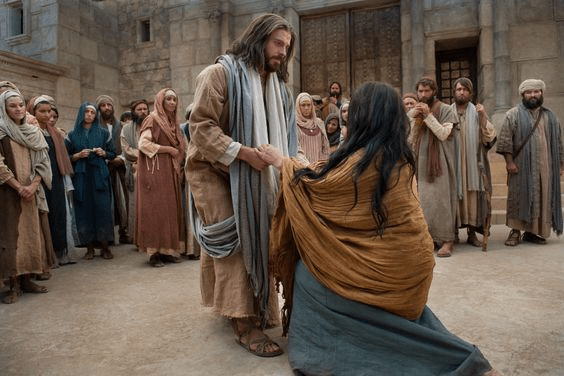
When I think of the word “kindness,” I think of Jesus. He’s kneeling in the dirt doodling while a woman’s life, who was caught “in the very act of adultery,” is hanging in the balance. He’s not showing any anger or any kind of demeaner that would tip anyone off that He’s the Creator of the universe. But He makes a statement that puts perspective to the situation. “All right, but let the one who has never sinned throw the first stone!” “BOOM!” “GOT YA!”

Can you hear the rocks dropping? Can you hear the shuffling of guilty feet scurrying to find some place to hide their shame? How like us to stone someone, if for no other reason than to turn attention away from ourselves.

And here’s the woman, lying in the dust, waiting for the other shoe to drop. Expecting anything but what she heard: “Where are your accusers? Didn’t even one of them condemn you?” To which she sheepishly responded, “No, Lord.”

Then Jesus shared the most healing, life-transforming, benign, words that could have possibly been spoken in that setting: “Neither do I. Go and sin no more.” Jesus is the epitome of gentleness, kindness, humility, yet, at the same time, of power, strength, and courage.

If you’ve ever been in the proverbial “dust,” ashamed, frightened, hopeless, desperate, and in utter despair, like I have been, you know there’s no greater kindness. To be forgiven and given another chance to live right and honor the One who forgave you is liberating.

We can debate all day whether the lady’s life changed, but you’ll never convince me she’s not going to meet us in heaven with the most beautiful smile anyone could ever imagine. Forgiven people are kind, loving, caring, forgiving, not because they think they’re better than everyone else, but because they know they’re not.

Kindness restores dignity, lifts moods, and gives hope. It’s like a sip of cold water on a very hot day. It’s the soothing presence of warm water after being caught in a driving rainstorm on a chilly evening. It’s the feeling of safety and security as you’re enveloped in the arms of the one you love more than you love your own life. It’s the sense of security you have when you realize you’re going to heaven, not because of anything you’ve ever done to deserve it, but because of the kindness of a Savior who loves you more than He loved His own life.

As God’s beloved children, we need to practice kindness, if for no other reason than to give expression to our love for the One who loved us when we couldn’t love ourselves; when we couldn’t lift our head; when our heart was breaking, knowing we didn’t earn or deserve His love, forgiveness, or kindness…and we never will!

Blessings, Ed 😊

A Closer Look at Patience

“By standing firm, you will win your souls.” (Luke 21:19 NLT)

Patience is one of those virtues that you really hope one day you’ll have, but you’re a bit afraid to ask the Lord to give it to you. We’re like the man who, in his frustration, shouted to the Lord: “Okay, Lord, I get it. So, give me patience and give it to me RIGHT NOW!In wisdom, the Lord doesn’t work that way.

Remember, we’re looking at the fruit of the Spirit, seeking to identify areas of our lives where we can allow the Lord to “search us,” as King David suggests in Psalm 139:23-24. We’ve looked at love, joy, and peace, and today we’ll shift the spotlight of God’s Spirit onto patience.

In the King James Version of the Bible, Galatians 5:22 translates the word the NLT and other versions translate as “patience” as “longsuffering.” On many levels that’s a much more descriptive word, because it means – “endurance, constancy, steadfastness, perseverance, forbearance, slowness in avenging wrongs.” (Strong’s)

The context of the verse above is Jesus giving His disciples, and us, insight into how things will be in the last days. He speaks of persecution on an unparalleled level; betrayal, even by those closest to us; everyone hating us because we’re Jesus followers; and other things descriptive of very difficult and frightening times.

In the early verses of Romans 5 Paul speaks of our faith and peace that God gives us, and the great privilege which is ours to be God’s children and to look forward to sharing in His glory. Then in verse 3ff he says: “We can rejoice, too, when we run into problems and trials, for we know that they help us develop endurance (patience). And endurance develops strength of character, and character strengthens our confident hope of salvation.”  

In some ways I believe we give a prospective Jesus follower a faulty vision of what life in Christ is supposed to look like when we don’t let them know it takes persistent effort to grow in our likeness of Jesus. Yes, of course, there are rewards now, but the lion’s share of our rewards will come when we meet Jesus after this life ends.

Photo by Abhinav Goswami on Pexels.com

We want to have our proverbial cake and eat it too. We want assurance of heaven without any effort to grow in our likeness of Jesus. We want salvation without sanctification; we want wholeness without holiness; we want character without commitment; we want to bear His name without bearing His scars.

We don’t like verses like Luke 14:26 when Jesus said: “If you want to be My disciple, you must hate everyone else by comparison – your father and mother, wife and children, brothers and sisters – yes, even your own life. Otherwise, you cannot be My disciple.” What does that look like?

It looks like putting Jesus above all else. It looks like enduring hardships when the future is unclear; it looks like standing strong when life is an uphill battle; it looks like trusting God when money is short, and energy is low. When tempers flare and anger is simmering; when love is a struggle and pain is real. It looks like yielding to His will when it doesn’t seem to make sense.

Life as a believer can be very difficult, but we can’t lose sight of the fact that we put God first by loving Him and others more than we love ourselves. In the above verse, Jesus isn’t telling us to hate anyone, especially not our family. The easiest way to think of it is to substitute the words “love less” in place of “hate.” Keep your love for Jesus above all others.

Patience grows out of obedience, especially when it’s hard. That’s the price we pay when we love Jesus supremely and desire patience.

Blessings, Ed 😊

A Closer Look at Peace

“Because of God’s tender mercy, the morning light from heaven is about to break upon us, to give light to those who sit in darkness and in the shadow of death, and to guide us to the path of peace.” (Luke 1:78-79 NLT)

There are more than 100 references to peace in the New Testament and, like the term “love,” there are at least four distinct Greek words that are translated “peace.” In the above verse and in Galatians 5, where it refers to “peace” as one of the fruit of the Spirit, the term can be translated like we often think of peace, as the absence of conflict, whether in a national or personal sense.

But unlike the other terms, this word has reference to the Messiah’s peace, “the tranquil state of a soul assured of its salvation through Christ, and so fearing nothing from God and content with its earthly lot, of whatsoever sort that is.” (Strong’s)

Peace, in this context, isn’t simply something we receive from God, it’s what we offer to others in His Name. Why is that so important? Jesus said in Matthew 5:23: “So if you are presenting a sacrifice at the altar in the Temple and you suddenly remember that someone has something against you, leave your sacrifice there at the altar. Go and be reconciled to that person. Then come and offer your sacrifice to God.”

The point is, God doesn’t simply give us peace with Him, He engages us in the ministry of being agents of peace with and for others. Peace isn’t only an emotion or a sense of calmness and satisfaction, it’s a ministry and a mission we teach with our lives.

Some of the terms translated “peace” mean to keep quiet when the temptation is to speak. The picture one of the words paints is of a muzzle for an animal. If God’s Spirit is living in us, He will enable us to keep our tongue harnessed, thus preventing us from stirring up trouble and adding fuel to the proverbial fire.

James reminds us in chapter 3:6: “And the tongue is a flame of fire. It is a whole world of wickedness, corrupting your entire body. It can set your whole life on fire, for it is set on fire by hell itself.” Some of the words interpreted “peace” mean “to hold your peace,” which can also be translated: “keep still or remain silent.”

In thinking about this whole subject of peace, the Lord reminded me of the many times I could have enjoyed a much greater level of happiness and peace in my marriage if I’d just kept my mouth shut. James writes in 1:19: “Understand this, my dear brothers and sisters: You must all be quick to listen, slow to speak, and slow to get angry.”

The presence of God’s Spirit produces fruit in our lives that we can’t produce in ourselves. That’s why it’s called the fruit OF THE SPIRIT! How many times have you heard or said: “I got so mad! I couldn’t keep my mouth shut.” We just need to give the Spirit permission to “muzzle” us before that happens.

When I was first in ministry an Elder called me and reamed me out for not doing something he’d asked me to do. By God’s grace, I remained silent. Finally, he asked me: “What do you have to say for yourself?” To which I replied, “Nothing. I’m wrong and I apologize. I’ll make it right.” We became good friends from that point forward.

Before we can be at peace with others, to God’s honor and glory, we have to be at peace with ourselves, allowing God’s Spirit to have complete rule and reign in our lives. Be patient with yourself. It takes time.

Blessings, Ed 😊