We Always Have a Choice

“His mighty arm has done tremendous things! He has scattered the proud and haughty ones. He has brought down princes from their thrones and exalted the humble. He has filled the hungry with good things and sent the rich away with empty hands.” (Luke 1:51-53 NLT)

These words of Mary’s “Song of Praise” upon hearing the Lord had chosen her to be the mother of the “Son of the Most High,” encourage and inspire me. Mary was essentially a peasant girl. She had no credentials anyone but God would value (and maybe Joseph 😊). If anyone could have played the “I’m not worthy” card, she could have, but she kept her focus on the Lord, saw her opportunity through His eyes and valued the privilege He was giving her. We’re all richer because of her choice.

What can we learn from Mary’s choice that can enrich our lives in Christ and help us to be more valuable in His holy Kingdom? Three things come to mind. First, don’t think too highly of ourselves. Yes, of course, the choice the Lord gave Mary placed very high value on her, but her response was sensible, yet very humble.

Photo by Mikhail Nilov on Pexels.com

Had that been many of us today, not that the Lord would have chosen a man, but we’d try to weasel out of such a major responsibility, not because we wouldn’t be flattered that the Lord had asked, but the price for us would have been considered far too high. Typically, rather than value what God can do through us, we count the cost of what we will have to go through to get there.

The Lord asks us to stand up for something that flows against the grain of popular opinion, but rather than risk the ridicule, we bow out. “Mention Jesus to my friends? They’d laugh me out of town!” Where’s the focus there? Not on Jesus!

Secondly, we must keep our focus on the Lord. Mary had a lot of reasons to turn the angel down, but she kept her heart and mind, not on what her decision would cost her, but on how it would exalt and honor the Lord. The Lord always gives us a choice to choose humility, but when we can’t get our thoughts off ourselves, we too often miss the will of God. God chooses those who leave the choice to Him.

When challenged with a decision that will potentially cost us time, money, energy, prestige, or position, where are our thoughts centered? As a rule, on us! But what if we could look beyond what seems to be the apparent results as we view them, to what the Lord sees. Listen to Mary’s words as she declared: “Oh, how my soul praises the Lord. How my spirit rejoices in God my Savior! For He took notice of His lowly servant girl, and from now on all generations will call me blessed.”  What might it mean to us to think like that?

That relates to the third thing the Lord showed me: We must allow the Lord to channel His thoughts through ours. Call me crazy, but Mary didn’t come up with those beautiful thoughts on her own. The Spirit of God had anointed her mind and heart to enable her to see things she would otherwise have missed. This isn’t by any means taking anything away from Mary, it’s actually commending her for allowing the Lord to speak to and through her.

My sense is God’s choice grew out of many hours He’d already spent with Mary over her lifetime. She was familiar with God’s voice, perhaps giving her insight into understanding the angel’s message was indeed from Him. If the Lord is going to channel His thoughts through ours, we must spend time with Him! Which is, of course, a choice we must make.

Food for thought.

Blessings, Ed 😊

The Dust of His Feet

“The Lord is slow to anger and great in power, and the Lord will by no means clear the guilty. His way is in whirlwind and storm, and the clouds are the dust of His feet.” (Nahum 1:3 ESV)

When I read a verse like the one above it occurs to me that we tend to be far too casual in referring to our Almighty Father. More and more we’re seeing in our world today evidences of His great power in the storms and tremendous displays of His authority through cataclysmic events.

In the Bible’s account of the life of Noah we learn that while he was building the Ark he was declaring the warning of God’s impending judgment, but to no obvious avail until the rain began falling. We take so lightly His warnings until it seems, it’s too late. How many thousands of people die every day who have heard over and over the declarations of God’s coming judgment?

“The Dust of His Feet” “Used by permission, © Ray Majoran, GlimpseOfInfinity.com

Every day we hear of accidents and incidents of violence and terrorism all over the world taking people’s lives without warning. Can it be we’ve grossly underestimated the power and authority of our God? Can it be our view of ourselves is much too great? Our insistence on holding fast to our own opinions is costing us the wellbeing of our eternal soul? Imagine the power, size and might of our Holy God who considers the vastness of the clouds as “the dust of His feet.”

My first flight took me through the dense clouds and as we broke through into the bright sunlight, all I could see in any direction were huge, puffy clouds. Our minds aren’t capable of imagining the size of our God, yet, we casually refer to Him as “the man upstairs,” and in other ways demean Him and seek to bring Him down to our level.

Ray Majoran’s words encourage me when he prays: “Teach us to trust You when we cannot see clearly. When the clouds stay longer than we expect, remind us that You are still working. When our hearts feel restless, steady us with the truth that You are present, even in the storm (Psalm 46:10).

By the power of Your Spirit, help us to pay attention to Your quiet work — the help that comes at the right time and the grace that meets us in the middle of confusion. You are the same God in the calm and in the storm. Let the clouds that pass before us remind us that even the dust of Your feet declares Your glory (Habakkuk 3:3-4).”

Doesn’t it seem unbelievable that an awesome, enormous, all-powerful God would even take notice of us? That must have crossed the Psalmist’s mind as he wrote in Psalm 8:3-4 NLT: “When I look at the night sky and see the work of Your fingers – the moon and the stars You set in place – what are mere mortals that You should think about them, human beings that You should care for them?”  

May we join with Paul in Romans 12:3 as he cautions us to be honest in our evaluation of ourselves, “measuring yourselves by the faith God has given us.” We can only begin to see the vastness of our Heavenly Father as we see Him with our eye of faith. The more clearly He comes into view, the more clearly we’ll see ourselves in comparison.

Only as we see the Lord as He is can we help our loved ones, friends, and those in our spheres of influence see how great He is and how lost they are.

Food for thought.

Blessings, Ed 😊

Personality

“Jesus knew what they were thinking, so He asked them, ‘Why do you have such evil thoughts in your hearts? Is it easier to say “Your sins are forgiven,” or “Stand up and walk”? So I will prove to you that the Son of Man has the authority on earth to forgive sins.’ Then Jesus turned to the paralyzed man and said, ‘Stand up, pick up your mat, and go home!’ And the man jumped up and went home! Fear swept through the crowd as they saw this happen. And they praised God for sending a man with such great authority.” (Matthew 9:4-8 NLT)

There are so many verses that display Jesus’ strong personality, but this one grabbed my attention because it showed His strong compassion while also revealing His ability to withstand opposition with strong conviction.

A common definition of “personality” is “the combination of characteristics or qualities that form an individual’s distinctive character.” Elsewhere I read: “A personality trait describes how a person tends to think, feel, and behave on an ongoing basis. Personality traits are characteristic of enduring behavioral and emotional patterns, rather than isolated occurrences. 

Photo by Odonata Wellnesscenter on Pexels.com

For example, anyone can occasionally have a bad day and make a snappy remark. When this happens in isolation, it doesn’t reflect a personality trait. However, when someone’s typical behavior is to snap at people rather than communicating politely, then ‘irritable’ is likely one of their personality traits.”

While there are hundreds of different personality trait examples that describe a person, psychologists often list five main personality traits, called the Big Five. They include: conscientiousness – the degree to which a person prefers to plan ahead rather than being spontaneous, agreeableness – how strongly a person tends to be kind, sympathetic, and helpful to others, neuroticism – the extent to which someone is inclined to worry or be temperamental, openness – the extent to which a person has an appreciation for a variety of experiences, extroversion – the extent to which a person tends to prefer being sociable, outgoing, and talkative. The combination of these traits can determine whether you are introverted or extroverted, open to new experiences or fearful of the unknown, agreeable or temperamental, and more.

Why does any of this matter? It matters because, as C. S. Lewis noted: “It is when I turn to Christ, when I give up myself to His personality, that I first begin to have a real personality of my own.” If we try to mask our wrong attitudes and actions, believing “that’s just my personality! It’s just the way I am!” while at the same time seeking to exhibit the character and personality of Jesus, there’s going to be a problem.

Jesus’ personality always revealed the heart of the Father, as must ours. It doesn’t matter if I’m extroverted or introverted, I’m still commanded to walk in obedience to the Lord’s directives. It doesn’t matter if I’m a leader or a follower, we’re still commanded to submit to the Lord’s authority and follow Him. It doesn’t matter if I like someone else’s personality or lifestyle, if the Lord asks me to reach out to them in love, that’s what I’ll do.

Granted, sometimes our personalities clash, even as believers, but our goal is to work together, submitting to one another in His honor and recognizing that we don’t necessarily have to like each other to love each other and to work together to the glory of our Savior.

Food for thought.

Blessings, Ed 😊

How Are You Different?

“I am writing to you who are God’s children because your sins have been forgiven through Jesus.” (1 John 2:12 NLT)

Our lives should be lived differently after our sins have been forgiven. The main difference should be our allegiance to Jesus should drastically alter our view of sin and its negative effects on our life. But our view of others, lost and found, should also be affected.

When we’re unrepentant and uncaring about how we live, our sin isn’t an apparent concern to us. But once we begin to realize how negatively our sin affects our outcomes in many areas of our life, we become more sensitive to the Spirit’s promptings as He convicts and convinces us of our need of forgiveness.

Photo by Malte Luk on Pexels.com

Then, once we yield our life and allegiance to Jesus, He transforms us, changing our eternal outcome, filling us with His Holy Spirit, and setting our life on a whole new course. While we’ve been cleansed, transformed, and initially prepared for this new adventure of life in Christ, the Holy Spirit must work with us, informing, teaching, and training us to live in a manner that’s consistent with the new life we’ve been given by grace.

It takes time and effort to allow the Spirit to guide us through this process, but if indeed the Spirit has come into our life, there WILL be evidence that He’s living in us. J. C. Ryle reminds us: “Where there is no holy living, there’s no Holy Spirit.” Granted, the Lord doesn’t expect us to become a mature believer overnight, but there should be some immediate evidence of the Spirit’s presence living in us.

For example, our attitude toward God, the Bible, prayer, worship, the Church, God’s people, and those who are still lost should begin to immediately change. How so? We should immediately align ourselves with a Christ-centered church that embraces new believers and has a plan to help them get connected and to grow in Christ.

A plan to grow must include guidance in how to pray, read God’s Word, how to form godly habits, how to avoid habitual sin with which you may be wrestling, even how to witness to others of your newfound faith. Andy Mineo helps us when he writes: “You live different when you know you’ve been forgiven.” That’s why it makes so much sense to get aligned with a Christ-centered, Bible believing/teaching church as soon as possible.

The internet makes it easier to check out what churches believe and teach, and often gives you access to teachings, schedules of services, what they offer, etc., but personal relationships with other believers with whom you may attend church can also be a good starting point. The Spirit will guide you as you investigate which church you should choose to become your church home.

The point is faithful attendance at a solid, Bible-based church is crucial in our development as a believer in Christ. It’s not the whole answer but can be a critical part in our walk with the Lord. How we’re different in our attitudes, actions, and other areas of our life can be much easier to activate and maintain when we’re walking closely with like-minded believers.

Ultimately, our goal is to have the same attitudes that Jesus exhibited, but we can’t learn those without spending quality time with Him and those who are seeking to walk closely with Him.

Food for thought.

Blessings, Ed 😊

Before the Outcome is Known

“Each time He said, ‘My grace is all you need. My power works best in weakness.’ So now I am glad to boast about my weaknesses, so that the power of Christ can work through me.” (2 Corinthians 12:9 NLT)

While we can debate Paul’s “weakness,” my sense is it had to do with his eyes and caused him issues throughout his ministry. But regardless of what it was, Paul, like so many of us, wrongly believed he could accomplish God’s will so much more effectively if he was healed of his affliction. Like Paul, many of us believe we could carry out God’s will so much better if everything in our life was perfect – perfect health, perfect finances, perfect circumstances. But Paul ultimately wisely discerned that God can work best through our less-than-optimal circumstances better than if everything was perfect.

We want to foresee the outcomes of our life, figure everything out, then tell God what to do about them, as if we know better than He does, seeming to forget He sees the beginning from the end more clearly than we see our present circumstances. Our complete trust needs to be in Him and His ability to guide, empower, and use us regardless of our outward circumstances.

“At Every Turn Give Thanks” “Used by permission, © Ray Majoran, GlimpseOfInfinity.com

I love how Ray Majoran describes it in his prayer: “Lord our Shepherd and Guide, every turn of the road reminds us that life unfolds under Your steady hand. Through each and every season, You remain faithful; Your mercy never leaves us.

We confess how easily our hearts forget. When the road grows narrow or steep, we complain instead of trust. When the view is wide and the colors bright, we often credit ourselves rather than thanking You. Yet You call us to gratitude not because everything is easy, but because You are near in all things. 

Lord, thank You that Your will for us is not hidden; it is found plainly in Your Word. And in Your Word, you tell us to give thanks through every circumstance, trusting that Your grace is sufficient and Your wisdom sure (2 Corinthians 12:9). Shape us to be men and women who give thanks before the outcome is known. 

By the power of Your Spirit, teach us to see Your fingerprints in both the smooth pavement and the sharp turns. Let gratitude become our compass, guiding us through seasons of abundance and of waiting. And when the journey ends, may our lives echo with the refrain of thanksgiving that began long before we reached home (Colossians 3:17).”

May we with gratitude and thanksgiving offer ourselves to the Lord for His service without reservation or complaint, not demanding to know every detail at the outset, but trusting with gratitude for the privilege of being chosen, warts and all. We rarely, if ever, know the outcome of anything to which the Lord calls us, but what we can know with certainty is that He is with us every step and the outcome is in His capable hands.

One thing that occurs to me is that we tend to want recognition and reward for our service, but often God’s plan is that our work for Him be done in secret and the reward be kept between us. In my mind, that’s part of the outcome. The only One I’m hoping to please is the Lord, so, I’m fine with no one but the Lord knowing how I do in my ventures for Him. Obedience is my department, outcomes are the Lord’s. I’m willing to trust Him to gain glory through the outcomes in any manner He would see fit. How about you?

Food for thought.

Blessings, Ed 😊
Where Do We Draw the Line?

“In the same way, encourage the young men to live wisely. And you yourself must be an example to them by doing good works of every kind. Let everything you do reflect the integrity and seriousness of your teaching. Teach the truth so that your teaching can’t be criticized. Then those who oppose us will be ashamed and have nothing bad to say about us.” (Titus 2:6-8 NLT)

Paul’s instruction to young Titus implored him to “Let everything you do reflect the integrity and seriousness of your teaching.” Why is that so vital? Because the most effective way to confirm the truth of the Gospel is to live a holy life. Words are empty and meaningless except they be confirmed by the truth of a life of integrity and purity.

Why is that such an issue in the modern church? Because in too many instances we’re reflecting the character of the world rather than the character of Christ. How is this most prominently displayed? In our leadership! If those who lead our churches aren’t men and women of integrity, how will those under their leadership gain a proper perspective on what’s right and wrong, not only in leading, but in living.

Photo by Download a pic Donate a buck! ^ on Pexels.com

Mark Mcintyre suggests that those who are leaders should ask themselves some questions: First, Am I forthcoming about how and why the decisions I make are made? Secondly, Do I apply pressure to those who have a different opinion to agree with me? And, thirdly, Do I listen and seek to learn from their perspective? His conclusion was, “If one or more of the leaders is using ungodly means to implement his vision, I struggle to see how the church could be healthy. The end never justifies the means.”

How do we respond if we’re a leader? Ask the questions but also ask the Lord to do a personal inventory of our life. Follow the Psalmist’s instructions in Psalm 139:23: “Search me, O God, and know my heart; test me and know my anxious thoughts. Point out anything in me that offends You, and lead me along the path of everlasting life.”

Ed Stetzer was right when he wrote: “God does not direct us to use ungodly means to accomplish Godly ends.” And while we can sometimes point to our leaders for promoting ungodly means, we are still responsible to the Lord if we follow them. So, what do we do if we suspect or know that some of the leaders in our church are involved in measures that are unpleasing to the Lord and clearly unbiblical.

Jesus outlines a workable plan in Matthew 18:15-17. Go to the person yourself. Express your concern(s) and see how they respond. If they’re genuinely repentant and see your point and actually make an effort to change their approach, you’ve won a brother and avoided a conflict. If that doesn’t work, take one or two people with you who understand the problem and agree the person should be confronted. Again, if they listen, problem solved, but if they don’t and it’s an issue that effects the whole church, take it to the leadership – the Pastor, Elders, Deacons, Official Board – however the government of your church is structured.

But what if it is a leader or the Pastor? Use the same process, but if none of them work, seek a higher authority – state or even national boards who oversee your denomination or church group. We cannot draw the proverbial line on our involvement unless and until we’ve done everything the Lord leads us to do to resolve what He has shown us is reflecting the world, not the church, from a clear Biblical perspective.

Food for thought.

Blessings, Ed 😊

Trust Born from Surrender

“O people of Judah and Jerusalem, surrender your pride and power. Change your hearts before the Lord, or My anger will burn like an unquenchable fire because of all your sins.” (Jeremiah 4:4 NLT)

Surrendering is a very hard concept for most of us.

War is costly and there are always casualties, but implicit in battle is a cause. As a rule, we don’t fight unless we have something for which to fight, and while not all of us have fought literal battles in the military, we all face daily battles with the enemy of our soul.

As a believer in the Lord Jesus Christ, He has instilled in us values for which we’re willing to die, certainly for which we should be willing to do battle with Satan to maintain. Values like integrity, respect, compassion, purity, decency, faithfulness, genuineness and others that set us apart as children of God. Satan daily battles us to compromise our values as a believer and the only way to not surrender to Satan is to surrender first to the Lord.

Photo by Luis Quintero on Pexels.com

What might that look like? Every day I sit before the Lord with open hands, and I say to Him some version of: “Lord, this is my life, take whatever is unlike you, anything that I don’t need, or anything that prevents me from being everything you died to enable me to be. And give me whatever I need to stand strong in my battle against Satan and that will allow me to grow in my likeness of You. In Jesus’ Name.”

Defeat and/or surrender IS the outcome of every battle. It will be determined by us or our enemy, so, why not be proactive and surrender to the Lord before we’re forced to surrender to Satan. And I can anticipate the pushback: “Satan can’t force me to do anything!” And technically that’s true, but when his evil thoughts become uncontrollable in our own strength and we yield to temptation, he wins.

Surrendering to the Lord is the logical step for anyone who longs to be more like Jesus and live pleasingly before Him. I love how Ray Majoran expresses it in his beautiful prayer: “Teach us what trust looks like in the real world — not the kind built on certainty, but the kind born from surrender. Help us to rest in You when our plans fall apart, and to believe that Your strength is made perfect in weakness (2 Corinthians 12:9). When we are weary of standing, may we lean into Your promises, and when we can no longer move forward, help us to know that You are enough.”(See Trust at the Edge – 11-10-25)

Surrender to the Lord is born out of love and devotion, not fear. We surrender because we learn to trust His judgment more than we trust our own. We know that no good thing comes from continually being defeated by the enemy of our soul, it only leads to frustration, guilt, shame and a desire to quit trying. That all comes from Satan, never from the Lord.

He’s the One rooting for us, walking with us, shouting our name, urging us on to victory. The Lord doesn’t shame us or cause us guilt; we do that to ourselves. He lifts, restores, encourages, forgives, fills, empowers, and equips us to live victoriously when we surrender to His will and ways.

The greatest strength we’ll ever possess will come as a result of our full surrender to the Lover of our soul, the Lord Jesus Christ. He had the power to surrender His life on our behalf in order that we might have the strength to stand strong for Him. Surrender is born out of trust and results in victory for us.

Food for thought.

Blessings, Ed 😊

God’s Covenant With You

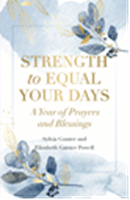
*As I do each 15th of the month, I’m devoting today to a devotional by Sylvia Gunter. Sylvia is woman after God’s own heart, so listen carefully to God’s heart as you read. Blessings, Ed 😊

Thus says God the LORD, Who created the heavens and stretched them out, Who spread forth the earth and that which comes from it, Who gives breath to the people on it, And spirit to those who walk on it: “I, the LORD, have called You in righteousness, And will hold Your hand; I will keep You and give You as a covenant to the people” Isaiah. 42:5-6 (NKJV)

Be blessed with the profound truth that the mighty Creator, who holds the cosmos in His hands, is intimately involved in your life. He knows you by name and has called you in righteousness. His call is not a distant command but a tender invitation to walk closely with Him. The Lord Himself has promised to hold your hand. He will never let you go. May this truth bring you deep peace and a sense of security, knowing that you are not alone. The One who created the stars and set them in place is the same One who walks with you each day, holding you in His protective embrace.

Be blessed as He keeps you in perfect care, surrounded by His unfailing love and faithfulness. The Lord has given you as a covenant to the people. Your life is a testimony to His promises, a living reflection of His grace and mercy. As you walk in the path He has set before you, be blessed to be a beacon of His light to others, carrying the hope and truth of His covenant wherever you go.

The Holy Spirit breathes life into your spirit and empowers you to live out the righteousness to which you are called. Let the Spirit guide your steps, filling you with wisdom, courage, and compassion. As you embrace this divine calling, may you grow in the knowledge and love of the Lord, becoming ever more like Him in character and action.

Rest in the assurance that God’s covenant with you is unbreakable. His promises are steadfast, and His love for you is eternal. May your life overflow with the grace and peace that come from knowing the One who created all things, has chosen you, called you, and will never leave you. Be blessed to walk in this truth, and may it fill your heart with joy, your spirit with strength, and your life with purpose.

© 2024 Sylvia Gunter. Taken from  Strength To Equal Your Days: A Year of Prayers and Blessings.

An archive of our devotionals is available at on our website.

Why We Drift from God

“’O Israel,’ Says the Lord, ‘if you wanted to return to Me, you could. You could throw away your detestable idols and stray away no more. Then when you swear by My name, saying, “As surely as the Lord lives,” you could do so with truth, justice, and righteousness. Then you would be a blessing to the nations of the world, and all people would come and praise My name.’’” (Jeremiah 4:1-2 NLT)

As James outlines in James 1, sin begins in our mind. We rarely, if ever, engage in an activity about which we’ve given no thought. Typically, our senses are alerted – we see or hear something that gets our attention, entices us to investigate further, then hooks our mind and heart and we’re dragged away by our lustful desires to sin in ways we never imagined we would.

Though God will never tempt us, He understands fully the process and stands ready to help, heal, and forgive, but He will not force us to repent and be forgiven, that choice is ours alone. We drift from God because we decide to allow it to happen. But then guilt and shame do their part, and we begin to doubt our ability to accept God’s forgiveness.

Photo by Orkhan Sweden on Pexels.com

It’s one thing to believe God is able and willing to forgive us, it’s a whole new level of faith to believe we can ever forgive ourselves. There have been ways I’ve violated God’s commands and hurt people I loved in ways I still wrestle to believe I’m forgiven, not by God, but by myself. The incessant question: “How could I EVER have done that?” echoes in my heart and mind and haunts me in inescapable ways.

Perhaps you can relate as you relive moments or seasons in your life that you disappointed yourself in unbelievable ways. You’ve sought the Lord for forgiveness, but your hesitancy to forgive yourself has created a distance, a space between you and the Lord. You’ve allowed yourself to drift from the Lord, not because He’s moved, but because you have.

Having wrestled with these relentless hauntings, I’ve discovered the only way to bridge that gap is worship. A. W. Tozer wrote: “Without worship we go about miserable.” There’s no greater misery than being separated from the Lord, but that’s what sin does, it separates. It divides our allegiance to the Lord and shares them with fantasies, dreams, and lustful considerations, that draw us away from the Lord and into a world of make believe where we think we can eat of the forbidden fruit and not pay a price.

Worship opens to us an avenue of opportunity to lay our burdens at the Lord’s feet, acknowledge our disobedience and sin, and find forgiveness, healing, and wholeness we can’t find anyplace else. But worship isn’t simply what we do at church on Sundays, it’s a moment-by-moment privilege we have as God’s children.

To me worship is like breathing because when I think of God, He’s like the air, He’s everywhere, ever-present. As a rule, I don’t think about taking a breath, it just happens. I’ve grown so accustomed to breathing I do it without conscious thought. In some ways, that’s how I view worship of the Lord. I want Him to be on my mind every second regardless of what else I may be doing. Why is that so important?

Because our mind can only focus on one thing at time, but it can be consciously aware of other things even as we focus on something else. I want that “something else” to be Jesus. I desire His presence to so captivate my mind that regardless of what else I’m doing, He’s right at the edge of my thoughts. It will be something, why not discipline ourselves to let it be Him. When we do it will prevent us from drifting from Him.

Food for thought.

Blessings, Ed 😊

The Unforgiven

“But God gave him no inheritance here, not even one square foot of land. God did promise, however, that eventually the whole land would belong to Abraham and his descendants – even though he had no children yet. God also told him that his descendants would live in a foreign land, where they would be oppressed as slaves for 400 years.” (Acts 7:5-6 NLT)

On many levels we’re products of our environment. Our primary sources of education and indoctrination into the system of this life into which we’ve entered is our family. Whether we grow up Princes or paupers our orientation will always be grounded in, not only what we learned, but what we experienced in those circumstances.

Think of the children of Israel who for 400 years knew nothing but slavery. Major W. Ian Thomas describes it this way: “Over four hundred years the children of Israel had been enslaved by the Egyptians, suffering bitterly beneath burdens inflicted by their taskmasters, helpless to save themselves, hopeless but for the fact that four hundred years before, God had promised Abraham that He would act to redeem them. This is the picture God gives us of the unforgiven sinner.”

Photo by Juan Pablo Serrano on Pexels.com

Right or wrong we tend to uphold the beliefs we learn in our growing up years. Imagine, if you can, for generations your family has known nothing but slavery. Being told what to do, when to do it, how to do it, and being severely punished if you didn’t do as you were told.

Think of Adam after the fall, after his sin and estrangement from God. He had been with God, walked with God, talked with God, but now he was empty of God’s presence, God’s power, God’s protection.

How do you explain freedom to a slave? How do you explain God to someone who has no concept of who He is or what it means to know Him? That’s who I was before I met Jesus, and believe it or not, that’s who you still are if you are without Him. It’s interesting to think about the enslaved Jews transition from slavery to freedom.

As powerful a man of God as Moses was, he was still, at his core, just a man. Yes, of course, on many levels he was an exceptional man of God, but still only a man. What’s my point? He wasn’t Jesus! The enslavement we experience as unredeemed mankind, while it may look a lot less like slavery than what the children of Israel experienced, is nonetheless, full blown, enslavement to the powers of darkness.

The term used in the verse above that is translated “slaves” is a word that means “to reduce to bondage,” which metaphorically can look like giving ourselves “wholly to one’s needs and service, make myself a bondsman to” whatever we’re in bondage to. What might that look like? A person can have position, power, prestige, great personal success, but without Jesus they’re still in bondage to the sin that enslaves them.

A person doesn’t have to be destitute in order to be enslaved, as the rich young man in Matthew 19 illustrates. Many in our spheres of influence today remain unforgiven because, like this young man, they love their “riches” more than they value forgiveness and eternal life. And here’s the irony, in many cases their “riches” aren’t literal wealth, but a heritage in which they’ve been raised that doesn’t recognize, value, or understand forgiveness in Christ Jesus.

Whatever keeps a person from knowing, loving, and finding forgiveness in Jesus is the reason they’re unforgiven. Whatever THAT is, is what keeps them in slavery!

Food for thought.

Blessings, Ed 😊