God’s Covenant With You

“Thus says God the LORD, Who created the heavens and stretched them out, Who spread forth the earth and that which comes from it, Who gives breath to the people on it, and spirit to those who walk on it: ‘I, the Lord, have called You in righteousness, And will hold Your hand; I will keep You and give You as a covenant to the people.’” (Isaiah 42:5-6)

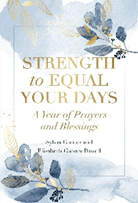
*As I do the 15th of each month, I’m inviting you to bask in the Lord’s presence as you read these timely and inspirational words of our friend, Sylvia Gunter. Blessings, Ed 😊

Be blessed with the profound truth that the mighty Creator, who holds the cosmos in His hands, is intimately involved in your life. He knows you by name and has called you in righteousness. His call is not a distant command but a tender invitation to walk closely with Him. The Lord Himself has promised to hold your hand. He will never let you go. May this truth bring you deep peace and a sense of security, knowing that you are not alone. The One who created the stars and set them in place is the same One who walks with you each day, holding you in His protective embrace.

Be blessed as He keeps you in perfect care, surrounded by His unfailing love and faithfulness. The Lord has given you as a covenant to the people. Your life is a testimony to His promises, a living reflection of His grace and mercy. As you walk in the path He has set before you, be blessed to be a beacon of His light to others, carrying the hope and truth of His covenant wherever you go.

The Holy Spirit breathes life into your spirit and empowers you to live out the righteousness to which you are called. Let the Spirit guide your steps, filling you with wisdom, courage, and compassion. As you embrace this divine calling, may you grow in the knowledge and love of the Lord, becoming ever more like Him in character and action.

Rest in the assurance that God’s covenant with you is unbreakable. His promises are steadfast, and His love for you is eternal. May your life overflow with the grace and peace that come from knowing the One who created all things, has chosen you, called you, and will never leave you. Be blessed to walk in this truth, and may it fill your heart with joy, your spirit with strength, and your life with purpose. 

© 2024 Sylvia Gunter. Taken from Strength To Equal Your Days: A Year of Prayers and Blessings. An archive of past devotionals is available at www.thefathersbusiness.com

The Assassination of Charlie Kirk

*As horrific as the death of young Charlie Kirk is; to ignore it and believe it has no bearing on us is even more tragic. Please read John Stonestreets words carefully and prayerfully. Blessings, Ed

Unsurprisingly, on September 11, 2001, I wept. I also wept, unexpectedly, on September 11, 2011. Perhaps it was delayed grief, but mostly, it was a delayed realization. Sitting that Sunday morning with my young daughters, only 6, 4, and 2 at the time, it struck me how different their world was from the one I wanted for them.

The same sense struck this week, on September 10. The assassination of Charlie Kirk seems to mark a new era, a world no one wants but may very well be here. Calling the murder a “tragedy for all of us,” U.K. comedian and commentator Konstantin Kisin wrote:

I hope I’m wrong. But tonight feels like some sort of invisible line has been crossed that we didn’t even know was there. … [T]o murder a young father simply for doing debates and mobilising young people to vote for a party that represents half of America? This is something else.

Charlie’s death is a tragedy for his wife, his children and his family. I don’t pray often. I am praying for them tonight. But I fear his murder will be a tragedy for all of us in ways we will only understand as time unfolds.

I hope I’m wrong. I fear I’m not.

Kisin is not wrong about lines being crossed, though the Christian must not fear. We must, however, squarely face the sober realities of this moment.

Kirk’s murder followed another this week, in Charlotte, of a young woman from Ukraine riding a public train. Iryna Zarutska was stabbed by a man who should have been in prison or at least institutionalized, and she was then left to die by people too engrossed in their screens to notice or too jaded to care. Together, these atrocities reveal realities about our culture and how it has shaped those within it that many will find unthinkable. But we had better think about it anyway.

Zarutska’s killer is a terrible example of the mental and social brokenness that permeates modern life. The bystanders who did not come to her defense or to her aid are, like the social media commenters and media personalities who callously commented on Kirk’s assassination, examples of the rabid and pervasive dehumanization that infects the Western world.

In a recent Breakpoint commentary, released prior to the atrocities of this week, Abdu Murray argued that this “post-truth world that elevates feelings and preferences above facts and truth has collapsed the distinction between a person’s ideas and their identity. And so, the social erasure of cancel culture has calcified into something darker.” That something darker, he argued, is “assassination culture.” He continued, “Unmoored from that objective standard for human value, we have made gods of ourselves and therefore justify eradicating any who dare to have other gods before us.”

This is precisely what Os Guinness warned of in the new film Truth Rising, that the West is squandering a unique heritage. A civilization built upon the ideal of human dignity, with a mixed and troubled history of working out that ideal, has now replaced it with something else. But racialized, sexualized, and politicized conceptions of human dignity only produce victims.

George Orwell is often credited as saying, “In a time of deceit, telling the truth is a revolutionary act.” Charlie Kirk was a committed truth teller, with a remarkable gift for exposing and answering deceit. And yet, as he did this, he treated the deceived with the dignity they had as image bearers of their Creator, recognizing that they too were victims of their own bad ideas.

There is a cost to telling the truth. Our Lord has told us to count this cost. If Kisin is indeed correct, that cost is higher than we have imagined. This is indeed a civilizational moment. It is to this moment that we have been called as His people. As His people, we know that this moment is not some fatalistic inevitability, nor does it determine or define the Story of which we are part.

In a video circulating on social media, Charlie is asked why he went on campuses to talk with and try to persuade those who disagree with him. Charlie responded, “Because when people stop talking, that’s when violence happens.” It was a prophetic moment, but Kirk also demonstrated that we need not accept that. He showed that the conversation can be had; that it must be had. He showed that the truth still wins hearts and minds, and that lies can be opposed. And that it can all be done with a big smile.

It takes courage to tell the truth and to, as Paul wrote, “regard no one from a worldly point of view.” As Murray wrote, only the “ancient biblical truth about what it means to be human can heal our contemporary malady.”

It can be healed. This is not wishful thinking. This is the hope Christ secured for us all. As the banner on the Turning Point USA website proclaims, Charlie Kirk has been “received into the merciful arms of our loving Savior, who suffered and died for Charlie.”

Forsaking Habitual Sin

“When the accusers heard this, they slipped away one by one, beginning with the oldest, until only Jesus was left in the middle of the crowd with the woman. Then Jesus stood up again and said to the woman, ‘Where are your accusers? Didn’t even one of them condemn you?’ ‘No, Lord,’ she said. And Jesus said, ‘Neither do I. Go and sin no more.’” (John 8:9-11 NLT)

When Jesus spoke these words to a woman who sold her body for money to make a living, what do you think He meant when He told her to “sin no more”? Is He suggesting she perhaps cut back to 3 or 4 days a week? Is prostituting herself less going to be the answer? Of course not! So why do we think we can “prostitute” ourselves in service to Satan by doing what pleases us and still believe God thinks it’s okay?

He doesn’t now nor will He ever! Habitual sin MUST be dealt with in a decisive and determined way. Do you believe for a minute the woman mentioned above ever questioned herself or wondered how she’d survive? Call me crazy, but I don’t think she ever looked back. My sense is she stayed so close to Jesus nothing else could draw her away.

Photo by Tima Miroshnichenko on Pexels.com

That’s what it takes for each of us, intimacy with Jesus is the answer to every wrong desire and the key to breaking every ungodly habit. The only question we need to answer is this: “What do I want more, my sinful, ungodly lifestyle or Jesus?”

Just like the woman caught in “the very act of adultery,” you and I have a choice to make: life or death? Her literal life lay in the balance when Jesus stepped in to save her. So is ours if we’re caught up in some form of habitual sin.

Let’s say we’re addicted to pornography, homosexuality, any form of immorality, drugs, alcohol, cigarettes, gossip, or overeating? Some people can walk away and never struggle with those things again. Their faith in Christ is strong enough to believe He will deliver them, and He does. But many cannot, or, at least, think they cannot. Then what? We get help. “Yeh, but shouldn’t Jesus be all the help I need?”

A mother was trying to comfort her frightened child, so, she told him: “When you’re scared just know the Lord is always with you.” To which he responded: “Yeh, I know, but sometimes I need Jesus with skin on!” Sometimes we do too. And when we’re dealing with habits that are addictive and destructive we need someone who has walked the journey before us, but who, by God’s grace has overcome it and is continuing to live in freedom from it to walk with us. But there are some conditions.

The woman could have said to Jesus: “Lord, I appreciate what you did, but you don’t own me. I don’t want Your help; I’ll take it from here” and she could have gone back to her old ways. Sadly, He would have allowed her to do that, the same as He’ll allow you or me, but that courageous woman put her life into His capable hands and trusted Him to walk with her on her journey, and because of that we’ll meet her in heaven.

We have to make the same decision – to commit everything we are to everything He is, then trust Him to lead us. My sense is, He’ll do for you what He did for her, put you in touch with godly people who will walk with you step by painful step. For some it may mean hospitalization in a facility that can have the means available to help you through your withdrawals or whatever other side effects may need to be dealt with. But whatever it is, if you’re serious about your walk with the Lord, go to your Pastor or a godly friend, confess your need and seek help together.

Commit to do whatever it takes to leave your life of sin behind. You’ll be eternally grateful that you did, knowing the Lord will lead you and be with you every step of the way.

Blessings, Ed 😊

Learning From Mistakes?

“But some of the teachers of religious law who were sitting there thought to themselves, ‘What is He saying? This is blasphemy! Only God can forgive sins!’” (Mark 2:6-7 NLT)

Why is it so hard for us to learn from our mistakes? Some mistakes are okay to learn the hard way, but missing who Jesus is can be eternally fatal.

If you didn’t fly over the words in the verse above, you noticed that the quoted words weren’t spoken, they were only thought. Yet, Jesus picked them up immediately and responded to them in the next verse. What does this tell us? Certainly, that Jesus knows our thoughts, but beyond that, He cares enough to listen.

Photo by KoolShooters on Pexels.com

Jesus asked the Pharisees, supposed lovers of God, “’Why do you question this in your hearts?’ Is it easier to say to the paralyzed man, “Your sins are forgiven,” or “Stand up, pick up your mat, and walk”? So, I will prove to you that the Son of Man has the authority on earth to forgive sins.’ Then Jesus turned to the paralyzed man and said, ‘Stand up, pick up your mat, and go home!’” (vss. 8-11)

You’d think the fact the Pharisees could do neither – they couldn’t heal OR forgive the paralyzed man, would get their attention, yet, in all their inadequacies they still couldn’t admit Jesus was really God and could do anything. As much as that staggers my mind, what troubles me even more is to know intelligent human beings today are just as thick headed, stubborn, and spiritually defiant as those Pharisees, and we still call ourselves Christian!

We seem never to learn from our mistakes. We knowingly and willingly sin. We commit sin with full knowledge that it is wrong – over and over again, wrongly assuming it has no bearing on our “walk” with God. Forgive me, but are we blind or do we really not know better? Sin separates us from God, yet we continue to sin as a habit without thought of consequence.

Are we more concerned with what pleases us or what pleases God? Because sin does not please God. How can we have intimacy with God when we can’t say no to the devil? It’s like wanting intimacy with our spouse while we have a secret partner on the side. Who are we trying to kid? Certainly not God! He knows our thoughts!

Do you know what it’s called when we commit the same sin over and over? A habit! Habitual sin kills our relationship with God. “But God paid the penalty for all my sins, past, present and future.” Yes, He did, and His blood is sufficient to enable us to find forgiveness for all of them. But when we continue in deliberate sin in defiance of God’s commands what should that tell us? Our sin means more to us than Jesus.

Why is that so important to recognize? Because we can’t live for ourself and God at the same time. We have to make a choice and if God is our choice we need to leave our sin behind. Does that mean we’ll never sin again? No, it means by God’s grace and through the power of His Spirit we can learn to walk in newness of life and overcome our habitual sins.

But how? Let’s look at the answer to that question in tomorrow’s post.

Blessings, Ed 😊

What Did You Say?

“A good person produces good things from the treasury of a good heart, and an evil person produces evil things from the treasury of an evil heart. And I tell you this, you must give an account on judgment day for every idle word you speak. The words you say will either acquit you or condemn you.” (Matthew 12:35-37 NLT)

Words are powerful tools that can be deadly when used in the wrong way. To express anger and hateful words can build walls of division that human efforts cannot dismantle. The harm we’ve done in our families with thoughtless words is immeasurable.

Why are words so impactful? Perhaps William Arthur Ward gives us a clue when he writes: “Our words reveal our thoughts.” Remember, what you think about comes about, and there’s no more obvious evidence of that than how we speak. Another way to think about that is: what we talk about comes about. What do you talk about most?

Photo by Jopwell on Pexels.com

With rare exception one of our favorite topics seems to be “ME!” Many of us love it when someone asks us: “Okay, tell me about yourself!” But even as I write those words, I feel a cringe in my spirit. I don’t like to talk about myself and, if I’m honest, I don’t very often like to hear others talk about themselves. So, why mention it?

Could it be words about ourselves is a deflection of what we’re really thinking or really wanting to talk about? In the context of our Christian Faith, perhaps it’s much easier to ramble on about ourselves, even “our” faith, than discipline ourselves to learn how to turn the conversation into a series of nonthreatening questions that can steer the person with whom we’re speaking to faith in Christ.

Often, we can pick up cues from what someone says in the course of small talk. Being relatively new to my city, when I meet someone for the first time it’s not unusual for me to ask: “How long have you lived here?” If you live in a small town where everyone knows each other, when you meet a stranger, you can simply ask them: “Where are you from?” Or “Where did you grow up?” Or “What brings you to __________?””

When I worked for AFLAC, my boss had a conviction that guided him in who he would hire. He said they must pass the “D.I.L.” test – “Do I Like!” He said he didn’t care how qualified they were, if he didn’t like them, he wouldn’t hire them. That may seem pretty superficial, but if you’ve ever had to train someone you didn’t like, you quickly see the wisdom in it.

But to the point, if someone’s first impression of us is negative. If they think we’re being pushy, we’re too negative, demeaning, or in any way turn them off, we’ll never make any headway with them in terms of helping them see Jesus more clearly. Sadly, if they don’t like us, they probably won’t like our Savior. That’s why we have to keep our cool, even if they criticize, belittle, or make fun of us for our faith. We must commit them into the care of the Lord and not try to defend ourselves or Him.

Words can be agents of goodwill, of healing, when spoken with sincerity and in an appropriate setting. Telling someone you love them too much to let them go to hell can push them away or pull them in, depending on how the words are said and in what context. My sense is we can say anything to anyone if we say it in the right way.

If our heart is to obey the Lord and be submissive to His authority, He will give us the right words to speak in the right way to get the right result

Food for thought.

Blessings, Ed 😊

Strength

“Jesus replied, ‘The most important commandment is this: “Listen, O Israel! The Lord our God is the one and only Lord. And you must love the Lord your God with all your heart, all your soul, all your mind, and all your strength.”’” (Mark 12:29-30 NLT)

Strength is a gift we often overlook until we have none. In my present journey, one of the most significant side effects of the medications I’m taking is almost constant weakness. We can quickly take for granted the strength we have to walk without assistance, until we can’t. But the greater tragedy is ignoring the strength God provides us to walk with Him.

What does it mean to “love the Lord your God with all your strength.” My sense is it’s referring largely to our human capabilities; the opportunities the strength of our body gives us from day to day. If we can walk, work, run errands, shop, attend church, have recreation, go on vacations, and many other things our strength allows us, each of those privileges affords us the gift of interaction with others, many of whom may not know the Lord.

Photo by Christina Morillo on Pexels.com

It takes not only physical strength, but strength of character to commit to a lifestyle of sharing Jesus with everyone in our spheres of influence. Recently I read a quote from George Whitefield that got my attention. He said: “God forbid that I should travel with anybody a quarter of an hour without speaking of Christ to them.”

How often do we interact with someone for hours and the thought never crosses our mind to speak with them about Jesus? The strength we need as children of God should far transcend our physical capabilities into a realm of strength we’ll never fully understand unless and until Jesus is our everything. The Holy Spirit will give us insights, wisdom, strength of heart and mind to do whatever the Lord lays on our heart to do.

Yes, of course it can be frightening, but the thought of me stumbling with my words and embarrassing myself is not nearly as frightening to me as the thought of the person with whom I’m speaking spending an eternity separated from a loving God for all eternity. That, my friend, is terrifying! Craig Groeschel brought up an interesting point when he said: “The way we respond to life’s challenges today will determine the strength of our faith tomorrow.” 

Spiritual strength is much like physical strength in the sense that if we don’t use it we lose it. Toby McKeehan speaks to that when he writes: “Don’t worry that you’re not strong enough before you begin. It is in the journey that God makes you strong.” Some of the greatest lessons I’ve learned and thus, the greatest measure of strength I’ve been given, is when I’ve fallen on my face in an effort to present the Lord in a meaningful way.

Sometimes the words won’t come, the Scriptures I want to use escape me, I feel flustered and inadequate, but the Lord assures me, in His most loving way, “You are inadequate, and you always will be, but I will use your inadequacies to speak in ways that you never could. Just do your best and trust Me to do the rest.” I can live with that, so, I just keep trying to point people to Him.

Is that how you’re using your strength? To point people to Him? I sure hope so.

Blessings, Ed 😊

Food for thought.

The Currency of Heaven

“One day some parents brought their children to Jesus so He could lay His hands on them and pray for them. But the disciples scolded the parents for bothering Him. But Jesus said, ‘Let the children come to Me. Don’t stop them! For the Kingdom of Heaven belongs to those who are like these children.’ And He placed His hands on their heads and blessed them before He left.” (Matthew 19:13-15 NLT)

What is it about small children that is so endearing? They’re fun-loving, easy to entertain, to make them laugh. They’re quick to trust and believe anything you tell them. Yes, of course, some of those things can be dangerous, especially if our intention is to hurt or deceive them, but that’s the point, Jesus had no such intention. His purpose was and is only to bless and encourage, never to hurt.

Pastor Corky Calhoun wrote: “Accountability, responsibility, and loyalty are still the currency of Christian maturity.” My sense is, those things are also the currency of heaven. Think about those characteristics in the context of children. As a rule, most small children are willing to be accountable to their parents. They want their parents’ affection and approval; they strive to please in a healthy context. As they grow, they desire to help, to be a contributing member of the family. They watch mom or dad cook or clean or iron or do laundry or run errands and they want to participate in those activities.

Photo by Dmitry Rodionov on Pexels.com

They wait longingly, sometimes impatiently, for mom or dad to come home after work and they want to interact, play, and share affection with them. They want to share responsibilities, but they also want to share in loving interactions.

They’re also very loyal. Boys want to be like their dad and girls aspire to be like their moms. To a child parents are the epitome of what they want to become. And here’s the irony, most of the time that’s exactly what happens, like it or not, they become the proverbial “chip off the old block.”

But here’s the relevancy to us, why those qualities are the currency of heaven. Unless and until we’re willing to be accountable – to the Lord, certainly, but to other believers we trust and like whom we aspire to become, we’ll never grow in our likeness of Jesus. Accountability is one of the strongest defenses we can build in our battle with Satan.

He will tempt us to believe we’re smarter, wiser, stronger, more spiritually mature than we are and, if we believe his lies, he’ll tear us down quicker in a moment’s weakness than it took us years to grow and develop in our walk with God. Accountability is critical.

But so is responsibility. We must take responsibility for our own spiritual growth and development. Does this negate accountability? No, not in any way. Responsibility to grow and mature as a believer demands accountability, but it also demands we take responsibility for our part in the carrying out of God’s mission on earth in and through the ministry of a local body of believers. Responsible people pick up the slack and do what needs to be done, when it needs to be done, in a manner that renders glory and honor to the Lord Jesus.

That’s why loyalty is so essential. If we’re not loyal – to the Lord and to a local body of believers, we’ll bail out when it gets too hard. If we have no loyalty to anything or anyone, we’ll make our own decisions and live like we deem best, which many times is far inferior to the high calling of our Savior.

While I know we need the currency of the area of the world in which we live, the primary currency I want to “collect” is the kind that will spend in heaven. How about you?

Food for thought.

Blessings, Ed 😊

What Is Self?

“I can of Myself do nothing. As I hear, I judge; and My judgment is righteous, because I do not seek My own will but the will of the Father who sent Me. If I bear witness of Myself, My witness is not true.” (John 5:30-31 NKJV)

What is “self?” Can “self” be the essence of who we are as a person; the identifying characteristics that mark us as an individual? Jesus said: “I can of Myself do nothing.” We know that Jesus had limitless abilities: He could turn water into wine, cause trees to instantly wither, walk on water, heal the sick, raise the dead, and Himself rise from the dead. Yet, He said of Himself He had no power to do anything.

What does that say about us? Obviously, the Lord Jesus was speaking of His intimate Oneness with His heavenly Father, the same Heavenly Father to whom He introduced us and gives us the privilege of knowing, loving, and serving. Could that relationship hold the key to a proper understanding of “self?” The “self” is powerless, limited, frail, feeble, unimpressive, yet the “self” empowered by the Spirit of the living God has unlimited resources to live as we cannot apart from Him.

Photo by Julian Jagtenberg on Pexels.com

Perhaps Eugene H. Peterson says it best when he writes: “Self is the soul minus God.” So, the logical question then becomes: what is the soul? Strong’s Concordance defines soul as: “The breath of life: the vital force which animates the body and shows itself in breathing. Life: a living being, a living soul. The seat of the feelings, desires, affections, aversions (our heart, soul etc.); the (human) soul in so far as it is constituted that by the right use of the aids offered it by God it can attain its highest end and secure eternal blessedness, the soul regarded as a moral being designed for everlasting life; the soul as an essence which differs from the body and is not dissolved by death (distinguished from other parts of the body).”

Essentially the soul and the body are two distinct and separate entities within a human being. We think, feel and function as a human being because of how God has designed and engineered the body. What does that mean? It means we can live our whole lives devoid of any understanding that we even have a soul. “Self is the soul minus God.” Much of the world today is clueless that God exists, but even if He did, what does that have to do with ME, with my SELF?

Why does any of this even matter? Because the mind, the ability to reason, to think, are human functions, which of course, can be aided by the presence of the Holy Spirit, but can also function without Him. Many over the centuries have concluded that God isn’t necessary and some have written volumes to support their view, but all they’re doing in essence is proving their narrowness and ignorance of the presence of a Creator who gives us choice.

One, who by grace – free, unmerited favor, gives us an opportunity to put our “self” on steroids; to maximize our abilities and capabilities as a human being. Jesus is the perfect example. Who without the empowerment of God has ever returned from the dead? Who without the Spirit’s enabling can live above sin, have power to say “no” to wrong and “yes” to what’s right, wholesome, and pleasing to our Father.

We’ll wrestle with “self” to the grave, but thankfully, we can have victory over sin, death, and the grave through the life-giving presence of the Holy Spirit. Something that cannot be accomplished in the energy of the flesh.

Food for thought.

Blessings, Ed 😊

The Meaning of Ministry

“And now I am bound by the Spirit to go to Jerusalem. I don’t know what awaits me, except that the Holy Spirit tells me in city after city that jail and suffering lie ahead. But my life is worth nothing to me unless I use it for finishing the work assigned me by the Lord Jesus – the work of telling others the Good News about the wonderful grace of God.” (Acts 20:22-24 NLT)

What does the term “ministry” mean to you? How would you define it? To what emotion(s) does it give rise in your spirit? Too often believers immediately think of those who do church ministry as a profession – preachers, Pastors, ministers, but to do that is to miss the point of much of the New Testament.

Yes, of course, there is a place for those called to paid, professional ministry; however, that is a very small percentage of the Body of Christ. The fact is EVERY believer is called to ministry, that’s why the gifts of the Spirit are for ALL believers. Paul reminds us in 1 Corinthians 12:7: “A spiritual gift is given to each of us so we can help each other.” Helping others is essentially what ministry is.

The word most commonly used in the New Testament for “ministry” is a word that means “service.” Ministers are “servers,” those who serve others. That’s the reality in our relationship with the Lord Jesus. Yes, of course, we serve Him, but we serve Him as His slave, not because He forces us, but because through His blood shed on our behalf, He has purchased us.

Paul clarifies this in Ephesians 1:14 when he writes: “The Spirit is God’s guarantee that He will give us the inheritance He promised and that He has purchased us to be His own people. He did this so we would praise and glorify Him.” If you are filled with God’s Spirit, you have been purchased by the Savior’s blood and you owe your life and allegiance to Him.

We may think we’re serving out of the goodness of our own heart, but to believe that is to misunderstand the meaning of ministry. Ministry flows out of a heart owned by the Lord Jesus, who not only calls us to ministry, He fuels our service through the presence and power of His Spirit. Why do you think the Lord gave us His Spirit?

Corky Calhoun helps us see this more clearly when he writes: “Our Ministry is always measured by the presence of Christ, and our proximity to those who desperately need him.” The presence of Christ IS the Holy Spirit’s presence in and with us. If the Holy Spirit isn’t leading, guiding, equipping, and encouraging us to praise and honor Jesus for all He accomplishes through us, we’re wasting our time and effort.

If all we desire is self-praise, a good feeling, or a pat on our back, we should get a job at the car wash and do a great job that will give us great feelings about ourselves. With our reflection in every car, we can breathe a sigh of relief that we’re really making a difference in our world.

Obviously, I hope you know I’m being facetious, but the truth is, we too often are more self-motivated in our ministries than Spirit-motivated. The meaning of ministry is derived from devotion to Jesus, a desire to exalt, honor, bless and please Him. He is the reason for our service, so all praise and honor go only to Him. Yes, of course, we want to help people, but our help should be designed to point them to Jesus, not just to us.

Food for thought.

Blessings, Ed 😊

The Romans 7 “Christian” (Part 2)

“Don’t be fooled by those who try to excuse these sins, for the anger of God will fall on all who disobey Him. Don’t participate in the things these people do. For once you were full of darkness, but now you have light from the Lord. So live as people of light! For this light within you produces only what is good and right and true. (Ephesians 5:6-9 NLT)

Our goal as a believer is to live above sin, to be as much like Jesus as we can be WITH THE SPIRIT’S EMPOWERMENT! We can never be good enough to earn our salvation. We can never overcome sin, death, and the grave except by the Spirit’s enabling. It’s only and always by the Spirit of God, by the empowerment of God’s Spirit, not ours.

That being said, to believe we can sin without thought of consequence and still go to heaven is a lie from Satan. It is absolutely not what the Bible teaches. Paul clearly instructs in the verses above: “for the anger of God will fall on all who disobey Him.” God does not take our habitual sin lightly.

Photo by Pixabay on Pexels.com

We must change our mindset to understand that every sin is willful and must be forgiven. Yes, of course, the forgiveness of every sin we will ever commit has been appropriated on the Cross, but there is no forgiveness for a sin that isn’t acknowledged and for which forgiveness has not been asked. John reminds us in 1 John 1:9: “But if we confess our sins to Him, He is faithful and just to forgive us our sins and to cleanse us of all wickedness.”

In Romans 7 Paul was describing His inability to walk without sin without the empowerment of the Spirit, He was not making an excuse for a believer to live like the devil. Sin may be habitual because we haven’t learned how to allow the Spirit to free us from it, but the Cross breaks the back of every sin when we confess and choose to forsake it. But how?

Sin is a choice, a decision we make. Sin is not a reflex or involuntary act. It may seem that way when we allow sin to rule and control us, but that’s Satan, not God. The Spirit of God within every believer is our resource of strength to break the power of sin and Satan and to walk in the light of our new life in Christ. But here’s the truth: the Holy Spirit is a gentleman and will not force us against our will to obey Him. He is available and will help us when we ask for His help, but we must ask.

What might that look like? It looks like asking, as the Psalmist asked in Psalm 139:23-24: “Search me, O God, and know my heart; test me and know my anxious thoughts. Point out anything in me that offends you, and lead me along the path of everlasting life.” If you’ll ask in faith He will answer, but you must be willing to submit to the Lord’s authority in your life, obey His directives, and seek with all that is within you to walk in confidence the Holy Spirit WILL enable you to change.

We CANNOT AND WILL NOT accomplish long term results in the energy of the flesh. We cannot live a sin free life without the Holy Spirit’s empowerment. But understand, this is not a one-and-done proposition. It’s a life-long battle that each of us will fight as long as we have air in our lungs. Yes, it gets easier, but we can never let our guard down.

We can’t relax in our self-sufficiency. There is no such thing in the Christian Faith, only God-sufficiency and God-dependency. It’s all about trust and confidence in HIM, not in ourselves. The fact is, the “Christian” Paul was describing in Romans 7 isn’t a Christian at all, I believe that was his point. There is no such thing as a carnal Christian, they are contradictory terms. To be carnal minded is to NOT be a Christian and to be a Christian is to NOT be carnal minded.

Food for thought

Blessings, Ed 😊