Speak Good

“In the same way, let your good deeds shine out for all to see, so that everyone will praise your heavenly Father.” (Matthew 5:16 NLT)

Every good thing we think, do, or say begins in our heart, motivated by the Spirit of God who indwells us as God’s child. Good does not originate in us, as we’re dominated and directed by our sin-nature from which the only deliverance and cure is forgiveness through Christ our Lord.

To believe we are capable of good without the Spirit’s prompting is to misunderstand the source of all goodness. God is good; thus, everything that is good is derived from Him. That’s why even people who don’t know Him, because they were created by Him, can have some measure of goodness in them. My parents were very good to me even before they came to know the Savior.

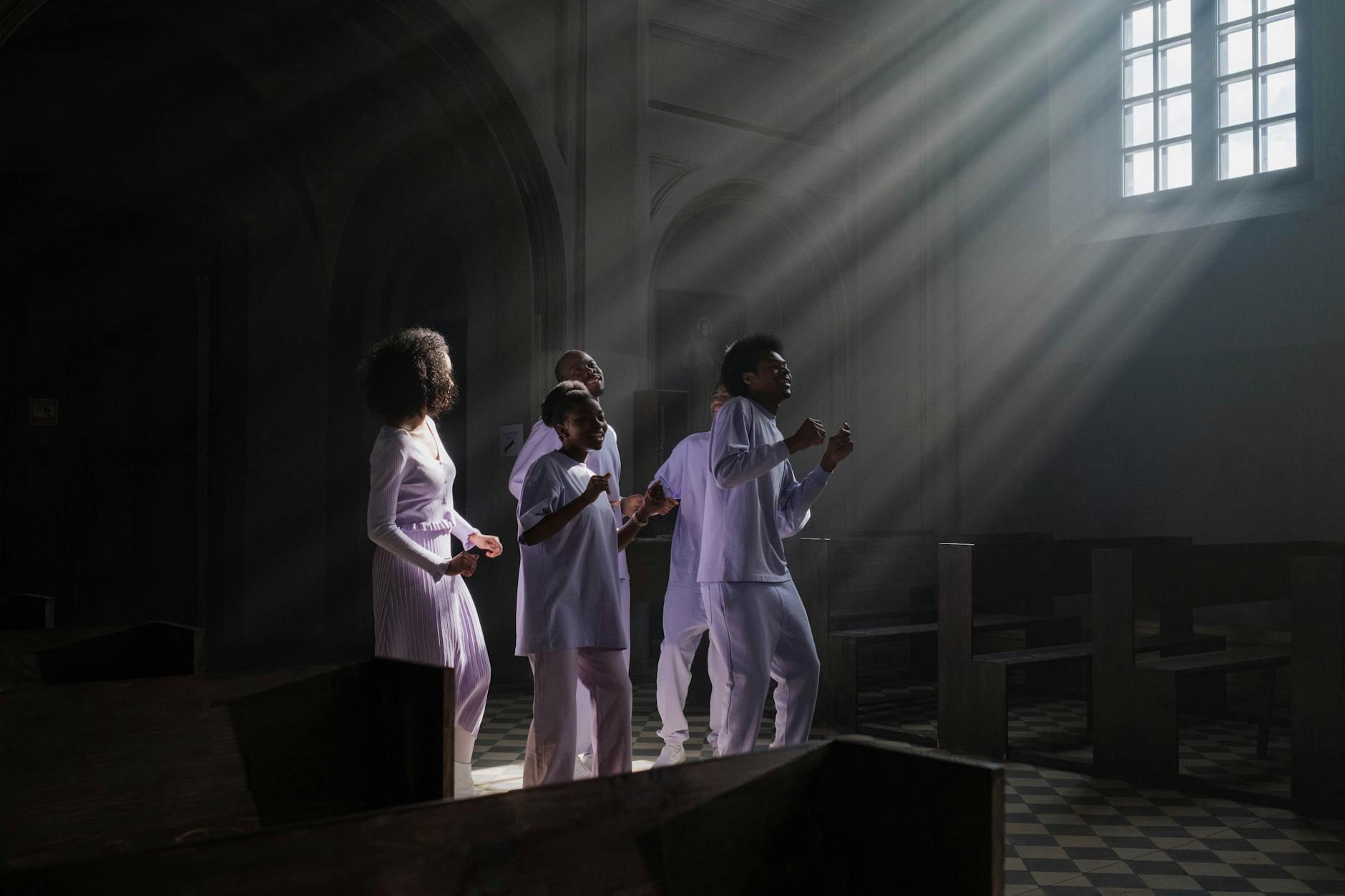
Photo by Caleb Oquendo on Pexels.com

However, as God’s child, the good things I do must be credited to the activity of the Spirit; otherwise, I may wrongly believe they originate with me, and I take credit that only God deserves. Am I splitting hairs? Maybe, but I’d much rather err on the side of giving God too much glory, honor, and praise, than not enough.

The title of this article may throw some of you a “curve ball,” as you may be thinking: “Shouldn’t that be ‘Speak Well?’” And, technically, you’d be correct; however, after reading the following quote by Craig Groeschel: “Each time you think something good, speak it. Never rob someone of the blessings of an unspoken treasure,” it launched my mind into considerations of how we might do that, how we might “speak good.”

What do you think? What do you think about that is good? The first thing that comes to mind in this moment is my wife 😊, but closely behind is the Lord who gave her to me. Speaking good involves sharing with others the good that the Lord has shared with me. That’s the basis of these articles.

As long as the Lord gives me breath and the ability to write, I will share insights, understanding, and revelations of anything good that I can find, whether from my heart or someone else’s. I already regularly use Sylvia Gunter’s beautiful and impactful devotionals on the 15th of each month. Periodically I have used articles from Ron Hutchcraft, Ray Majoran, John Stonestreet and others from the Colson Center, as well as Rick Warren and writers from Family Life.

It behooves us to pass on the good things we read or hear to others in our spheres of influence. For many reasons, the Lord has prompted me, beginning July 1st, to use the articles of various ones whom I respect and from whom I’ve learned over the years. So, for now, I will dedicate the 1st and 15th of each month to those whose words have blessed me, in hopes they will bless you as well. Additionally, as I have been doing, I may sporadically use others when prompted by the Lord.

I invite your feedback as to how you feel about this idea and whether you believe it will be helpful to you. You can respond by giving feedback to this article or writing me directly at walkingwithjesus09@gmail.com.

My heart is to be God’s instrument of blessing to you and to those in your spheres of influence. Words cannot adequately express how much I appreciate those of you who read these words. With all my heart my prayer is that they come to you from the heart of God. Be blessed, dear friends. I love and appreciate you and often thank the Lord for you and your faithfulness.

Blessings, Ed 😊

Just Reading?

“All Scripture is inspired by God and is useful to teach us what is true and to make us realize what is wrong in our lives. It corrects us when we are wrong and teaches us to do what is right. God uses it to prepare and equip His people to do every good work.” (2 Timothy 3:16-17 NLT)

If you’re just reading the Bible like you’d read an email or a novel, you’re missing the point of reading the Bible. Please don’t read out of obligation, but out of recognition of the great privilege and honor it is to have God’s Words in front of you. These are not the words of men about God, they are God’s words about Himself and about me and you. He has given them as a gift to be cherished, not an obligation to be dreaded.

If you don’t want to read the Bible, by all means, don’t read it. Let it set as you would a sizzling steak on the table or tickets to your favorite sports team on the nightstand. It’s your loss. The Lord won’t punish you for not reading, studying, and treasuring your Bible, you’re punishing yourself by being so near-sighted and spiritually blind.

Photo by Tara Winstead on Pexels.com

To hurriedly read a few verses to check a “box” is to rob yourself of spiritual nourishment your soul desperately desires and needs. The Bible is like a letter or an email from a loving family member or friend. We read it and reread it, not simply to understand the message of the words, but to “hear” the heart of their author.

We want to experience their presence, feel their warmth, and sense their love. We want to hear their laughter or share in their sorrow; experience with them the joy of their triumph or the sadness of their pain. The Bible is God’s invitation to enter into His presence, feel the strength of His loving arms around us, hear the whisper of His heart as He shares His words of encouragement, love, instruction, correction, and guidance with us.

These are words of life, literally, words apart from which we can’t function in our life as a believer. Failing to read, study, and ingest the nourishing words of Scripture is to deprive ourselves of water when crossing the desert. It’s to intentionally will ourselves to a slow, agonizing, spiritual death. We literally cannot grow and develop as a child of God without the spiritual nutrition afforded us by God’s Holy Word.

And this is much more than listening to someone else read, preach, or explain God’s Words. We can sit at the window of a restaurant and watch people eat all day and night, but it won’t give us an ounce of strength for our journey. Pastor Corky Calhoun said: “I am convinced reading Scripture without living it is a waste of time. It’s just information without application.” 

Scripture is the road map upon which we plan our life’s journey. Without the guidance of the Bible we won’t have a plan, a strategy, a pathway upon which to travel on our faith journey. How do we learn to love God and receive love from Him? How do we grow as a believer in the Lord Jesus? How do we cope with the pressures of life when they close in on us like the arms of a huge machine?

I hear the whispers of my Savior as He shares His love for me. I hear His sound counsel as He instructs, guides, corrects, encourages, inspires, and challenges me. I see examples of who I need to be like and the kinds of people I need to avoid; how I should pray, worship, live, obey, submit, thrive, celebrate, and a thousand other things the Lord wants to show me through His Holy Words.

Please don’t just read the Bible. Let it feed and nourish your soul so you can be all God has called you to be to His honor and fame. As a child of God you’re not living just for yourself.

Food for thought.

Blessings, Ed 😊

Compassionate Father…Fierce Warrior

“Love your enemies! Do good to them. Lend to them without expecting to be repaid. Then your reward from heaven will be very great, and you will truly be acting as children of the Most High, for He is kind to those who are unthankful and wicked. You must be compassionate, just as your Father is compassionate.” (Luke 6:35-36 NLT)

Compassionate, as used in the above verse, means to be merciful. What first comes to mind when you think of mercy? To me, mercy means to give what isn’t deserved. Someone is unkind, unfair, demanding, mean, but instead of retribution, anger, or unkindness, you remain calm, caring, considerate. Someone cuts you off in traffic, but rather than honk and express your displeasure, you lift a prayer of concern for the inconsiderate driver to your heavenly Father who always gives you the benefit of the doubt.

Where does God’s compassionate mercy originate? Why is He so kind, considerate, caring, merciful? Because He’s love! All things loving originate and have their home in our heavenly Father, whose life and being was given full embodiment and illustration in and through the life of His only Son, the Lord Jesus. Why is that important for us to know?

Photo by KATRIN BOLOVTSOVA on Pexels.com

Because He’s our role model, our example whom we’re supposed to emulate. Why does that matter? Because if we don’t seek to follow our Savior’s example in the simple, daily activities of our lives, what we do or say at church doesn’t matter. Jesus didn’t just obey His Father in the big, important matters, He obeyed in the smaller, everyday issues even though they led to His death.

When His heart was breaking and His nerves were shot, His emotions were raw and bleeding, as well as when He walked out of His grave. Every second of every day Jesus was real, alive, attentive, and submissive to His Father’s authority, desires, and directives. That’s what I want in my life. Don’t you? Isn’t that our goal as a Jesus follower? To model our life after His?

But that’s not a religious exercise we “perform,” it’s a heart exercise we adapt as our own. Loving kindness, mercy, grace, compassion doesn’t grow out of our disciplines alone, but out of our heart that longs to be like our Master. We must at some point allow His nature in us to override and outperform our sinful, fleshly nature. We must long for and work towards total submission and obedience to the Lord’s directives and commands in and over our life. To what end?

Our compassionate Father is also a fierce warrior. How so? If you’re a parent think of someone messing with your child at any age. It doesn’t matter. When someone seeks to hurt our children in any way, what happens? We go into “fierce” mode! There’s literally nothing we wouldn’t do to protect our children. That’s how our heavenly Father feels about us. That’s why Satan’s not going to have a good day on judgment day.

Jeremy Treat echoes this sentiment when he writes: “The Lord is just and joyful. He is a fierce warrior because He is a compassionate Father.“ Love, mercy, grace, kindness and every other fruit of our life in Christ, grows out of power, not weakness. It takes a strong person to be merciful when someone hurts us and deserves to be hurt in return. Our strongest witness for the Lord won’t come when we respond like everyone else, but like only Jesus would.

That kind of behavior doesn’t grow out of self-discipline alone, but out of God-dependence and reliance upon the Holy Spirit’s power living in and working through us.

Food for thought.

Blessings, Ed 😊

The Tuning Fork for Your Soul

“Let the message about Christ, in all its richness, fill your lives. Teach and counsel each other with all the wisdom He gives. Sing psalms and hymns and spiritual songs to God with thankful hearts. And whatever you do or say, do it as a representative of the Lord Jesus, giving thanks through Him to God the Father.” (Colossians 3:16-17 NLT)

What “tuning fork” do you use to “tune” your soul? According to Wikipedia, “a tuning fork is an acoustic resonator in the form of a two-pronged fork with the prongs (tines) formed from a U-shaped bar of elastic metal (usually steel). It resonates at a specific constant pitch when set vibrating by striking it against a surface or with an object, and emits a pure musical tone once the high overtones fade out. A tuning fork’s pitch depends on the length and mass of the two prongs. They are traditional sources of standard pitch for tuning musical instruments.”

The context of the above verses in Colossians 3 is a letter from Paul to those who were following Jesus in the city of Colosse. According to Paul in Colossians 1:2b, they were “faithful brothers and sisters in Christ.” Isn’t that, on many levels, our goal and aim as believers? To walk “faithfully?” But what should that look like?

Photo by cottonbro studio on Pexels.com

In chapter 1, Paul focuses on a lengthy explanation of who Jesus is. In order for our life to harmonize with Christ’s holy life, we must have the proper “pitch;” we must have a correct understanding of who Jesus is. According to Paul, “Christ is the visible image of the invisible God. He existed before anything was created and is supreme over all creation.”

Jesus is God poured into human flesh – 100% man and 100% God; otherwise, He couldn’t have qualified to take our place on the Cross and bear our sin and shame. Only a sinless human being could have satisfied a holy God, and only a holy God could have lived a sinless life. To minimize who Jesus is, as some cults do, is to misunderstand His Incarnation, thus, nullify what He accomplished on the Cross.

There can be no self-exaltation in our development as a believer in Jesus. Any and all progress in our walk with Jesus is Spirit led and Spirit fed. The “richness” of Christ our King must emanate and resonate in and through our lives abundantly, in an excessive manner. Christ isn’t our “foundational” principle upon which we start, but grow out of, He’s the essence of every note of every song our life “sings,” from start to finish.

But how do we learn who He is? How do we grow in our understanding of what it means to be a member of the Body of Christ? Allow the words of Scripture, the Bible, to saturate our soul, fill our heart and mind, and flow out of our being. But how? Read it over and over, studying words, phrases, concepts, passages as the Spirit leads, while using trusted sources and reliable Commentaries.

All you need to start is a Strong’s Concordance, but for years I’ve also used the Online Bible. Recently I’ve discovered blueletterbible.org, and years ago, when I was still pastoring, I purchased the Logos Bible Software, which has proved invaluable. There is no excuse for not doing deep dives into God’s Word with all the resources the internet affords us today.

If you truly desire your soul to reverberate with the songs of heaven, read, study, memorize, and internalize God’s Holy Word. Stop making excuses and start making an investment in the health of your soul by making it a top priority.

Food for thought.

Blessings, Ed 😊

Doubt

“’Yes, come,’ Jesus said. So Peter went over the side of the boat and walked on the water toward Jesus. But when he saw the strong wind and the waves, he was terrified and began to sink. ‘Save me, Lord!’ he shouted. Jesus immediately reached out and grabbed him. ‘You have so little faith,’ Jesus said. ‘Why did you doubt Me?’” (Matthew 14:29-31 NLT)

Doubt, as with Peter, often comes as a result of an imminent threat, trial, or trouble. We’re at the end of our resources, with no viable means of dealing with the problem on our own. And, at least in our mind, it’s not doubting Jesus that’s as big a problem for us as it is doubting ourselves or our own resources.

Why was Jesus so quick to make the connection between Peter’s failure and doubt? Jesus specifically says: “Why did you doubt Me?” What is it about doubt that becomes an affront to our Savior? What is it that becomes so offensive? What did Peter do?

Photo by Liza Summer on Pexels.com

When he began to pay more attention to what was going on around him than Who was in front of him, he began to sink. What’s the application for us? How are we tempted to do the same thing? Doubt isn’t just having conflicting thoughts about who Jesus is, about His Word, or issues pertaining to our faith in Him, it’s allowing ourselves to get so distracted by what’s going on in or around us, we allow it to draw our attention away from the Lord.

Some of my strongest convictions have grown out of my most nagging questions and doubts, so, on some levels can’t we see doubt as a good thing? Tim Keller addresses this when he writes: “Believers should acknowledge and wrestle with doubts… It is not sufficient to hold beliefs just because you inherited them.” 

In my mind there is a difference between doubts about doctrinal positions on a specific belief and doubts as to the deity of Christ or the inerrancy of Holy Scripture. We can differ in our understanding of how the Holy Spirit gifts us or what priority we should give those gifts in our day-to-day life. But doubting that the Bible teaches salvation by faith alone in Christ alone or that every believer is called to follow Christ’s directive to participate in making disciples (Matthew 28:19) is clear as can be.

We can doubt ourselves and our readiness to do something to which the Lord calls us, but we have to wrestle with the implication that it may not be a matter of knowledge or understanding, but a willingness to obey a clear directive of the Lord. The literal translation of the word “doubt” in the verse above is “knot, joint, problem.” Figuratively, it can also relate to difficulties that cause our minds to stir with so many thoughts of what might be or where our current difficulties may lead.

It stands to reason that Peter was a capable swimmer, as his whole life centered around his time on and around the water. Surely, he’s seen storms on the lake before, but none on which he was walking. It was all new to him and, obviously, very frightening, as it would be for me or you. The Lord didn’t give Peter instructions to keep His eyes on Him, but implicit in His directive, “Yes, come,” was the idea of coming “to ME!”

On our walk with the Lord Jesus, it’s His desire that we keep our focus on Him. But why? Because there are so many distractions that can so quickly draw our attention away from Him onto something else that has the potential to “drown” our faith. So, the clear implication to me is, we must keep our eyes on Jesus and allow our doubts to push us closer to Him, not pull us further away. We’ll find every answer we need in Him, in His love for us, in His unwavering care for us.

Food for thought.

Blessings, Ed 😊

The Christian Life

“Since we have been united with Him in His death, we will also be raised to life as He was. We know that our old sinful selves were crucified with Christ so that sin might lose its power in our lives. We are no longer slaves to sin.” (Romans 6:5-6 NLT)

There seems to be a lot of confusion in the church today as to what a person’s life who is born of the Spirit should look like. The short answer is it should look like Jesus.

The more time we spend with someone the more of their characteristics and mannerisms we pick up. Husbands and wives who have been married a while can complete one another’s sentences, pick up and often mimic their mannerisms, quips, or common phrases. Unfortunately, that can also work when we spend too much time with people who don’t know the Lord as well.

Photo by Afta Putta Gunawan on Pexels.com

It’s a common understanding that if you want to know what your life will be like in 5-10 years, look at your five closest friends. We become like those with whom we spend the most time. It stands to reason that if we want to be like Jesus, we need to spend time with Him.

As important as it is to learn new things as a believer in Jesus, we must not allow learning “about” Jesus to displace living “with” Him moment by moment. He IS our life! He is the air we breathe, the energy with which we function. Apart from Him we are nothing and can do nothing. Yes, of course, study to show yourself approved (2 Timothy 2:15), but let that study be at the feet of the Master.

Ronnie Floyd said: “The Christian life is not about being right — it is about being Christ-like.” How can we ever expect to be like Him if we don’t spend extended, quality time with Him? But how? Let me offer some practical ways to open yourself to His life and love by making prayer your “first” language.

  1. Spend time early in your day speaking with the Lord about the needs of your life. Lift to Him loved ones, friends, co-workers, classmates, neighbors, those who are lost (especially in your spheres of influence). Also pray for your brothers and sisters in Christ who serve and suffer for His Name’s sake across our world.
  2. Allow the Lord to be on your mind whatever else you may be doing. Train yourself to breath “sentence prayers” in whatever your circumstance. For example, even as I write these words I’m asking the Lord to guide my heart, mind, and spirit, focusing my thoughts on Him, enabling me to listen carefully to what He wants said.
  3. Take a “spiritual retreat.” This can be something you do with others or alone but go somewhere close by (usually within an hour or so of where you live). It can be a local park or a nearby lake or forest area. Ideally, someplace in nature that will remind you of God’s creativity, His beauty and majesty. Take your Bible, a pen and paper, and dress so you can stay outside comfortably.
  4. Have a plan in mind. For example, make a list of 25-30 of God’s promises. Click on this link Promises in the Bible, or do your own search. Another idea is to take a passage of Scripture that you’d like to better understand, and devote specific time researching, praying, studying, and recording what the Lord is teaching you.

The bottom line is, keep Jesus in the forefront of your mind in order that whatever you’re doing you realize that He’s personally with you, loving you, cherishing His time with you, and growing you into His likeness.

Food for thought.

Blessings, Ed 😊

Being Formed to Lead: How Christian Virtue Shapes Societies

*Recently I was introduced to The Identity Project through The Colson Center. It’s an amazing resource for finding answers to many current questions regarding how our worldview as a believer is being challenged. You can view this article in its original form by clicking here. Blessings, Ed 😊

In every generation, Christians have changed the world—not by retreating from culture, but by engaging it with conviction, creativity, and sacrifice. J.P. De Gance argues that defeatism has crept into the modern Church, eroding our confidence in the gospel’s power to transform society. But history tells a different story—one in which believers led movements that healed families, reformed nations, and elevated the human condition.

A Legacy of Holy Disruption

The abolition of slavery. The explosion of literacy. The temperance movement. These were not secular campaigns later co-opted by the Church—they were born from the Church’s deep commitment to righteousness and human dignity.

“It’s through this creative work that we participate in God’s creation and make the Kingdom of God more present.” — J.P. De Gance

In the U.S., Christians launched the Sunday School movement, making the country the most literate on earth by the mid-1800s. They also championed abolition, dismantling the transatlantic slave trade at great personal cost.

But De Gance gives special attention to one often-forgotten success story: the Christian-led temperance movement.

When Vice Was the Norm

In the early 1800s, America was drowning in alcohol. Children drank in the streets. Advertisers targeted toddlers. The average adult consumed a bottle and a half of liquor each week. Alcoholism fueled crime, broken homes, and social despair.

“If slavery was America’s original sin, alcoholism was its original vice.” — J.P. De Gance

Even mainstream institutions promoted addiction. A distillers’ lobby urged Congress to supply soldiers with liquor to “steady their nerves.” The culture was not neutral—it was militantly opposed to Christian virtue.

How Christians Changed the Script

Rather than simply protest, believers built something better.

The Anti-Saloon League and the Women’s Christian Temperance Union led the charge. They organized concerts, parades, and social clubs. They offered community—not condemnation. At its height, New York alone had 700 temperance societies. Singing groups, mass-produced literature, and revivals followed.

And it worked.

By the early 1900s, alcohol consumption dropped by 65%. Domestic violence decreased. Families stabilized. Even jails began to empty.

“This success came because Christians championed a fruit of the Spirit: self-control.” — J.P. De Gance

Trusting Him, Shaping Me, Restoring Us

Trusting Him:

God’s Spirit empowers us with more than personal salvation—it equips us for cultural renewal. History affirms that the gospel changes lives and societies when believers act boldly and faithfully.

Shaping Me:

Spiritual formation includes growing in self-control, a fruit often overlooked. When practiced communally, it becomes a countercultural witness that shapes habits, families, and public norms.

Restoring Us:

Christian-led movements offer more than resistance—they offer restoration. Creating alternative communities, celebrating virtue, and enduring hardship for the good of others rebuilds what sin destroys.

How to Respond

  • Learn from past Christian reform movements and their strategies
  • Teach on cultural engagement, not just personal piety
  • Practice and promote the virtue of self-control
  • Resist defeatist narratives about culture and faith
  • Encourage creative alternatives to today’s dominant norms

The Kingdom Doesn’t Retreat

The greatest threat to the gospel is not hostility—it’s hopelessness. But the Church has never been called to surrender. With courage and creativity, Christians can once again lead movements that bless families, renew communities, and reveal the presence of God’s Kingdom.

Want to go deeper? Explore more videos and resources that equip you to raise secure, resilient children at IdentityProject.tv/explore.

The Goal of Prayer

“As Moses and Elijah were starting to leave, Peter, not even knowing what he was saying, blurted out, ‘Master, it’s wonderful for us to be here! Let’s make three shelters as memorials – one for You, one for Moses, and one for Elijah.’ But even as he was saying this, a cloud overshadowed them, and terror gripped them as the cloud covered them. Then a voice from the cloud said, ‘This is My Son, My Chosen One. Listen to Him.’ When the voice finished, Jesus was there alone. They didn’t tell anyone at that time what they had seen.” (Luke 9:33-36 NLT)

Is it safe to say we can only begin to imagine what Peter, John, and James experienced on the mountain that day? Earlier in the above passage we’re told that the purpose of their trip up the mountain was to pray, and as they prayed Jesus’ face was transformed and, the Bible says: “His clothes became dazzling white.”

That’s when Moses and Elijah appeared and the three disciples’ lives were changed forever. This was still early in Jesus’ ministry, and while I’m sure they were convinced Jesus was special in many ways, my guess is they didn’t yet understand just how powerful and special He was.

That’s where we meet the disciples on the mountain today. It’s very likely that few, if any of us have had a similar experience in our lives, but if we focus on that we’ll miss the point. The context of the whole scene was prayer. The voice of God and the Transfiguration grew out of prayer.

Perhaps Jesus was thanking His Father for such great men of God as Moses and Elijah when suddenly they were present with Jesus and the 3 disciples. It’s interesting the Bible tells us that they didn’t tell anyone about this until later. But why? There could be many reasons, but a couple that occur to me are first, it would be hard for anyone else to believe them, but, secondly, perhaps the Lord didn’t want them to focus on miraculous occurrences like that as the essence of prayer.

The goal of prayer is intimacy with God, not external feelings or anything else. Yes, the Lord speaks through visions and dreams, but those are not the essence of prayer or the reason we pray. Lessons, instructions, visions, ideas, goals, dreams, those are byproducts of prayer, not the primary reason we pray.

The miracles on the mountain were present before Moses and Elijah ever showed up. My sense is the Lord allowed them to come to get the Disciples attention, but the focus was always intended to be on God’s Son, thus the reason for God’s affirmation. He’s the miracle, He’s the One to whom our prayers should be directed and upon whom they should focus.

It’s out of our closeness with Jesus that everything else we need to be effective warriors for the Lord, will flow. If we’re weak and wavering in our commitment, it’s because we’re slipping in our commitment to prayer. Prayer is the glue that keeps us on track. We want to recite the Lord’s Prayer or whisper a few: “Bless me, O God’s” and call it a day. What if the only time we spoke with our spouse was when we wanted them to do something for us? What if the only time we spoke to our children, co-workers, or friends was to tell them to do something for us or to get something from them. Dr. Albert Mohler said: “There is no true intimacy with God without prayer.” 

Prayer isn’t only about us, it’s about Jesus. The goal of prayer is to know Him, love Him, and align ourselves with Him in order that we might be equipped to be better examples of Him in every area and dimension of our lives.

Food for thought.

Blessings, Ed 😊

Why Do We Work?

“The coming of the Son of Man can be illustrated by the story of a man going on a long trip. When he left home, he gave each of his slaves instructions about the work they were to do, and he told the gatekeeper to watch for His return.” (Mark 13 :34 NLT)

The work we do, is not only what we do through the church or in response to our own individual ministries, but from day to day, in the factory, office, school, or wherever we labor for our living. Work is a sacred trust given to us, not only to earn money, but to earn a reputation, to develop positive influence, and most importantly, to exalt the Lord Jesus until His return.

Is this to say we must be “preaching Jesus” with every other breath? No, it’s to say we should be living and breathing Jesus with every activity of our life, including our work, whether we ever speak His name. When our bosses and co-workers recognize us as a person of integrity, someone they can trust and admire, we have laid the groundwork for individual “witnessing” in the breakroom or on our own time.

Photo by Andrea Piacquadio on Pexels.com

To take time away from work to share with our co-workers, text, or make calls about the Lord, unless specifically instructed by the Lord, is to rob our employer of what they’re paying us to do. Being a good “witness for Christ” has less to do with what comes out of our mouth and more to do with what goes into doing the best job we were hired to do.

We work, not simply to earn a paycheck, as important as that may be, but to exalt, honor, and glorify our Master. There may be someone else’s name on our check, but the source of our income is the God of heaven. Unless and until we understand that every penny we have is a gift from God, we’ll be confused as to whose money it is and for what purpose it should be used.

Even as veteran “saints,” we sometimes wrongly assume that the Tithe is the sum of our “obligation” to the Lord, when in fact it is simply an indicator that we understand that everything we make and everything we have belongs to the Lord, including our families. Work, as planned and designed by the Lord, should never be viewed as drudgery, but privilege.

Realizing that a number of homeless people are not able to care for themselves, I will not make a blanket statement that includes all that are without work, but many, if not most, are not working either because they believe it’s below them or because they believe they deserve a better job than they’ve been offered.

Some would rather bleed the proverbial “system” than take work they feel is beneath them, but having been without work, I found that often that “menial” job is exactly the step I needed to get to something better. When our confidence is in the Lord and not the “job,” we can trust Him to direct us to the right place at the right time, and in the right way.

It occurs to me that some reading these words aren’t employees, but employers. You’ve worked hard, scratching and clawing for years to get where you are. Please keep an eye out for prospects that were “you” a number of years ago. Take someone, or perhaps a small group, under your “wing,” teaching them what you’ve learned, training them on how to excel as you have. Trust the Lord to enable you to choose them so they not only can model your work ethic, but your faith.

Food for thought.

Blessings, Ed 😊

Times of Darkness

“O Lord, why do You reject me? Why do you turn Your face from me?” (Psalm 88:14 NLT)

The above quote is a verse from a song written by Heman the Ezrahite thousands of years ago, yet, it captures the heart’s cry of millions in our world today, many who sincerely and genuinely know Jesus as Savior and Lord. But how can that be? Doesn’t salvation in Jesus deliver me from those times of isolation and aloneness?

The words of Dr. George Pardington encourage me when he writes: “Times of darkness come to a faithful and believing disciple who is walking obediently in the will of God. They come as seasons when he does not know what to do or which way to turn. His sky becomes overcast with clouds, and the clear light of heaven does not shine on his path, so that he feels as if he were groping his way through complete darkness. Dear believer, does this describe you? What should you do in times of darkness? Listen to God’s Word: ‘Let him…trust in the name of the Lord and rely on his God.”  

Photo by Enoch Patro on Pexels.com

While his words may fall on doubting or even deaf “ears,” his words are nonetheless true. But how can it be? Just because an answer is simple, doesn’t make it any less profound. What do you do when the engine on your car locks up and is useless? You pull it out and replace it or get a different car. Easy answer, not always so easy to do.

Following Jesus is simple on many levels, but it’s rarely easy. Self-denial and self-discipline aren’t traits that most human beings cherish or even desire, but they’re critical and essential if we’re going to live effective and fruitful lives to the honor and fame of our Savior. Times of darkness are hard, for anyone, but especially for someone who has placed their trust in Jesus.

We’re quick to assume He will guard and protect us from such tormenting times, but that’s not always the case. But why? Because the impurities of silver (Psalm 66:10) are burned away in the fire. If we never had emotionally trying times, we’d never be able to be rid of some of the selfish impurities that cling to our spirit.

Selfishness and ungodliness are not at their core emotional, they’re spiritual. The Lord will allow us to have times of emotional stress, but they may be caused by many factors. The point isn’t what causes our dark times, but what helps us in and through them? The Lord’s goal is always to refine, strengthen, improve, make better and more valuable, not destroy.

Trust allows us to see through the maze of distractions upon which the enemy would have us focus, to the core of what’s really happening. God only allows things to enter our lives if they make us better, never bitter. He wants to use them to equip us to be more, not less; be stronger, not weaker; more like Him, not more like ourselves.

The “fire” of the Cross led to the joy of the Resurrection; you can’t have one without the other. You can’t coast through life without ever experiencing pain, suffering, times of loneliness and despair and believe you’re being shaped into the image of God’s Son. I think of Paul’s words in Philippians 1:29: “For you have been given not only the privilege of trusting in Christ but also the privilege of suffering for Him.”

Spending time with Jesus in the darkness enables us to shine more brightly the light of His holy life, that others may see Him more clearly.

Food for thought.

Blessings, Ed 😊