Why Are You Crying?

“And many will turn away from Me and betray and hate each other. And many false prophets will appear and will deceive many people. Sin will be rampant everywhere, and the love of many will grow cold. But the one who endures to the end will be saved. And the Good News about the Kingdom will be preached throughout the whole world, so that all nations will hear it; and then the end will come.” (Matthew 24:10-14 NLT)

These familiar words from Jesus chill us and cause us to wonder if today, the times in which we now live, might be the very days about which He was speaking. Perhaps, but I believe a better way to view them is this: do these challenging words cement my heart to His, creating a hunger in my heart for Him that no sin can satisfy?

Implicit in His words in Matthew is an oft seen scenario where a brother or sister in Christ is “caught” in a sinful scenario – unfaithfulness in their marriage, a DUI, anger, mismanagement of their employer’s money, or a thousand other things, but their grief isn’t caused by their sin, but by being caught.

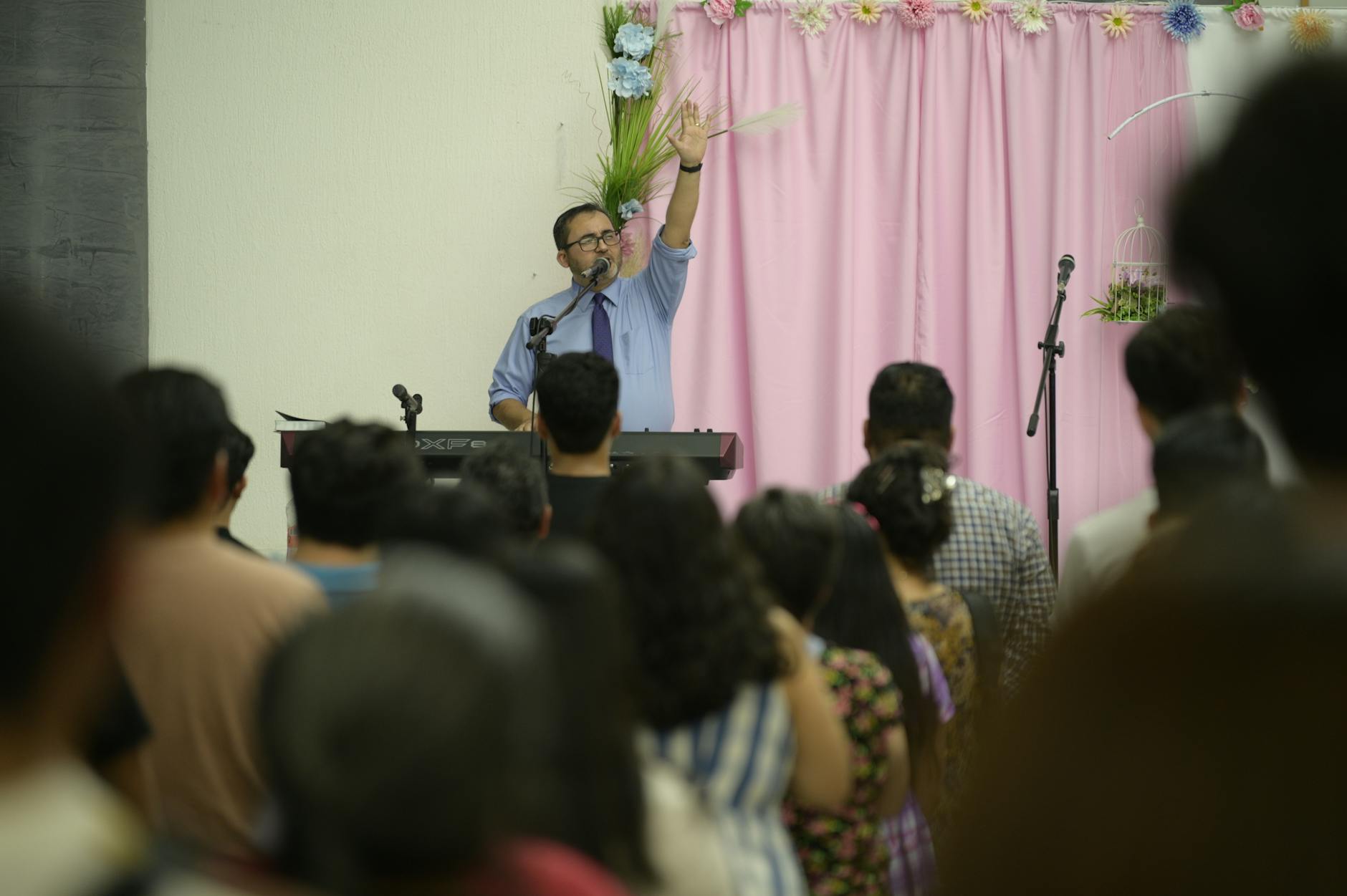
Photo by Timur Weber on Pexels.com

John Piper wrote: “Many people weep at the consequences of sin who still love the sin.” If we’re not vigilant in our love for Jesus, we can become the proverbial “wolves in sheep’s clothing.” And, honestly, that can happen with the best of intentions.

We stop to help a stranded driver, only to learn she’s a woman trying to escape an abusive husband. Or a man at work has just lost his wife and the cookies we bring him have no intention of drawing his affections to us. But…one thing leads to another and before we really stop to think of the consequences, we’re involved in an illicit relationship that is threatening, not only our marriage, but our witness as a believer.

But here’s where the plot thickens, the tears we shed at being discovered often aren’t tears of repentance, but tears of regret that we have to part from a relationship or situation that, at its core, was very satisfying and rewarding to us. We come to believe the “wrong” thing we did was actually sort of “right.” We end up having right feelings for wrong reasons.

We SHOULD be crying. We’ve let something that started with good intentions become something that is clearly wrong in God’s sight. And, unfortunately, that’s too often the source of our tears. The sin we so long to hold onto is being taken away, which well it should, but rather than rejoice that the Lord has delivered us, we weep with longing to hold onto the feelings we had in the beginning stages of our sin.

Here’s a word from the Lord. Be very careful when seeking to help someone of the opposite sex when you or they are married. We can’t always guard our heart from whom we will be attracted, so, proceed with extreme caution. A one-time favor or “kindness” is one thing, but when the option for a continued relationship is offered, please, for Christ’s sake, walk away.

Satan is no respecter of persons and will tempt anyone with anything he thinks will draw their attention away from Jesus. Endurance as a believer is developed in small things. Keeping our spouse aware of what we’re doing and why. If we’re stopping to help someone, whether we know them or not, let our spouse know, not only because it’s the right thing to do, but for our own safety.

We live in a crazy world, and we can’t be too careful, physically or spiritually. And the irony is, it’s not always just our credibility at stake, but Christ’s.

Food for thought.

Blessings, Ed 😊

Are You Content?

“Not that I was ever in need, for I have learned how to be content with whatever I have. I know how to live on almost nothing or with everything. I have learned the secret of living in every situation, whether it is with a full stomach or empty, with plenty or little. For I can do everything through Christ, who gives me strength. (Philippians 4:11-13 NLT)

Contentment has little to do with how much we have, whether possessions, money, position or acclaim. It has everything to do with the state of our heart. Contentment is the condition of our heart when we’re satisfied with what we have.

And yes, I realize that can be a curse as well as a blessing. A man sitting on the roof of his house as the flood waters rise, with men shouting to him to get in their boat before it’s too late, may be content, but he’s also not using sound judgment. Contentment must be weighed with the consequences in mind.

Photo by cottonbro studio on Pexels.com

We often use verse 13 above out of its original context. Paul wasn’t speaking of miracles, though he performed many. He wasn’t addressing his many spiritual achievements, though they abounded. He was speaking of the strength of Christ to live day by day, hungry or fed, “with plenty or little.”

There have been seasons in my life when I was very discontented, not because of what was happening around or outside of me, but because of the raging storm inside my heart and mind. On some levels, contentment can be compared to happiness. We seem to be happy when, in our opinion, things are going well. Which often translates, “we’re keeping up appearances.”

Our house might not be the most expensive in the neighborhood, but it’s better than many. Our kids aren’t the best dressed, but they fit in with their classmates. Our job may not be prestigious, but at least we’re working. But when our son or daughter comes home talking about this new kid at school, who just moved in. Their dad is the new Principal of our school. Or the new Athletic Director. Or the new Football Coach. Or the new ________________.

And we struggle to think: “Wow! That’s great!” Because the tone in our child’s voice that we choose to hear is: “and our dad is only a salesman at the mattress store!” It’s not what they said or even inferred, but it’s what we choose to hear because we’re really not content. Charles Spurgeon wrote: “If you are not content with what you have, you would not be satisfied if it were doubled.”

Unless and until we find our contentment in Christ alone, we’ll never see ourselves measuring up. And the sad truth is, even as believers, we love the “comparison game.” We love the new couple at church until we find out they want to start another adult class that will “compete” with ours. Why are we afraid? “What if more people want to attend their class than ours?”

What if they do? Praise God! The church is growing. We’re reaching new people. People who may not have been interested in coming to our class have seen value in theirs. Good for them! If God is honored and the Kingdom of God is forwarded, Hallelujah! Let’s start all the classes we can or launch all the effective ministries we possibly can, not to try to “top” one another, but to open up all the avenues we can to give people an opportunity to come to Jesus and grow in Him.

Contentment in the best sense, is using everything we have or don’t have to honor and glorify our Savior. Whether hungry or full, offering whatever strength the Lord gives us to forward His eternal purposes in and through our life.

Food for thought.

Blessings, Ed 😊

B

A New Agenda for Tech and Family

By: John Stonestreet and Shane Morris

*This is too vital not to be read by everyone. Please read with prayerful consideration. Click this link to see the article in its original context. Blessings, Ed 😊

In Lewis Carroll’s Alice in Wonderland, Alice asks the Cheshire Cat, “Would you tell me please, which way I ought to go from here?”

The wiley cat replies, “That depends a good deal on where you want to get to.”

Alice than says, “Well, as long as I get somewhere.”

“Oh, you’re sure to do that,” the cat replies, “as long as you walk far enough.”

The inseparable and essential relationship between the destination and the journey should be obvious, but it often isn’t. This is especially true of technology, which is progressing at a dizzying pace and taking us all along for the ride, often without a clear idea of where we’re going or why.

From artificial intelligence to assisted reproduction to social media to automation to assisted suicide, new developments in technology are transforming how we live, love, communicate, procreate, and die. Few who are leading this technology seem willing or able to explain our destination. Is the purpose efficiency? Maximizing utility and pleasure? Making tech billionaires richer? With technology so pervasive and powerful, it’s essential to ask, like the cat, where society should go before deciding where it will go.

A new project to explore how technological progress should serve human flourishing has united a stellar group of conservative leaders. A Future for the Family: A New Technology Agenda for the Right is asking where technology should take us. In a statement of principles that was just published in First Things, these leaders state:

A new era of technological change is upon us. It threatens to supplant the human person and make the family functionally and biologically unnecessary. But this anti-human outcome is not inevitable. Conservatives must welcome dynamic innovation, but they should oppose the deployment of technologies that undermine human goods.

The statement gives numerous examples. For instance, medical interventions in the form of IVF and surrogacy bypass the body in reproduction, turn vulnerable women into wombs-for-rent and commodify the smallest lives, often fatally. Technological efforts to control life and death have led to a slippery slope of euthanasia and assisted suicide on one hand, and a transhumanist quest for immortality on the other. Ever-expanding access to pornography and “digital prostitution” has turned sex into a product that propels addiction, predates on children, and corrupts essential relationships. And unchecked algorithms of social media have rewired children’s brains and hijacked their most vulnerable stages of development in the name of profit.

In short, our technologies promise human connection and productivity while in actuality isolating users and placing us all under constant surveillance. This so-called “progress” has left life more disembodied, removing image bearers from the natural world, and making physical community and human contact an afterthought.

The consequences have been especially terrible for the family, which is the institution most essential for human flourishing. Our technologies promise to redefine, renegotiate, and even redesign this fundamental aspect of how God made the world, but cannot deliver. “The triangle of truisms- father, mother, and child,” G.K. Chesterton wrote, “cannot be destroyed. It can only destroy those civilizations which disregard it.”

Nothing could be more foolish than to place the future of families in the hands of tech companies whose sole motives are profit and efficiency. Good policy guidance, beginning at the federal level, is needed. This “Future for the Family” statement proposes ten sound principles to direct our technological journey.

The list of signatories and organizations behind “A Future for the Family” is impressive to say the least. Together, these experts in policy, social science, family, and theology offer what has long been missing in the rush toward technological “progress.” This is a project Christians can celebrate, join, and support.

Visit https://afutureforthefamily.org/ to read the statement and its guiding principles, as well as a list of curated resources. If there will be lasting change in our national journey of technology, it will be because we all choose to live differently. This statement is a clear and much-needed reminder that technology should serve families, not the other way around.

Unrelenting Hunger

“God blesses those who hunger and thirst for justice, for they will be satisfied.” (Matthew 5:6 NLT)

When you’re hungry, what is it that you most long to have to satisfy that hunger? Often, unfortunately for those of us with Diabetes, our thoughts turn to sweets. For me I envision a warm, bubbling piece of cherry pie with a couple big scoops of Tillamook Vanilla Bean ice cream.

But here’s the reality, that’s only in my dreams, I can’t, I literally MUST NOT allow myself the fulfillment of that vision if I want to maintain my health. Maybe a bit of each on occasion, but I can’t “feed” that hunger if I want to stay on track with my health.

The same principle applies to our life in Christ. There are “fantasies” or “temptations” that lure us, but we must not give in. But how do we avoid them? We pursue that which we give the most credence. What does that mean? It means though I love cherry pie (I really do 😊), I love feeling good and having a healthy body more.

What do you love more? Satan does not tempt us in moderation. He makes sin so appealing he wants us to believe we CAN’T escape it – BUT THAT’S A LIE! God’s Word is true, and the Bible says God will ALWAYS give us a way of escape! The key is, we MUST take it!

As I’ve mentioned before, a huge temptation to me was lust, sexual, but also material (money, cars, material things). It literally took years to be delivered from those completely, but, by God’s grace, today I’m free. But how? A big factor was training my eyes, ears, and mind to submit to Christ’s Lordship over my life. How did that happen? The Lord enabled me to discipline my thoughts. It may have been Augustine, but one of the old saints said: “You can’t keep a bird from flying over your head, but you can keep it from building a nest in your hair.”

That may sound silly and common sense but think about it. When does temptation get its foothold? When you ponder it. If you nip it in the proverbial bud, you stop it in its tracks. If I say to you, “Whatever you do, DO NOT, under any circumstance, think of your refrigerator!” Where does your mind immediately go?

It’s not unlike that with temptation. We seem to think if we go to the Lord in prayer begging Him to deliver us from __________, and we keep that continually before Him and, of course, in our mind, what’s going to happen? We’re going to give in every time. So, how do we break the cycle? How does the Lord free us of that nasty, destructive temptation with which we struggle so much?

At the first hint of that temptation, train your eyes, ears, and mind to redirect IMMEDIATELY! For example, I can’t help but see an attractive lady, but I can immediately turn my eyes and refocus on something else. Since temptation is essentially a mind process, I turn my thoughts, thus my mind, to my wife. She’s the most beautiful woman on the planet to me. I love her and treasure what we have as husband and wife. I’m not willing to risk that by turning my thoughts to anyone or anything else that would put our relationship in jeopardy.

Our willingness to entertain lustful or wrong thoughts, in whatever form they may come, are there for the sole purpose of distracting us from our devotion to Jesus and others we love. You are the only one who can say “NO” and turn your thoughts to something wholesome and good.

One thing I’ve used to train my mind is to immediately sing a chorus or recite a verse. Whatever will work for you, but we must train our mind and heart to unrelentingly hunger for Jesus and His holiness and righteousness above all else.

Food for thought.

Blessings, Ed 😊

A Tribute to Kannamma – A Life Transformed by Love

“Jesus said to her, ‘I am the resurrection and the life. Whoever believes in me, though he die, yet shall he live, and everyone who lives and believes in me shall never die. Do you believe this?’ She said to him, ‘Yes, Lord; I believe that you are the Christ, the Son of God, who is coming into the world.’” (John 11:25-27 ESV)

*It seems of late that the Lord is prompting me to use more articles of others whose lives and words continue to inspire and encourage me. Though I’ve never met Ray Majoran, nor do I know Kannamma, I can’t wait to meet them and spend time together in heaven. Prayerfully enjoy this beautiful tribute and Ray’s prayer. Blessings, Ed 😊

Yesterday morning (02-05-25), our dear sister Kannamma — a widow that we care for through Advocacy Global — went to be with the Lord. Though her earthly journey was marked by hardship, abandonment, and physical challenges, her spiritual journey was one of strength, redemption, and faith. She was once a woman who thought no one cared for her, yet through the love of Jesus, she discovered the truth — that she was deeply loved, cherished, and never alone.

Kannamma grew up in a world where she was often seen as a burden. Her own family walked away because of her disability, leaving her to survive in a small, fragile home. But despite the rejection, God never left her side. When she encountered the Gospel, she found the One who truly sees, the One who never abandons, and the One who gives eternal hope — Jesus Christ.

She embraced Christ, was baptized, and despite the difficulty of walking, she faithfully attended gatherings, eager to worship and grow in the Word. She persevered through pain and isolation, demonstrating a faith that was stronger than her circumstances. She lived as a testimony of God’s power to heal not just bodies, but souls, and to bring light into the darkest corners of life.

Kannamma’s story is not one of loss, but of victory. The world may have cast her aside, but in God’s kingdom, she was always precious. She has now entered into the fullness of His love, free from suffering, standing strong in the presence of the Savior who carried her through every storm.

As we grieve her passing, we also rejoice in her new life. May her story remind us that no one is forgotten in God’s eyes, and that His love can redeem even the most broken hearts.

“Precious in the sight of the Lord is the death of His saints.” — Psalm 116:15

Kannamma, you are home now. You are loved. You are whole.

Ray’s Prayer

Gracious and Everlasting God, You are the One who gives life, the One who calls us out of darkness and into the light of Your presence. You see what the world overlooks. You redeem what others cast away. You hold the broken and lift up the weary. In Your kindness, You welcomed Kannamma into Your eternal embrace, not as a stranger, but as Your beloved. Her body, once frail, is now whole. Her sorrow has turned to joy. What once was abandoned has been restored — because You are the God who never forsakes (Deuteronomy 31:8).

Let us not waste the breath You’ve given us, living as if this world is our home. Break our comfort if it keeps us complacent. Shake us if we settle for less than the righteousness You call us to hunger for (Matthew 5:6). Open our eyes to those like Kannamma — those unseen, unloved, forgotten — because to ignore them is to ignore You (Matthew 25:40). Give us the courage to pour out the love we claim to believe in. May our faith be more than words, our compassion more than sentiment, our obedience more than convenience.

You are our dwelling place. You are our hope beyond the grave. And because of You, death does not have the final word.

One Question

If my life ended today, would I be ready to meet Jesus?

Who’s Building God’s Kingdom?

“May Your Kingdom come soon. May Your will be done on earth, as it is in heaven.” (Matthew 6:10 NLT)

Is it safe to assume that to the extent God’s will is done on earth, to that extent His Kingdom will come? What IS God’s Kingdom? How will we know when it has come?

The Kingdom isn’t an institution or organization, the Kingdom of God is a Person and His Kingdom is a very present reality. King Jesus is over and in charge of His Kingdom and when we yield our life and allegiance to Him, we become a part of His Family, which is a vital part of His Kingdom.

Photo by Josh Sorenson on Pexels.com

Christ’s Kingdom is spiritual, so, invisible to human eyes. It’s built, developed, guided, and enabled by the Spirit of God, not by us. We’re given the privilege of being a part of what God is doing, but it’s His Kingdom to build, not ours. The people we influence to come to Him are His doing, not ours. It’s His Spirit who works in and through us to carry out His agenda, not ours.

The Church, the visible Body of Christ on earth, is a tool, not the end of what God’s Kingdom is to become. In my mind and heart the culmination or true establishment of God’s Kingdom will be in heaven and or on the new earth to come.

The Kingdom is perfect, we are not. The Kingdom is eternal, and while we are also eternal, our contribution to the development of God’s Kingdom is very temporary. Sometimes we get the mistaken notion that the Kingdom of God is dependent upon our faithfulness, goodness, hard work, ingenuity, guidance, and instruction, when, in fact, ALL those roles must be filled by Jesus, because, in a very real sense, He IS the embodiment of God’s Kingdom.

Francis Schaeffer said it well when he wrote: “We are not building God’s Kingdom, He is building His Kingdom, and we are praying for the privilege of being involved.” But how? How can we be involved in the building of God’s Kingdom? First, by receiving Jesus as Savior. When we yield our life and allegiance to Jesus we join ranks with every other born again believer whose mission on earth is to represent our King willingly, effectively, and fruitfully.

What does that mean? It basically means that when we are born again of the Spirit of God we are no longer our own, we no longer call the shots in our own life, we no longer march to the beat of our own “drum.” The Apostle Paul in 1 Corinthians 6:19-20 reminds us: “Don’t you realize that your body is the temple of the Holy Spirit, who lives in you and was given to you by God? You do no belong to yourself, for God bought you with a high price. So you must honor God with your body.”

What’s the takeaway? How we care for “the temple of the Holy Spirit” is a reflection of our willingness to be aligned with God’s agenda. Why do you think new soldiers are put through such rigorous physical training? How we eat, exercise, study, pray, worship, serve are all reflections of our attitude about ourselves, thus a reflection of how we believe God sees us.

Our contribution to God’s Kingdom is in direct correlation to our submission to His authority over our lives. When we treat our bodies like they belong to us we short-circuit our usefulness to God in the building of His Kingdom. We are not our own, but God’s instruments to be used at His bidding to build His eternal Kingdom.

Food for thought.

Blessings, Ed 😊

Out of the Silent Universe

By: John Stonestreet and Thaddeus Williams

*This article by Dr. Thaddeus Williams is just too good not to share. Please also consider purchasing the book from which the quote is taken and following Breakpoint.org daily. Blessings, Ed 😊

If God exists but wanted us to be perpetually in the dark, He could have remained silent. If God wanted to only reveal His will and His moral expectations, but not Himself, He could have. That’s what makes the idea of Christian revelation so remarkable. Not only that God exists, He wanted us to know. And He wanted us to know not only what He expected but Himself.

Getting God right requires that we rely on what He has revealed. I asked Dr. Thaddeus Williams, professor at Biola University and author of the book Revering God, to describe the significance of God speaking to a truly Christian worldview:

What do you think is the most repeated phrase in the entire Bible? It’s, “Thus says the Lord…” which clocks in at over 400 occurrences. The God of the Bible is not the stone-cold silent god of the ancient Greeks. Nor is He the stone-cold silent god of the ancient Stoics or Epicureans, too busy enjoying the amenities of divine bliss to bother with humanity. No. The God who exists is a God who speaks.

It is all too easy to take God speaking for granted. In fact, this is something we can learn from one of the most famous atheists of the twentieth century, the French existentialist Albert Camus.

Camus reckoned honestly with the implications for humanity if no speaking God exists. “When it comes to man’s most basic questions of meaning and purpose,” Camus said, “the universe is silent.” We shout, “Why are we here?!” to the night sky, and the answer is crickets.

We can admire Camus’ honesty when he says, “all human attempts to answer the questions of meaning are futile. … our very existence is absurd.” That absurdity of life in a silent cosmos was precisely the tough pill Camus offered in his best novels, The Plague, The Stranger, and The Myth of Sisyphus.

But something astounding happened to Albert Camus. In the 1950s, a New York Methodist pastor named Howard Mumma was guest-preaching at a church in Paris. Mumma noticed a mysterious figure in a dark trench coat circled by admirers. It was none other than Camus, international atheist celebrity, a self-described “disillusioned and exhausted man.” Camus approached Mumma and confessed that he had never read the Bible himself, so they agreed to meet and tour the text together. What followed was a friendship that lasted five years, Mumma visiting Paris and Camus visiting New York City to explore the possibility that God has spoken.

Then came a moment no one saw coming. Camus asked Mumma if he could be baptized. Given his celebrity status, Camus only had one condition. The baptism must be private so no paparazzi or protesting atheists could exploit Camus’ sacred sprinkling. Mumma kindly explained that the very concept of a private baptism was a contradiction in terms, an oxymoron like “jumbo shrimp,” “crash-landing,” or “soft rock.” Baptism is a public sacrament, a visible declaration of one’s new identity in the death and resurrection of Jesus.

Camus said he would consider it, and they parted ways. Camus died a couple weeks later in a car crash. His final words to Mumma were, “Pray for me brother, that I keep the faith”—not that I may find the faith, but keep the faith. Evidently, the man who wrestled with the silence of the universe with such bleak honesty came to the conclusion that the God who made the universe is not silent.

Dear friends, do not take those four words, “Thus says the Lord,” cheaply.  

Camus was right that “human attempts to answer the ‘meaning’ questions are futile.” But God exists, and God speaks. Therefore, human existence is not absurd. We have purpose because we were created on purpose by a purpose-driven God as spoken in his Word.

In fact, new research shows how taking God’s word seriously adds to life’s meaning. Researchers found that those who read their Bibles once or twice a week experienced no benefit over those who never read their Bibles. At three times a week, minor gains were detected, but with at least four times a week, everything seemed to spike. Sharing their faith skyrocketed 200%. Discipling others jumped a whopping 230%. In contrast, feelings of loneliness dropped 30%. Anger issues dropped 32%. Relationship bitterness dropped 40%. Alcoholism plummeted by 57%. Feelings of spiritual stagnancy fell 60%. And finally, viewing pornography decreased 61%.

God, as Francis Schaeffer loved to say, is there, and He is not silent. Crack open a Bible today and hear your Maker speak.

*That was author and professor Thaddeus Williams, author of the new book Revering God and a featured speaker at this year’s Colson Center National Conference, May 30-June 1, 2025, in Louisville, KY.

When It’s Right to Stand Out

“Jesus told this story to His disciples: ‘There was a certain rich man who had a manager handling his affairs. One day a report came that the manager was wasting his employer’s money. So the employer called him in and said, “What’s this I hear about you? Get your report in order, because you are going to be fired.”’” (Luke 16:1-2 NLT)

We often lose sight of the fact that our job, our work, as believers in Jesus, is a gift from God to be managed as if we were employed directly by Jesus Himself. It could be argued that, outside our homes and family, there’s no greater environment where our witness as a believer is more vitally important. To be lazy and non-productive; to just do enough to get by, to fly under the boss’ “radar” is a sin and we are answerable to God for our attitude and behavior.

Showing up early and ready to work should be our normal pattern, regardless of whether we like our work or not. God Himself has given us that assignment and He never does anything without a reason. If we’re there we have purpose and we must be dependent upon the Lord to enable us to do our absolute best to His honor and acclaim.

Photo by Alex Dos Santos on Pexels.com

Often the “mission” is a person or persons. It could be a co-worker, our boss, the person on the other end of the phone or whoever cleans the windows, but regardless of who it is our primary goal is to do the best job possible for our company. Any “witnessing” has to be done on our time, not company time. Hanging out in the breakroom talking to people about Jesus may make us feel better about ourselves, but it will also get us fired, and rightfully so.

Our commitment is first to Jesus, then to our boss/company, but that priority doesn’t excuse us from doing our best to forward the purposes of our employer. If, for moral or other reasons, we can’t in good conscious do that, we need to ask the Lord to put us on another job where we can.

David Bahnsen has written a new book entitled Full Time: Work and the Meaning of Life, in it he writes: “How the sovereignty and faithfulness of God reframes a true understanding of the economy and financial stewardship are not talked about nearly enough by Christians. Too often, we are shaped by fear, market volatility, an over-reliance on politics, and, especially, a secular view of work and money.” In his book, Bahnsen argues that work is better understood by the truth God has revealed about the world and who we are in His image.

He further writes: “But in the marketplace, where most people spend most of their time, there is an opportunity for incredible cultural conquest and influence. And I believe that we have to understand creationally why God made us to that higher calling and the opportunity it represents for us in the future.” (See BreakPoint Christian Work Is Christian Witness -02-04-25)

As I understand my responsibility to Christ and His Church, I owe it to Him and myself, as well as my boss or company, to excel, to stand out to His glory. Sometimes, admittedly, there’s a thin line between accepting praise and honor and pointing it to Jesus, but nonetheless, if our heart is right and our positive work ethic and it’s results are motivated by a heart that loves Jesus, He WILL be glorified and honored, and our work environment will be blessed.

Food for thought.

Blessings, Ed 😊

Whose “Calling?”

“Yes, each of you should remain as you were when God called you. Are you a slave? Don’t let that worry you – but if you get a chance to be free, take it. And remember, if you were a slave when the Lord called you, you are now free in the Lord. And if you were free when the Lord called you, you are now a slave of Christ.” (1 Corinthians 7:20-22 NLT)

Calling can be confusing when we try to separate what God has created and equipped us to do, and what “calling” looks like specifically as a follower of Jesus. We often hear the expression “called to ministry,” which can be misleading when we consider that EVERY believer is “called to ministry.” “Ministry” is service for the Lord in whatever manner and in whatever setting we serve. Our life is an act and avenue of ministry.

While I was called to serve a specific congregation as their Pastor, God also “called” me to be a salesman for a secular company. Was one position more “spiritual” than the other? Not from God’s perspective! God’s call extends to whatever we do from day to day, whether “sacred” or “secular.” From God’s view EVERY area of our lives is “sacred,” meaning, He sets us apart for sacred use in whatever setting we find ourselves, whether in the kitchen making a meal, on the assembly line, making a living, or in an office, making a deal.

Photo by Brett Sayles on Pexels.com

Calling to “ministry” has come to be reserved for those who serve a church, religious or Ministry organization, but Biblically, EVERY believer is called by God to represent Him in and through whatever we do. But here’s the point: we don’t “call” ourselves into whatever we think we might enjoy doing.

Calling is of God. He knows us best, after all, He designed us to be exactly as we are and who we are. But sometimes we have, or come to have, distorted views of who we are and/or what we’re “called” to be by outside “forces,” either drugs, alcohol, prescribed medication, demonic oppression or even demon possession.

But let’s be clear, a child of God CANNOT be possessed by a demon, and we need not fear demonic activity. The clear basis of “calling” is communication with God. Foundationally, all communication with the Lord is sacred and personal. It may, and often does, have implications for service in various ways and in manifold types of arenas, but whatever He calls us to must render glory and honor to the Lord or it’s not God’s call.

Ivan Mesa wrote: “We don’t choose our callings; by definition, we’re called to them. Repeat: God calls us; we don’t call ourselves.”We’re initially called to be God’s child by virtue of the new birth through Christ alone by faith alone. But that’s only the beginning of our calls.

Perhaps it would be clearer to think of “call” as “instruction,” or “Spirit-direction.” For example. As a believer I’ve been called to marriage, ministry, mission, and miscellaneous other assignments that have included working at a newspaper, selling cars and insurance, working with a moving company, as well as having positions of Ministry with churches.

In my retirement, my primary “calling” is to write this blog and to reach my neighbors for Jesus, as well as love my wife, children, and grandchild like Jesus would love them if He were me. So, to the extent I allow Him full access to me, He flows in and through me to carry out His ministry.

Food for thought.

Blessings, Ed 😊

Are Jesus and Satan Equal?

“Next the devil took Him to the peak of a very high mountain and showed Him all the kingdoms of the world and their glory. ‘I will give it all to You,’ he said, ‘if you will kneel down and worship me.’ ‘Get out of here, Satan,’ Jesus told him, ‘For the Scriptures say, “You must worship the Lord your God and serve only Him.’” (Matthew 4:8-10 NLT)

If you’re not familiar with Scripture you may tend to believe, as many misinformed people today do, that Jesus and Satan are equal, but that’s like saying oil and water are equal. They are not! Have never been and never will be.

Satan is a created being who rebelled against God and is subject to judgment and eternal punishment as is every other of God’s creation. Satan is subject to Christ’s authority and will one day lose his power over sinful mankind, but in the meantime, we have a fight on our hands. A few things we must consider.

Photo by Wicliff Thadeu on Pexels.com

First, alone we are no match for Satan, but with the covering of God’s Spirit we are impenetrable. Does that mean we can’t be tempted or caused to fall prey to temptation? No, it just means that as long as we rely on the Spirit’s armor and are fully dependent upon the Spirit’s strength, he cannot defeat us.

Can a believer in Jesus be demon possessed? Absolutely NOT! When a person is filled with God’s Spirit, they are in no danger of being possessed by Satan or his emissaries. However, we can be oppressed by Satan. What does that mean? Paul addresses a manifestation of this in 2 Corinthians 12:6-7. It can be in our mind, emotions, or in our body, but there are times that the Lord, for His own reasons, allows us to suffer in some way for the express purpose of drawing us closer and causing us to become more dependent upon Him.

Sickness can be tricky, because, unfortunately, we often blame Satan for what we bring on ourselves. Diabetes, kidney disease, and Alzheimer’s aren’t diseases with which I wrestle because of Satanic attack, they are issues I brought on myself because of my negligence to care for my own body, but are exacerbated by Satanic pressure to not take responsibility for what I now have to do as a result.

As long as I can blame Satan for my issues, I can avoid taking responsibility for them. It can be “poor me,” instead of “I brought this on myself.” Why does it matter? Because to not realize the origin of my problems is to misunderstand God’s role in them. To believe they’re caused by Satan takes my attention away from the Lord and lets me give credit to Satan that isn’t his due.

To understand that I have these physical concerns as a result of my own negligence puts me prostrate before my Savior seeking first, His forgiveness, but secondly, His continued presence in enabling me to be the best I can be for Him, beginning with the care of my body. Like it or not, our body is the temple of the living God and to neglect care of my body is not a lot different than not taking care of my car on which I depend for transportation.

Satan gets far more credit than he deserves, especially, when we make bad, ungodly choices, then blame him for our failures. We shouldn’t not study for a test, then blame Satan or even sometimes God, for our failure. But we must keep Satan’s power in perspective. It’s like Satan is a firecracker and God is an Atomic Bomb. There is NO COMPARISON!

That’s why it’s critical to place our trust in the living God and focus our energy on pleasing him, not fearing Satan. Can Satan influence us to do wrong? Of course, but God ALWAYS, without exception, gives us a means of escape when we’re tempted.

Food for thought.

Blessings, Ed 😊