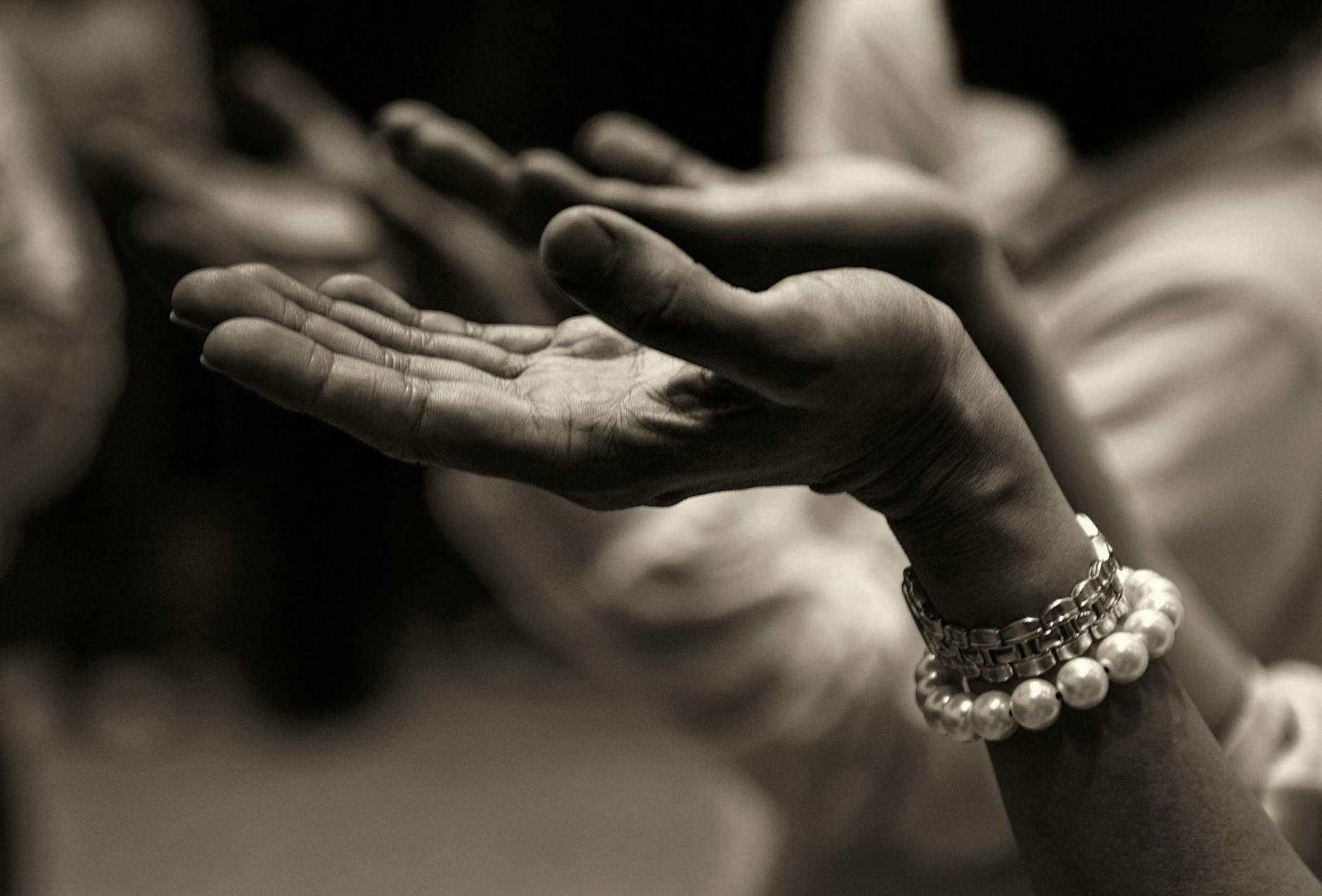
A Fresh Look at Repentance

“Prove by the way you live that you have repented of your sins and turned to God.” (Matthew 3:8 NLT)

Repentance is a multi-dimensional process. Have you ever been on a road trip and well into your journey you realize you are going the wrong way? If you’re adventuresome you may blow it off and keep going, but usually we have a destination and we’re bent on getting there. Repentance is like that.

Many alive today have no clue where they’re headed. They just get up and do what they do, go to bed, then get up and do it all again. Same thing, just a different day. Repentance is looking around and realizing: “Whatever I’m doing isn’t working, so, I’m going to make a change.” To repent means to change your mind, then to change your direction.

No one changes the direction of their life without first changing their mind. You may know intellectually that something is drastically wrong, but until you decide to do something about it, nothing changes. That’s what it means to repent.

Photo by Pixabay on Pexels.com

It’s a military term that paints the picture of a soldier making an “about-face.” They’re marching in one direction, then, upon command, they go in the opposite direction. What are the implications? Heaven and hell are not reached by going in the same direction. We may reach hell by default, by making no specific decision, simply continuing to do what we’ve always done. But to reach heaven requires an informed decision to yield our life and allegiance to Jesus.

The goal of repentance is to introduce us to Jesus, leading us in the formulation of a new direction in our life, but ultimately to lead us to an eternal home in heaven. We have a new destination – heaven, but the pathway is Jesus. John 14:6 teaches us that Jesus “is the way, the truth, and the life. No one can come to the Father except through Me.”

The Christian life is a purposeful, intentional journey that requires guidance by the Holy Spirit, and focus on Jesus. The logical question then becomes: “How do I get to heaven? What signposts do I look for? How do I know I’m going in the right direction?” The simple answer is: “Follow Jesus!” But in practical terms what does that look like? How can we know for sure we’re following Him and not our own inclinations?

Repentance isn’t a one-time decision, it’s an ongoing heart attitude demanding discipline, flexibility, and a willingness to confess our failures, get up and carry on. Just because we’ve made a decision to allow the Lord to turn our life around, doesn’t mean Satan’s going to stop trying to influence us to follow him. Sin is a very real presence as long as we live, but the Holy Spirit is our constant Friend who will guide and protect us against the enemy of our soul.

Kevin DeYoung wrote: “Repentance is more than a repeated apology.” As a rule, each Jesus follower is plagued by some specific “weight” that becomes for us our “sin of choice.” Often our sin of choice becomes habitual and over time we tend to expect to do whatever it is, even though we know it’s wrong and is keeping us from being fully engaged in our walk with the Lord.

It can, as DeYoung implies, become a repeated action that leads to repeated “apologies” to God. But over time our habitual disobedience to God can become so familiar, rather than repenting (turning from our sin), we begin to embrace it and in some twisted way, believe the Lord is okay with it. He’s not! And until we face the truth that our sin is driving a wedge between us and God, we’ll never repent, put it behind us and move into a consistent life of holiness and devotion to Christ.

Food for thought.

Blessings, Ed 😊

Who’s Poorer?

“Then Jesus said to His disciples, ‘I tell you the truth, it is very hard for a rich person to enter the Kingdom of Heaven. I’ll say it again – it is easier for a camel to go through the eye of a needle than for a rich person to enter the Kingdom of God!’” (Matthew 19:23-24 NLT)

Is Jesus saying here that it is impossible for a person of wealth to enter the Kingdom of God? I certainly hope not, because on world standards Americans who are counted among the poorest are still rich.

In Jesus’ day many larger communities were walled with gates. After dark the gates were closed, but within many gates were smaller doors called “the eye of the needle,” through which a camel could enter, but without its load. Jesus isn’t saying it’s impossible for the rich to be saved, but it’s highly unlikely due to their allegiance to their riches.

Photo by JESHOOTS.com on Pexels.com

What comes to your mind when you think of “riches?” Years ago, it was rare to find a person who generated more than a million dollars a year. Today there are a growing number of billionaires who own companies worth trillions of dollars. And how has all of that money profited the world?

Gratefully there are those who invest their wealth in humanitarian and even spiritual causes. But, on the other hand, who do you think funds the illegal drug market, sex trafficking, prostitution, arms used to slaughter millions of innocent people, and many other God-dishonoring enterprises? Rich people too often have “rich taste” that includes the degradation of children and adults against their will.

It causes me to ponder the ways that I overlook the poor, hungry, and destitute in my spheres of influence. Am I unable to get through “the eye of the needle” because of the burden of my riches? Satan’s strategy is to keep us focused on “them,” with the express intent to keep our eyes off our own hypocrisy in the ways we misuse the “riches” with which the Lord has blessed us.

Billy Sunday said: “The fellow that has no money is poor. The fellow that has nothing but money is poorer still.” The longer I walk with the Lord the richer I realize I am. But I also realize how indebted I am to my Savior. If you want to measure how rich you actually are, calculate what will be in heaven when you get there. What is the “treasure” you’re accruing in heaven?

Certainly, the souls of the people we’re leading to and influencing to follow the Lord, but what about the things that can’t be calculated by human measurements? The kind words spoken – to a child, a homeless person, a grieving parent, a struggling teen, someone doing a menial task. How about the person in whom you invest time, not for something you can get, but simply for the vital contribution you can make in their lives?

How about the hours you invest in volunteering at your church or community ministry that feeds and clothes those who can’t afford to provide those things for themselves. I think of the ministries of churches of which I’ve been a part and the selflessness of those who have and are giving time, money, and effort for no other reason than to glorify God and help those who can’t help themselves.

Do you not realize the Creator of the universe keeps a record of every one of those precious moments? Riches entail so much more than dollars and cents, just as poverty of soul involves so much more than a singular focus on the accumulation of wealth.

In my mind the poorest person isn’t the one who has no wealth, it’s the one who has no need  of a Savior. “Holy Father, glorious Savior, powerful Spirit, enable us by your richness and indwelling presence to reach those in our spheres of influence who are so desperately in need of You!”

Blessings, Ed 😊

Does Worship Bore You?

“All the nations You made will come and bow before You, Lord; they will praise Your holy name. For You are great and perform wonderful deeds. You alone are God.” (Psalm 86:9-10 NLT)

Worship is the one thing that human beings can do that gives them opportunity to distinguish themselves from all the other creatures God placed on this earth, yet, among all of God’s creation we’re most reluctant to do so. Why is worship of the Lord God Almighty so foreign to us?

Because it’s contrary to our human nature. Humans, for all their positive qualities, have a love affair with themselves. While worship is second nature to us, it takes a spiritual heart transplant to give us insight into Whom we should be worshipping and why.

Photo by Pixabay on Pexels.com

Worship is common among virtually every people group. Often, worship ceremonies are a means of either giving thanks for provision or in preparation for the procurement of food, either through crops or hunting. Perhaps a carry over in current societies, especially in the Christian Faith, is giving thanks before a meal.

For centuries worship has been accompanied by music and or dancing, and has been a communal event, often involving many participants. What many churches have done with worship is to make it more performance oriented, to be led by the “experts,” which has served to destroy much of the purpose of worship, make it exclusive rather than inclusive, and allow it to become boring.

One of the many things I appreciate about our church is that the musicians and vocalists don’t see themselves as “performers,” but prompters. While they are excellent, they don’t point the spotlight of attention on themselves, but often remind us that they, with each person present, are the worshippers, and there’s only One person in the audience – the Holy God who deserves all praise, adoration, and worship.

Corporate worship is the highlight of my week, but I have time set aside everyday and throughout my day to worship the Lord individually and with my wife. God’s Word and prayer are key elements in my and our times of worship, but another key that is, at least for me, the most enjoyable, is listening.

Jesus said: “My sheep listen to My voice, I know them, and they follow Me.” A.W. Tozer wrote: “The fellowship of God is delightful beyond all telling.” Listening isn’t something I do intuitively. Just ask my wife. I struggle to listen well. One thing that has been helpful for me to understand is that listening and hearing are two very different things.

Often, I will turn on Christian music when I’m working on a project in the garage, and I’ll enjoy the music, but I often don’t pay a lot of attention to the words. And I suspect I’m not alone in that. Unfortunately, we often do the same thing in conversation, but especially when listening to a message. And I intentionally didn’t use the word “sermon.”

When the Pastors of the church of which I’m a part speak, I listen. Why? Because they don’t preach sermons, they deliver messages from God. You can see for yourself at hopechurchlv.com/watch. You can watch services live on Thursday evenings at 6:30 and Sunday mornings at 8:30 and 10:30. Special Christmas services will be on Thursday, December 21st at 6:30 p.m. and on Sunday morning, December 24th at 8:30, 10:30 and 12:30 pacific time.

In my humble opinion the only way anyone could be bored with worship is if they haven’t met the King of kings and Lord of lords. To know Jesus is to love to worship Him.

Food for thought.

Blessings, Ed 😊

Are You Angry?

“Human anger does not produce the righteousness God desires. So get rid of all the filth and evil in your lives, and humbly accept the word God has planted in your hearts, for it has the power to save your souls.” (James 1:20-21 NLT)

May I confess that emotional intimacy is very difficult for me. Whether I blame it on genetics, past hurts, or something else is irrelevant, it still makes it hard when my wife asks, “Why are you upset?” And while I know it frustrates her to hear me say, “I don’t know,” it frustrates me even more.

That’s why Andy Allan’s words in a Family Life devotional really spoke to me: “When it comes to emotional intimacy, I’ve found myself similarly limited. When my wife asks, ‘How are you feeling?’ my sentence starts with ‘I feel’ but usually ends with ‘…like taking a nap,’ ‘… eating Taco Bell,’ or ‘…punching the wall.’ 

Photo by Gary Barnes on Pexels.com

Emotions serve as signposts pointing to deeper realities within us. Like when I’m mad as I wash dishes, muttering about how dirty our kitchen is and clanking plates at earsplitting levels. My wife knows I’m angry (the neighbors must know, too). When she asks, ‘What are you mad about?’ I’ll respond with ‘I’m not angry,’ in my best Clint Eastwood impression.

At some level, I know I’m angry but don’t want to admit it. But I need to see through my feelings to what caused them and go from there. If I pause to process, dirty dishes accuse me of failure. ‘If you were a better man,’ their crumbs shout, ‘we’d be clean by now.’ A dirty kitchen makes me feel like I don’t measure up, and I’m filled with anger at myself.

James 1:20 says, ‘the anger of man does not produce the righteousness of God’ It produces quite the opposite, causing stress and turmoil from the kitchen to the bedroom and everywhere in between. Examining the belief underneath my anger, especially alongside my wife, has been so helpful. She doesn’t judge me by how quickly our plates are cleaned, and she reminds me God doesn’t either.”

As I age, gratefully it’s not as prevalent, but in my younger years I found myself angry and I genuinely didn’t understand why. Does that ever happen to you? At first I would try to brush it off and ignore it, but then I began to seek, with the Lord’s help, to process it in a healthy way. I’ve been able to share some with my wife, which is helpful, but the bottom line for me is that it’s a distraction from the enemy of my soul.

It’s easy for us to blame ourselves for not only our failures, but for the person we’ve become. In our mind and heart, we never quite measure up to that person we envisioned we’d one day be, or, perhaps, who we thought everyone else wanted or needed us to be. It’s a weight too heavy to carry when we keep piling on, not only our own expectations, but the expectations of others. It will literally kill us. It’s unbearable.

That’s why the Lord has made a way of escape for us. It’s called grace. It’s the free, undeserved, unmerited favor of God where He takes our sin, our shame, our unrealistic expectations, and places them on Himself. That’s what He did on the Cross and that’s where we need to leave them.

Are you angry? Join the club! We should be angry at the enemy for holding over our heads all the things the Lord died to free us of, including our sense of self-loathing for not being who we thought we should be. What comforts me, and I pray comforts you, is that we’re the apple of God’s eye just as we are. He made us the way we are for a very specific purpose: So, we’d learn to depend solely on Him, not on ourselves.

Food for thought.

Blessings, Ed 😊

Checklist or Benchmark?

“Don’t misunderstand why I have come. I did not come to abolish the law of Moses or the writings of the prophets. No, I came to accomplish their purpose. I tell you the truth, until heaven and earth disappear, not even the smallest detail of God’s law will disappear until its purpose is achieved.” (Matthew 5:17-18 NLT)

There are several implications for us in the verses above that we may well miss if we don’t pay attention to what the Lord is saying. As Gentile (non-Jewish) believers we tend to pay very little attention when the law is mentioned because we fail to see any relevance to 21st century believers.

Our attitude is essentially that the law was fulfilled by Jesus, that we’re offered peace with God by grace through faith and all we have to do is read the Bible, pray, and follow the Lord’s directives and we’re good to go. And that’s good as far as it goes, but I believe we miss something vital when we fail to realize the law still has relevance to us today.

If “not even the smallest detail of God’s law will disappear until its purpose is achieved” doesn’t it make sense to determine what purpose it’s designed to achieve? Even if we just consider the Ten Commandments, why is it so important to recognize those “laws” still apply to us? Largely because we still have an obligation to obey them.

Photo by Jos van Ouwerkerk on Pexels.com

What is the purpose of any law? Stop signs or traffic lights? Laws that demand we pay taxes, treat others with respect by not stealing from them or killing them? The late Timothy Keller wrote: “The Law is not a checklist we keep but a benchmark we fail.” So?

The Pharisees and religious leaders of Jesus’ day held, at least by profession, to the strictest letter of the law. That’s what drove them nuts about Jesus. While Jesus said the two most important laws were to love God with all your heart, mind, soul, and strength, and love others as yourself, the Jews had developed hundreds of miniscule laws to cover virtually every detail of life. Which ironically, they didn’t even keep themselves, yet, expected everyone else, including Jesus, to keep.

So, what’s the application for us. We’re Jesus followers, but we’re still accountable to the Lord for how we live and treat each other. So, as Dr. Keller noted, we have a choice to make, which, ironically, we must make nearly every minute of every day. Are we, like the rich young man who came to Jesus in Matthew 19, checking the boxes, but missing the Savior?

Are we content to see even the 10 Commandments as a checklist we check or a benchmark by which we measure our failures. A benchmark is a measure whereby we compare our own progress. It’s like the 4-minute mile that no one believed could be achieved, until someone did. Now it has become the benchmark for mile runners.

Similarly, as Jesus followers, Jesus is our “benchmark,” our goal being to approximate His likeness in our lives as best we can, realizing we’ll always fall short, we’ll always fail, yet, by God’s grace and with His help, we continue to make the effort. But why? Why do we keep allowing our failure to urge us on? Largely because we’re not saved to stay the same.

If the sum total of the Christian life was to receive the gift of eternal life and never change, what’s the point? Out of the shoot we know we’ll always fail to be everything Christ died to enable us to become this side of eternity, so we use His law to measure our progress; to help us have a tangible means of showing we’re actually making progress; otherwise, our constant failure would be debilitating.

Food for thought.

Blessings, Ed 😊

Do You Love Evangelism?

“Jesus came and told His disciples, ‘I have been given all authority in heaven and on earth. Therefore, go and make disciples of all the nations, baptizing them in the name of the Father and the Son and the Holy Spirit. Teach these new disciples to obey all the commands I have given you. And be sure of this: I am with you always, even to the end of the age.’”

While the words “evangelism” or “evangelize” aren’t found in Scripture, the term “evangelist” is and was used to describe those who weren’t Apostles but were commissioned by the Holy Spirit to share the gospel. An Evangelist is the bearer of good news, specifically news about who Jesus is and what He did on the Cross. As a believer in Jesus, it should be in our DNA to want to share Him with others.

For the early Jesus followers sharing about their new life in Christ wasn’t a burden, but a privilege. It never entered their mind NOT to share their love for Jesus and to encourage everyone they met to do the same.

Photo by Alexander Dummer on Pexels.com

Ed Stetzer made an interesting observation when he wrote: “Many Christians love evangelism as long as someone else is doing it.” On some levels for a person who is born again of the Spirit of God to not desire to share their love for Christ is like a parent not wanting to talk about their child. It’s counter intuitive. Why is that?

Could it be we’ve come to believe that because we’re not a Pastor or church leader we have no responsibility to share? Or could it be we just don’t know how? May I ask you, if you’re a parent, who “taught” you to talk about your baby? “But that’s different!” You may object. How is it different?

A new life has been brought into the world by you and someone you love and with whom you’ve shared life. When a person becomes a child of God, there has been a “new birth” experience that has required two persons, us and our proud heavenly Father who has given us the privilege of having His Holy Spirit come to dwell in us. Why? To empower us to live the life of a Jesus follower.

While it’s not necessarily intuitive, like being a new parent, we learn from those who are parents, but some things we learn by trial and error. The first time I was left alone with my infant daughter I couldn’t get her to stop crying. I checked her diaper, offered her a bottle, laid her down, picked her up, rocked her, and walked her up and down the hallway, but nothing was working. Finally, in desperation, I began to hum songs to her and finally she settled down and went to sleep.

What’s my point? Just because it’s unfamiliar to share your faith with an unbeliever, learn from your mistakes, but don’t stop trying to reach them. What motivated me to keep trying to help my daughter was my love for her. When she was upset, I was upset; when she needed attention, I was there to give it to her, and even if I didn’t know exactly what to do to help her, I kept trying things until something worked.

Because someone I love rejects my efforts to lead them to Jesus, I don’t stop trying. There are two fundamental “rules of faith” that I have to keep me moving in the right direction. First, I don’t push them to make a quick decision. If I sense they’re getting agitated or uncomfortable, I backoff. But, secondly, I continue to love them in practical ways until they give me another opportunity to have a faith conversation with them.

Leading someone to the Lord is rarely a one contact or one conversation process. I have friends and loved ones with whom I’ve been sharing Jesus for years, but there are others who have been much more receptive and have given their lives to the Lord more quickly. The point is, don’t stop trying. Keep praying, learning, and investigating new ways to share your love for Jesus with whomever will listen.

What motivates me to share my faith isn’t my love for evangelism, it’s my love for those who will die and miss heaven if I don’t.

Food for thought.

Blessings, Ed 😊  

A Single Sin

“My dear children, I am writing this to you so that you will not sin. But if anyone does sin, we have an advocate who pleads our case before the Father. He is Jesus Christ, the One who is truly righteous.” (1 John 2:1 NLT)

My sense is that we tend to take sin far too lightly. As a result, we often miss opportunities to hear God’s voice or see His hand at work in significant ways. We want to settle for far less than God has for us due to our infatuation with the things of the world.

Part of the problem is we’re asking the wrong question. We ask: “What’s wrong with _____________?” The issue for a believer in Jesus isn’t necessarily what’s wrong with something, because our best choices aren’t between good and evil, but better and best. Sin, like love, isn’t a feeling, it’s a decision. That’s why sin is so heinous. It plays on our emotions and draws us away from the Lord with promises to make us feel better.

Remember, we don’t feel our way to right actions, we act our way to right feelings. You do the right thing; you’ll feel the right way about it. Sin is a decision to do, say, or think something that is displeasing to God, something that will detract from the honor, glory, or fame He deserves. It’s an act of will, not something we accidentally do.

Years ago, I saw a picture of a man walking across the desert with a caption that said: “It’s not the mounds of sand in front of me that slow me down, it’s the grain of sand in my shoe.”

Adam and Eve didn’t accidentally partake of the forbidden fruit. It was the result of planned intention. Why were they at that specific tree in the first place? My guess is they made passes by the tree on many other occasions, getting closer and closer, until one day sin’s pull was just too hard to resist. They allowed the “grain” of curiosity to take its toll.

We flirt with sin, seeing how close we can come without crossing the proverbial line, until one day the draw becomes too much to walk away. The major failures in my life didn’t come about because I spent too much time reading God’s Word, praying, or serving God. They came about because I spent too much time pondering things that were clearly wrong, but rather than shifting my thinking and walking away, I allowed the tentacles of sin to pull me in.

Did I know it was wrong? Absolutely! Did I want to disobey God? Of course not! Then why did I do what I did? My curiosity allowed me to get too close until I could no longer resist the urge to investigate the forbidden. None of us is able in our own strength to resist the devil. We must depend on the Holy Spirit to enable us to shift our eyes or close our ears to things we know will entice us to sin.

Tim Challies wrote: “Just a single sin left in your life is as dangerous as a single rattlesnake left in your bed.” Dear brother or sister, please allow the Holy Spirit to give you wisdom in making decisions that can potentially be dangerous to you. We know ourselves much better than we like to admit, and we know when an “innocent” text or call isn’t innocent at all. The Holy Spirit will alert us to evil. Are you listening?

Paul wrote in 1 Thessalonians in the KJV: “Abstain from all appearance of evil.” Be careful how you dress, what you allow your eyes to see, your ears to hear, and that on which you allow your mind to dwell. The greatest battlefield for a believer is our mind. What we think about comes about. So, read what will draw you closer to the Lord; listen to what will instruct your heart for good; and never underestimate the power of even one single sin.

Food for thought.

Blessings, Ed 😊

An Undivided Heart

“Jesus knew their thoughts and replied, ‘Any kingdom divided by civil war is doomed. A town or family splintered by feuding will fall apart.’” (Matthew 12:25 NLT)

What does it mean to love someone with an undivided heart? Be careful, it doesn’t mean to love them exclusively. Our hearts will always require us to love many people. The Lord may own our heart, in the sense that we owe Him full allegiance and total commitment, but we will never love anyone alone, not even God.

Remember Jesus’ words in John 14:15? “If you love Me, obey My commandments.” Loving God with an undivided heart means devoting our energy to the fulfillment of His commands, but it also means obeying Him with a singular focus. How so? How effective will you be as a marriage partner if you have another love interest?

Photo by Brett Sayles on Pexels.com

Corky Calhoun wrote: “Obedience is not a requirement of Christian commitment and discipleship, it’s the by-product of an undivided heart.” While I didn’t see his statement in context, so don’t know this with certainty, what it says to me is obedience must be the result of the desire of a heart with a singular focus, bent on pleasing Jesus. A focus that results in following Jesus with full devotion, not having one foot in the world and one foot in my life with Christ.

Obviously, we have many areas of interest and concern as human beings. We have relationships with family, friends, co-workers, neighbors, special interest groups, etc., but as a believer in Jesus we’re called to have a relationship with Him. How can we juggle all these relationships, put Jesus first, and walk in obedience to His directives?

In some ways it’s no different than being married and having all the other relationships. In marriage we still need time with friends apart from our spouse. I belong to a Men’s Group, my wife has her Women’s Group, and we both attend a Couple’s Group. But the design of each of these groups is to make us a better spouse, not push us in opposite directions.

Corky Calhoun also wrote: “Way too many Christians these days are letting the things of this world come between what Jesus is trying to unite.” In my mind the single most important area that demands unity is our heart and mind. We’ve got to determine where our “citizenship” is – heaven or earth? To profess Jesus and live like the devil, so attached to the things of this world we bear no likeness of Jesus is the product of a divided heart.

An undivided heart seeks to reflect the character of Christ in the things we say and do, regardless of who we’re with or where we are. Paul David Tripp wrote: “Live today in the power of the resurrection, power to say ‘no’ to what leads to death and the power to say ‘yes’ to what gives life.” To me that doesn’t mean every decision we make will change our eternal outcome, but holds the potential of interrupting the course of our journey, either moving us closer to the Lord or driving us away from Him.

If I love my wife with an undivided heart I won’t be lusting after other women on the internet or otherwise, and if I love Jesus I won’t be lusting after the things of this world. My focus will be locked on fulfilling my goal of full devotion to my Master, whether in my activities or my relationships.

Having an undivided heart doesn’t mean I can’t love other people or even other things, I just appreciate them in the context of my total commitment to carrying out God’s will in my life. I love nature, but I see it as evidence of the grandeur and majesty of my Creator. And I love my wife as the precious gift from God that she is.

Food for thought.

Blessings, Ed 😊

Are You As Close to God As You Want to Be?

“The Lord hears His people when they call to Him for help. He rescues them from all their troubles.” (Psalm 34:17 NLT)

Closeness to God isn’t a feeling. On the contrary, like love, intimacy with God is a decision. When I want to be close to my wife I don’t sit in my office and try to muster up some special kind of feeling. I get up from my chair, walk to where she is and hold her in my arms. Admittedly, it feels great to hold her, but that good feeling was the result of a decision.

Rudolph Dreikurs said in a book I read many years ago, “When you do the right thing, you’ll feel the right way.” In other words, right feelings follow right behavior, not the other way around. We don’t feel our way to right actions, we act our way to right feelings. Why is that so important to understand?

Photo by Rathin Santh on Pexels.com

Our closeness to God is made difficult by the fact He’s invisible to our physical eyes. We can only see God with the eyes of our heart. Because of that we often reduce our love for God to a few verses of Scripture or the way we feel when we sing Christian songs.

You may have heard the adage: “If you’re not as close to God as you want to be, who moved?” We tend to place so much stock in how we feel in any given moment. “It’s cloudy, so I’m going to stay in bed. I just don’t feel like getting up.” Have you ever tried this one? “I’m aching all over, so I don’t think I’ll pay my taxes this year.”

Ultimately, we learn to deal with things regardless of how we feel. On some levels that’s how we need to approach our walk with God. Personally, I feel closest to God when I’m fulfilling His will to the best of my knowledge and ability. For example, I believe God’s will is for me to love my wife, but I also believe He’s allowed me to author these blog articles.

So, when I’m heading to my office and I hear my wife say: “You said you’d do (whatever it is I said I would do for her). Is now a good time?” So, what do you think I do? I know both are God’s will, but in that moment I have to prioritize, so, yes, I do what my wife asks me to do.

What’s my point? Whatever God has called and equipped you to do for Him, you will be challenged by many other avenues of His will. But it must begin with a solid commitment to personal holiness. What does that mean? It means to commit to daily prayer and reading/studying/listening to God’s Word, the Bible, then seeking to live out what the Lord is teaching me.

Apart from prayer and God’s Word there can be no long-term closeness to God. And by prayer I’m not talking about “saying” prayers. For example, simply reciting the Lord’s prayer or some other prayer you’ve memorized. Although, even as I’m writing, the Lord is reminding me of the repetition in my prayers every day.

Because of my heart for the lost, I ask the Lord to give me sensitivity and open doors of opportunity for me to reach my loved ones, friends, and neighbors for Him, but I use essentially the same words every day. The point isn’t as much the words we use, but the heart behind those words. If we’re reciting words to fulfill a “commitment” to God, we’re wasting our breath, but if those oft used words reflect the desires of our heart for whatever we’re praying, we’ll move the heart of God and we’ll sense His closeness.

Tozer’s words I’ve shared before: “Every man is as close to God as he wants to be,” may seem a little harsh, but they’re still true. The point is, God is ALWAYS with us, so if we want to get closer to Him, we have to make the conscious decision to make that happen, regardless of how we feel about it.

Food for thought.

Blessings, Ed 😊

God’s Intention (Part 2)

“For husbands, this means love your wives, just as Christ loved the church. He gave up His life for her to make her holy and clean, washed by the cleansing of God’s word. He did this to present her to Himself as a glorious church without a spot or wrinkle or any other blemish. Instead, she will be holy and without fault.” (Ephesians 5:25-27 NLT)

How much do you love Jesus? Many would boldly say: “Enough to die for Him!” And, admittedly, sometimes that’s what He asks of us. But largely what He’s asking is for us to live for Him. Similarly, some husbands, under severe circumstances, literally give their lives on behalf of their family. But the design of marriage isn’t death, it’s life “until death do us part!”

Marriage demands compromise, give and take, sacrifice for the health of the one “body” formed in marriage. In much the same way, Christ sacrificed His sinless life to give us the privilege of being in oneness with Him by yielding our life and allegiance to Him. As in marriage, its design is to be an exclusive relationship with benefits designed specifically for those who make that commitment.

Photo by Rene Asmussen on Pexels.com

As each husband and wife are able, they give birth to children who bear their name and, as they grow, learn to take part in the maintenance and care of their family. They are given responsibilities commensurate with their abilities which, ideally, they take pride in doing as they grow in their appreciation of the family in which they’ve been placed.

Obviously, this is an ideal that isn’t enjoyed by everyone, yet it’s God’ design and desire for His children who become a part of His eternal family. As in the family, our role in the family of God isn’t independence, but interdependence. And yes, of course, children are trained to one day become independent of their mom and dad, but never to be separated from their allegiance to their family of origin.

In much the same way, each Church “family” is to bear spiritual “children” who will learn what it means to be a child of God. The goal isn’t to create thousands of individual “believers,” but to help them understand and maintain allegiance to their whole Family – the Body of Christ. I’ve seen this in its best light as I’ve traveled to other countries.

I’ve never been asked in another country: “What church do you attend?” I’ve only been welcomed with open arms and hearts as I would be if I was coming home to my family, because indeed I was. The love of Christ isn’t given to help us build barriers between us, but to tear them down. Our goal as children of God is to reach our hands in fellowship to every blood-washed one.

When I was in secular employment and someone learned I had been a Pastor, often the first question was (and you know what’s coming): “In what church were you a Pastor?” One of two things was bound to happen when I answered: “Hmmm. Well, I’m a _________!” And I’d either see a smile or they’d often just turn and walk away if I wasn’t part of “their” group.

Friends, that’s the work of the evil one. We don’t have to agree on every point of doctrine to have meaningful fellowship. Our commonality is derived from our Father in heaven, not the name over the door of our church. God’s intention is unity, not division; love and acceptance based on the shed blood of our Savior and our devotion to Him.

One thing I’ve learned over the years of serving and being a part of many churches: I don’t have to like you, but if I’m going to please my Father, I’d better love you, not for yours or my honor, but for His.

Food for thought.

Blessings, Ed 😊