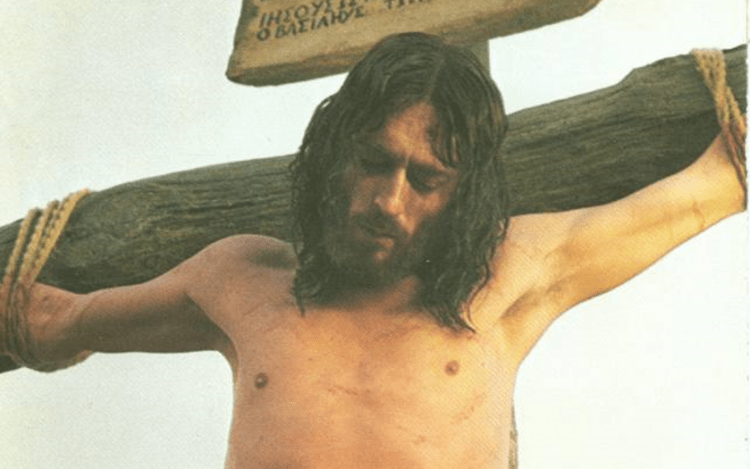
No Atheists in Hell

“Don’t you realize that those who do wrong will not inherit the Kingdom of God?” (1 Corinthians 6:9a NLT)

There are several verses in the Bible, especially in the New Testament, that outline many of the things we can’t continue to do if we expect to go to heaven. So much so we often get so focused on what we shouldn’t be doing, we forfeit the development of those things we should be doing.

It’s interesting to me that the word “atheist” isn’t found in Scripture, yet, an argument could be made that virtually every sin we commit is founded on unbelief. So, you may be wondering, if atheists don’t go to hell, where do they go when they die? They go to hell. Whoa, wait a minute. The title of this article says there are no atheists in hell. Yes, that’s correct.

Paul writes in 1 Corinthians 13:12: “Now we see things imperfectly, like puzzling reflections in a mirror, but then we will see everything with perfect clarity. All that I know now is partial and incomplete, but then I will know everything completely, just as God now knows me completely.” What does that mean?

It means every atheist, every unbeliever, everyone, even if they know who Jesus is, that He’s God in human form, but deny His deity and thus refuse to yield their life and allegiance to Him, will, by their own choice, go to hell.

However, at the split second that it will take to close our eyes in death and open them in eternity, everyone – believer and unbeliever – will see everything with perfect clarity. There will be no doubt or unbelief in heaven or hell – only full knowledge that Jesus was exactly who He claimed to be. For those in heaven, an eternity of peace, joy, celebration, and reward. But for those in hell, it will be knowledge that will haunt and torment them for all eternity.

Even on earth, we’re not saved by what we do or don’t know. We’re saved by faith in the only One who died in our place and took the punishment we deserved for our sin. Many people know that yet aren’t saved. And there are those, according to Romans 1, that may not know all the details of who Jesus is and what He did on their behalf, but God has made Himself known to them, as Paul writes in verse 20: “Through everything God made, they can clearly see His invisible qualities – His eternal power and divine nature. So they have no excuse for not knowing God.”

Everyone in hell will be just as knowledgeable regarding the things of God as those in heaven but won’t have responded to God by faith and obedience. That’s the “hell” that many face even in this life when they’ve been told about Jesus, but they’ve never acted upon what they know to be true about Him.

James writes in 2:19: “You say you have faith, for you believe that there is one God. Good for you! Even the demons believe this, and they tremble in terror.” Why do you think Satan is working so hard to keep people distracted? He knows exactly what awaits him and, because he is pure evil, wants to take as many people with him to hell as he can.

Please don’t let him take you or your loved ones! Pray earnestly and take every opportunity to share the life and hope of Jesus with anyone who will listen.

Blessings, Ed 😊

Is God Safe?

“Be on guard. Stand firm in the faith. Be courageous. Be strong.” (1 Corinthians 16:13 NLT)

In C. S. Lewis’ “The Chronicles of Narnia, there is a scene from The Lion, the Witch and the Wardrobe, when the children learn that Aslan is a lion, “the Lion, the great Lion.” “Ooh!” said Susan, “I’d thought he was a man. Is he—quite safe? I shall feel rather nervous about meeting a lion.” “Safe?” said Mr. Beaver…. “Who said anything about safe? ‘Course he isn’t safe. But he’s good. He’s the King, I tell you.”

Of all the ways we tend to think of God – loving, kind, caring, compassionate – and on and on, we rarely stop to consider that He is strong, powerful, mighty, indestructible, unconquerable. Yet, when we’re in a difficult circumstance, who do you want to come to your aid? A little wimpy god who MIGHT be able to help against the devil? Or “a roaring lion” – as Peter describes him?

We seem so quick to dismiss fear in reference to God as simply “reverence,” which it can mean. But it can also be translated: “terror, exceedingly dreadful, awesome or terrifying.” My dad was never mean to me and rarely spoke to me in an angry voice, but I knew from an early age that if push came to shove, he could clean my clock and never break a sweat.

God is anything but “safe” if you’re walking in blatant disregard to His commands. Jesus reminds us in Matthew 11:28: “Don’t be afraid of those who want to kill your body; they cannot touch your soul. Fear only God, who can destroy both soul and body in hell.” To view our heavenly Father as the proverbial white-haired old gentleman casually passing His time sitting in His holy rocker thinking loving thoughts of you, is to think wrongly of Him.

Paul writes in 2 Thessalonians 1:7b-9: “He will come with His mighty angels, in flaming fire, bringing judgment on those who don’t know God and on those who refuse to obey the Good News of our Lord Jesus. They will be punished with eternal destruction, forever separated from the Lord and from His glorious power.”

It’s also wrong to believe that God is so loving that He will keep us safe from harm of any kind. I love how John Stonestreet of the Colson Center puts it: “Though we love the idea that God is not ‘safe,’ we often live as if our safety or comfort marks the boundaries of our relationship with Him. Catechized by bad theology, captivated by our culture’s enablement of self-centeredness, or weary of an angry and fractious age, many Christians cannot conceive that God’s will for our lives could involve anything unpleasant or uncomfortable. When it does and our expectations collapse, we wonder if God cares, having conflated God’s faithfulness with a painless, placid life of blessing and provision. We are quick to assume that pain or discomfort means that God’s will has been thwarted, or that His love and protection have been withdrawn. It’s difficult to accept that, rather than a sign of God’s absence, the presence of pain could be a sign of His sovereign care.”

In my pain, whether physical, spiritual, emotional, or otherwise, I’ve learned that God is a very present help in my time of need. Pain is never, an indication that God is punishing us or has deserted us; rather, it’s an opportunity for us to see Him in ways and on levels of comfort and care we’ve never experienced Him before.

It’s in that setting that God’s “safety” is highlighted and appreciated in ways that can’t be realized when we’re nestled in our false little cocoons of safety and security from all the ills of the world. We who have yielded our lives and allegiance to Jesus are certainly secure in His loving care, but that doesn’t mean we’re protected from the inevitable effects of living in a world of sin. He is our Rock and shelter in the storms of life, not from them.

Is God safe? Absolutely yes if you’re His child. But there will be hell to pay if you’re not! But don’t misunderstand, it’s not because He’s a bully just waiting to punish those who disobey Him, it’s because He sacrificed the life of His only Son to secure our salvation. To dismiss Jesus is to dismiss His Father’s sacrificial love offering for our sin.

Food for thought.

Blessings, Ed 😊

Forsaking the Fake

“One day Saul said to David, ‘I am ready to give you my older daughter, Merab, as your wife. But first you must prove yourself to be a real warrior by fighting the Lord’s battles.’ For Saul thought, ‘I’ll send him out against the Philistines and let them kill him rather than doing it myself.’” (1 Samuel 18:17 NLT)

Have you ever wondered why video games and the futuristic sci-fi movies have such a following? In my era it was basically Super Man, who pretended to be Clark Kent, lowly news reporter. But when the need demanded, Clark would hide for a few seconds, then emerge as Super Man to save the day.

There’s a part of all of us men that wants to be “Super Man” for our family and friends. Why is that? I believe it’s largely because we feel inadequate in the face of all the demands life makes on us. Who is ever ready to be a husband? Father? Spiritual leader?

Too many men seek solace in things that have little or no inherent meaning, trying to make life count for something. Brant Hansen, radio host and author says: “a big reason men in our culture are so aimless or stuck in meaninglessness is because they’re doing meaningless things, such as seeking pleasure instead of something greater or transcendent.”

He gives men six decisions they need to make to set themselves apart and be a blessing to their families and communities: “Forsake the Fake and Relish the Real. Protect the Vulnerable. Be Ambitious about the Right Things. Make Women and Children Feel Safe, Not Threatened. Choose Today Who You Will Become Tomorrow. Take Responsibility for Your Own Spiritual Life.”

As I perused that list it occurred to me that no one in all of history has more fully encapsulated those attributes in a single life than Jesus. Who was ever more manly than the Son of Man, God’s only Son, the Lord Jesus! How can we follow His example? How can we most effectively “forsake the fake” and become the “real” man God created us to become? What is the “track” on which to run the race of life as an authentic man of God? What is the pathway that once found, will lead us out of our aimless life of meaninglessness?

I’m convinced that to the extent we can emulate Jesus’ life, by allowing His Holy Spirit to live in and through us, we’ll find meaning, purpose, value, ministry, hope, and wholeness in our lives. And by so doing, we’ll not only help ourselves as individual men, but enhance the value and meaning of every person’s life in our spheres of influence.

How is such a focused life ever realized? It begins at the foot of the Cross of Christ. When the tears clear enough for you to actually begin to absorb what you’re seeing and experiencing, ask yourself what put the only perfect, sinless Man who ever lived on that Cross?

It was for you, my friend! But why? To allow you to find the one place on this earth where you can forsake the fake and see yourself as you’re seen by God: fallen, but forgiven; filled with value, purpose, meaning, God-given ambition; filled with God’s Spirit who will inform, equip, guide, and enable you to become the man you were created to become.

Will you trust Him to do in, through, and on your behalf what you’re literally unable to do for yourself? Ask Him to forgive, fill, and empower you to be all He created you to become, not so you can impress your family and friends, but so you can be real! So you can finally understand why you were born, and live the life you were meant to live.

Blessings, Ed 😊

The Guise of Control

“For you are a slave to whatever controls you.” (2 Peter 2:19b NLT)

Every person is controlled by something or someone. We don’t govern even our own life. What does govern can vary from person to person, but ultimately, one day God will bring everything under His control (Philippians 3:21). But don’t we have free will to choose our own destiny and direction? Yes and no.

Yes, God has given us a will that enables us to make choices, but ultimately the rulership of our lives will boil down to one of two sources – our sin nature or God; this world or the next; Satan or the Holy Spirit. Once we give ownership and rulership of our lives over to one of them, it’s for all intent and purpose, out of our hands. But how do we determine who it is? Therein lies the proverbial “rub,” but there are indicators, which when recognized, can give us clarity as to who’s really in charge.

For example, let’s say for sake of illustration that you’ve decided you “need” a new car. The car you have is only four years old and only has a little over 60K miles. It’s been well maintained, so it still looks and runs very well. So, what’s the hurry to get a new one? Three of your friends at work got a new car, so, suddenly, your car just isn’t cutting it anymore.

Okay, yes, it’s your decision, and no, it’s not necessarily wrong to buy a new car, but what’s really behind this desire? Or another way to think of it, who’s controlling or motivating this decision? Of course, there are many factors to consider, but if you’re a Jesus follower, shouldn’t Jesus have a say as to whether or not it’s time to buy another vehicle? And shouldn’t His say be preeminent?

This is just one of a thousand kinds of decisions we make in a given day, that when tallied together give us a view of who’s really in control. How we use our time and money are two of the factors that weigh the most in terms of who or what is ruling our lives. But another weighty matter is who do you want to rule you? Are you content with letting your selfish, world-centered nature rule your decisions? Or would you rather have the Holy Spirit govern what you do, say, and think?

Realistically, there are aspects of our sinful nature that once given full sway are literally impossible for us to regain control without assistance. For example, sin can manifest itself in many crippling ways. Sex, money, drugs, alcohol, anger, lust, lying, gossiping, pride, envy, jealousy, crime – the list is long, but treacherous. People who are caught in addictive behaviors will often say: “It’s not a big deal. I can stop anytime I want to. I just don’t want to!”

As I understand it, one of the primary ways to identify who’s in control is to ask yourself and five of your closest friends, if you have any left: “Do I have ________, or does it have me?” You can fill in any of the things above or one that isn’t mentioned with which you wrestle.

Paul wrote in Romans 7:22-25: “I love God’s law with all my heart. But there is another power within me that is at war with my mind. This power makes me a slave to the sin that is still within me. Oh, what a miserable person I am! Who will free me from this life that is dominated by sin and death? Thank God! The answer is in Jesus Christ our Lord. So you see how it is: In my mind I really want to obey God’s law, but because of my sinful nature I am a slave to sin.”

We often want to stop there and believe our conscience is clear to keep living in subjection to our sinful nature – that over which apart from the Holy Spirit’s rule and reign in our life we have no power to control. But just two verses later Paul writes: “And because you belong to Him, the power of the life-giving Spirit has freed you from the power of sin that leads to death.”

We will be imprisoned by our self-focused sinful nature unless and until we yield our life and allegiance to the only One who can free us from self and Satan – the Lord Jesus Christ. Hallelujah! What a Savior!

Blessings, Ed 😊

Your Race of Faith?

“Therefore, since we are surrounded by such a huge crowd of witnesses to the life of faith, let us strip off every weight that slows us down, especially the sin that so easily trips us up. And let us run with endurance the race God has set before us.” (Hebrews 12:1 NLT)

Outside magazine ran an article on the best running tips of all time, based on forty years of articles. Among the suggestions: (1) Strengthen your whole body; don’t just focus on your legs. (2) Run more hills; it’s good for your hips. (3) Find a routine, then stick to it—maybe even down to wearing the same clothing. (4) Take recovery days seriously.

What are the implications for those of us who are running our race of faith? It’s no accident the first Commandment is: “You must love the Lord your God with all your heart, all your soul, and all your mind” (Matthew 22:37). In summary – love God with every aspect of our being. Why is that so vital?

Have you ever done something “half-heartedly?” How’d that work out for you? How happy do you think your husband or wife would be if on Valentine’s Day you gave them a card that said: “I love you with most of my heart!” Or your boss gives you an assignment and you bring it back with: “Here’s my report, but my heart wasn’t in it.”

Yet, truth be told, many professing Christ followers are not loving and serving with their whole heart, soul, and mind. But why is that? Most have forgotten why they entered the race of faith to begin with. Admittedly, most of us become believers in Jesus, not for what we can do for Him, but for what He has done and can do for us.

Who wouldn’t sign up for forgiveness of all sin, peace, wholeness, and a place in heaven when we die? I’m convinced the only reason more people don’t come to Christ is because all of that seems too good to be true. But here’s the deal – it IS all true – it’s just not the whole picture.

Jesus said in Matthew 16:24: “If any one of you wants to be My follower, you must turn from your selfish ways, take up your cross, and follow Me. If you try to hang on to your life, you will lose it. But if you give up your life for My sake, you will save it.” That’s a primary reason the Lord gave us the Church, to help us know how to give all of us to all of Him.

Joseph M. Stowell wrote: “We run for Him—for Christ’s glory and for the honor of His name. We run for the advancement of His kingdom.” Jesus followers struggle for the same reason many would be “runners” wash out before their first race. Why? They wrongly believe it’s a one person sport. Yes, surely, in the race it’s often you against all the other runners, but that’s not how you train.

Training for being an effective “runner” for Jesus has many similarities to learning to run in a literal race. For serious runners they’ll have trainers; a nutritionist/dietitian; medical staff; a coach, who not only helps them train, but who guides them in their choice of clothing, including shoes specifically for their feet, type of track, etc.

In our initial zeal for Jesus, we think we can pray a prayer of confession and repentance and head to the “track,” not realizing we’re not in a sprint, we’re in a marathon. And it’s not a race we run alone, but with many other Jesus followers who can help us “train.” Which begs the question: Who’s training and running with you? Are you part of a dynamic, growing church where people are being saved, discipled, and guided into small groups who can challenge and help you grow as a child of God?

You won’t survive your race of faith without help from other believers who have been “running” longer than you. Find at least one other person you trust to “run” with you, someone who loves Jesus and you and is willing to pour into you what others have poured into them

Food for thought.

Blessings, Ed 😊

Church Person or Jesus Person?

“For I decided that while I was with you I would forget everything except Jesus Christ, the one who was crucified.” (1 Corinthians 2:2 NLT)

There is a common expression that I’ve heard used in various settings that says: “Fake it ‘til you make it!” In some arenas of life that may be appropriate; however, it’s never acceptable for a child of God. To “fake” a relationship with Jesus is, on some levels, like pretending to be someone’s friend.

Across the years I’ve witnessed firsthand people who have no real feelings for another person, yet they pretend to care because of something they want from them (me). It saddens me to see that, but not nearly so much as when I see it in the church. Even pastors or leaders in the church who go through the proverbial motions of ministry, not because they’re called or even that they love Jesus. To them it’s a “vocation” or “a job.”

Similarly, many who attend and serve in churches do so out of an allegiance or sense of obligation to the pastor or to the church, not necessarily to Jesus. Yet, on the other hand, there are increasing numbers of people, especially since Covid, whose attitude seems to be: “I love Jesus, but I have no use for the church.”  

Where are you on this subject? Are you a “church person” or a “Jesus person?” I resonate with Matt Chandler’s words when he said: “If you’re a church person and not a Jesus person, my heart hurts for you. It’s like being engaged and never getting married. It’s miserable.” 

Perhaps you’re wrestling with the difference between the two. To me the prime difference is motivation. Why do you attend or not attend church? But I believe it’s broader than that. In my mind the difference rests in the focal point of a person’s affection. Is it the “church,” meaning the people of the local fellowship to which they belong and/or serve, or is it Jesus?

And the logical question then becomes: “Can’t you love and serve both?” And, yes, of course you can, but the original question is still valid. Where does your primary affection lie? Do you love and serve your church fellowship primarily based on your love for and devotion to Jesus, or to the church? Does your heart beat with desire to magnify Jesus and make much of Him in every area and dimension of your life? Or is your focus more on what’s going to make you look good and feel good about yourself?

Part of the answer lies in who you are as a person, in the sense that, where does the “real you” shine? Because I served many years bi-vocationally, working a secular job as well as serving a church, I’m reminded of conversations I’ve had with folks over the years. Their conversation is often flavored with profanity and lewdness until they find out, usually because someone else would tell them, that I was also a pastor.

Then it’s “Oh, pastor, I attend such and such church and I’m a deacon or ________. God bless you, brother, for your service.” Therein lies the difference between the two. Transparency, authenticity, genuineness of character and life.

Who we are is revealed not only in the words we speak, but the life that backs those words. If Jesus is the Lord and motivation behind the person I am, it’s not only going to show itself in the words I speak, but the attitude of my heart – WHY I speak those words, and to what end? Am I seeking in everything I do and say to magnify Jesus or me?

Food for thought.

Blessings, Ed 😊

What Does Holiness Mean?

“God the Father knew you and chose you long ago, and His Spirit has made you holy. As a result, you have obeyed Him and have been cleansed by the blood of Jesus Christ. May God give you more and more grace and peace.” (1 Peter 1:2 NLT)

Holiness as described in Scripture may be among the most misunderstood and misused teachings in the Christian Faith. On some levels we dismiss it as unattainable and, equally destructive, we use it to try to “whip believers into spiritual shape.” While some see it as a goal to pursue, others see it as the height of spiritual achievement which they have reached.

1 Peter gives us balance and insight that is much needed in our pursuit of Christlikeness and holiness of heart, mind, soul, and body. Notice in the verse above that we are chosen and made holy by God alone. We were chosen in Christ before the beginning of time and the Holy Spirit made us holy the moment we received forgiveness and new life in Christ.

The word that’s translated “knew” in the verse above can also be translated “foreknowledge” and is the Greek word “prog’ no sis.” Does that word look familiar? That’s why we go to see the doctor, so they can give us an accurate “prognosis” for whatever sickness or symptoms we have. Sin is our sickness, and the only reliable cure for our prognosis is forgiveness and new life in Jesus.

To be holy means to be set apart for sacred use. We have no holiness of our own, only what is given to us by God. Notice in the verse Peter sets out the progression of our holiness: we’re foreknown and chosen by God – the Holy Spirit makes us holy (sets us apart for His use) – then, or as Peter writes, “as a result” we “have obeyed Him and have been cleansed by the blood of Jesus Christ.”

Why is this so vital to understand? Because in our haste to get it right, we too often get it wrong. We want to be holy by our good behavior. We tend to believe we’re made holy by the people we hang with, the books we read or don’t read, the places we go or don’t go, the food we eat or don’t eat, the clothes we wear, even the way we style our hair. But what do all of those things have in common?

They’re all external – outward – but the holiness God designed, and desires is internal – it’s spiritual. Submission to God’s agenda by our obedience is the willing response of a forgiven heart. We don’t obey God to become holy, we obey God because we are holy. Holiness isn’t a lifestyle that results in inward purity, it’s inward purity that demonstrates and illustrates God’s activity in and through us by the “set apart” lifestyle we live.

That’s why the writer of the Hebrew letter said in 12:14: “Strive for peace with everyone, and for the holiness without which no one will see the Lord.” “Strive” in this verse can also be translated “pursue.” In much the same way as we strive for or pursue our wife or husband, not to gain their love and affection, but because we want to grow in our love and affection for them. Our goal isn’t to gain something we don’t have, but to grow in something we already enjoy.

Holiness isn’t a lifestyle that results in anyone making much of us, rather, it is God’s working in and through us resulting in us and others making much of Him. He’s the subject of our holiness, not us. That’s why it’s so important that we understand what it means.

Blessings, Ed 😊

Are You Living Within Your Margins?

“For we are God’s masterpiece. He has created us anew in Christ Jesus, so we can do the good things He planned for us long ago.” (Ephesians 2:10 NLT)

Margins are like guardrails on the highway, they help protect us from disaster. We need to set boundaries beyond which we know we exceed to our peril. We need to know our limits – emotionally, spiritually, physically, mentally, socially, relationally, financially, even theologically.

As Jesus followers who take our life in Him seriously, we tend to overload our schedules with good things, often to the detriment of the best. What’s our goal as a child of God? Growth? To what end? Christlikeness? But what does that look like? Really, in practical terms, what does it mean to be “more like Christ?”

Check out the verse above one more time. What do you see? “For we are God’s masterpiece.” Not might be. Not one day will be. We ARE God’s masterpiece. When we yielded our life and allegiance to Jesus, in His eyes we’re a finished work. He saw us as that priceless treasure before we were even born. He not only saw what we COULD be, He saw with His 20/20 perfect insight what we WOULD be.

The plot thickens because He hasn’t yet let us in on the details of how that will happen. So, what’s our part?  To “do the good things He planned for us long ago.” Sounds simple enough, right? But it isn’t always, but why not?

In our exuberant desire to follow as closely as we can, to grow as quickly as possible, to please our Savior with everything within us, we sometimes bite off more than we can chew. Many times for a believer our decisions don’t center on the good or the bad, but the good or the best. And when our judgment is tainted, who suffers?

We suffer, certainly, but who else? Usually those we love the most. Janel Breitenstein, quoting her husband, wrote: “Sometimes your overcommitment affects how the gospel is played out in our home.” Then she added: “What he meant: It’s harder for us to see God’s unconditional, happy, sacrificial love when you’re constantly stressed and irritated, doing for God more than being with Him. Kindness and generosity and relationships take time and a wholeness of heart—not a harried, you-get-the-leftovers love.”

What’s our takeaway? God’s desire for us is to walk each step of our life with Him – not behind, and not ahead. Side by side, like two oxen in the same yoke. It’s easy to see that, to imagine that, but it’s not always easy to live it out from day to day. So, what do we do?

For me, it involves three things. First and foremost, it demands a committed heart. When I want Jesus to be first; when I desire Him above all things; when He’s the Treasure for which my heart most longs, I’m pliable and able to hear His voice more clearly. Second, when my calendar reflects my heart’s desire I will live within my margins and won’t overcommit. Sometimes our most spiritually appropriate response is “no!” Third, give yourself adequate time to rest.

When we’re making decisions on the fly without having had enough rest, we’re going to seek to appease others, not please God. It’s a process that takes time to learn, a process I’m still learning, but, by God’s grace, I’m closer today to accomplishing the good things He’s planned for me than I was yesterday. And tomorrow? We’ll figure that out after we get some rest!

Blessings, Ed 😊

The Cramped World of Self

“The most important commandment is this: ‘Listen, O Israel! The Lord our God is the one and only lord. And you must love the Lord your God with all your heart, all your soul, all your mind, and all your strength.’ The second is equally important: ‘Love your neighbor as yourself.’ No other commandment is greater than these.” (Mark 12:29-31 NLT)

By opening our heart, soul, mind, and strength to God, we open the pathway to loving others as we love ourselves. Have you ever asked, “How do I love myself?” I’m not sure how it is for you, but for me it’s selfishly, possessively, generously, undeservedly, lavishly and with much grace, mercy, and kindness.

What might our walk with God look like if we really loved others as we love ourselves? Eugene Peterson wrote: “Prayer is the way we work our way out of the comfortable but cramped world of self and into the spacious world of God.” The world in which we live feeds our ego and encourages us to maximize our selfishness, but to what end?

Ben Franklin said: A man wrapped up in himself is a very small bundle.” We’re born with an intense desire to make much of ourselves, but God’s most important commandment is that we should make much of God. But there’s more! The second, and in the words of Jesus – “equally important” commandment is – to focus an equal amount of energy and effort that we put into loving ourselves, into loving others.

A line from a Third Day song says: “You took my heart, and you changed it with your words of life. You took my eyes, and you opened them and gave me sight.” By God’s grace, the Spirit of God opens our heart and eyes to ways to love and serve Him, but He also seeks to open us up to ways to give expression to the love He’s investing through us to others.

The longer I walk with Jesus, the more I realize how much God loves me. Think about that for a moment. What is the most loving, sacrificial gift God has ever given you? His Son, right? So, what is the most reasonable response to God’s love for us as we give expression to His love through us to others? To tell them about what God has done for them through Jesus, right?

The only way anyone is ever going to escape the “cramped world of self” is to meet Jesus and allow Him to open their heart, mind, soul, and body to what knowing, loving, and serving Jesus looks like. Selfishness is diametrically opposed to who Jesus is and what He died to accomplish. The longer I walk with Jesus the more I realize my selfishness is allowing my friends, loved ones, neighbors, and others in my spheres of influence to miss heaven. How so?

To the extent I allow my own pride, fear, or desires of self-preservation and security to block my efforts to reach those who are lost, to that extent I’m held “liable” for their fates. Am I implying we will go to hell if we don’t warn them? No, but they might! Is it really worth the risk to allow that to happen? Not to me.

A.W. Tozer wrote: “Always, everywhere God is present, and always He seeks to discover Himself to each one.” To me that means that the Holy Spirit will illuminate and magnify our efforts to help others discover who He is, if we’ll allow Him.

I don’t know everyone who reads these posts, but I do know some of you and your life of loving sacrifice for the good of others, in terms of the efforts you make to make Jesus known in the lives of others, is exemplary and inspiring. I’m seeking to model in my life what I see in Jesus’ life and in the life of many I know who bear His holy Name. Thank you for living selflessly and sacrificially to the good of others and the glory of God. Thank you for showing me the way of escaping the cramped world of self.

Blessings, Ed 😊

You Are Being Transformed by Turbulence!

“The Spirit of the Lord is upon Me, for He has anointed Me to bring Good News to the poor. He has sent Me to proclaim that captives will be released, that the blind will see, that the oppressed will be set free, and that the time of the Lord’s favor has come.” (Luke 4:18-19 NLT)

Shortly after beginning His public ministry, Jesus went to the Synagogue in Nazareth, His boyhood home, and was handed the scroll of Isaiah the prophet. After reading the above words from Isaiah 61, He rolled up the scroll and announced to those present: “The Scripture you’ve just heard has been fulfilled this very day!” Several things were accomplished in that reading, much of which escapes us, as it did those who were in His original audience.

What things? He essentially announced He was the Messiah, God’s Chosen One, the fulfillment of ancient prophecy that was referenced to identify the coming of God in human form. Jesus was saying in essence: “I am the long-awaited One who will do and say things never seen or heard before. I’m here to declare that the time of God’s intervention in the affairs of man in a very personal way has come and I am His agent to carry them out among you.”

There was a lot of suffering among the Jewish people when Jesus came. They were subject to Roman rule, oppressed by high taxes and literally held captive on many levels. In many ways it was very similar to Isaiah’s audience when the words were first given. But what do these ancients words have to say to us today?

“Help in Darkness” “Used by permission, © Ray Majoran, GlimpseOfInfinity.com

Are you brokenhearted? Being held captive by your life-draining addiction? Needing release from the darkness of your soul that has imprisoned you? Is your faith crippled by the sinful desires that torment you day and night? Are you feeling helpless and hopeless? You may not believe me, but you’re actually in a very good position to experience the miracle of new life and hope in my Savior and best Friend, the Lord Jesus.

If you go back to Isaiah 61 and read the rest of the chapter you’ll see that in the vision God gave Isaiah of the coming Messiah, He (Jesus) will transform the turbulence of your life and turn you into a powerful display, not only of what knowing Jesus can do to change your life, but to enable you to become a living, breathing illustration of what yielding your life and allegiance to Jesus can look like.

God wants to use your present “turbulence” to enable you to become, in Isaiah’s words: “a joyous blessing instead of mourning, festive praise instead of despair. In their righteousness, they will be like great oaks that the Lord has planted for His own glory.” God’s desire is to turn you from wallowing in self-pity and spiritual worthlessness to a warrior dedicated to His honor and fame. Or in the words of Ron Hutchcraft: “He wants to use the turbulence to give you such a beautiful relationship with Him that you will be a stage to show His glory. Ultimately, the Bible says, ‘you will be named ministers of our God.’ That means you’ll be equipped by the hard times to be a powerful instrument of God in other hurting lives.”

The trials and troubles of our lives are never meant to hurt or disqualify us from God’s service; but rather, to equip and enable us to be more than we ever dared dream we could be. As I look at my life and the lives of many others, whatever measure of effectiveness God has given us has grown out of difficult circumstances in which we felt worthless and ruined for anything useful in God’s Kingdom. But by His grace and with His cleansing forgiveness, He’s lifted us up to greater heights of usefulness and purpose than we ever dared dream possible.

You may feel hopeless to make much needed change, but with His help you CAN! Trust Him! Whatever is holding you back, give it to Jesus, your Sovereign Lord, and allow Him to turn your turbulence into transformational triumph to His honor and fame.

Blessings, Ed 😊