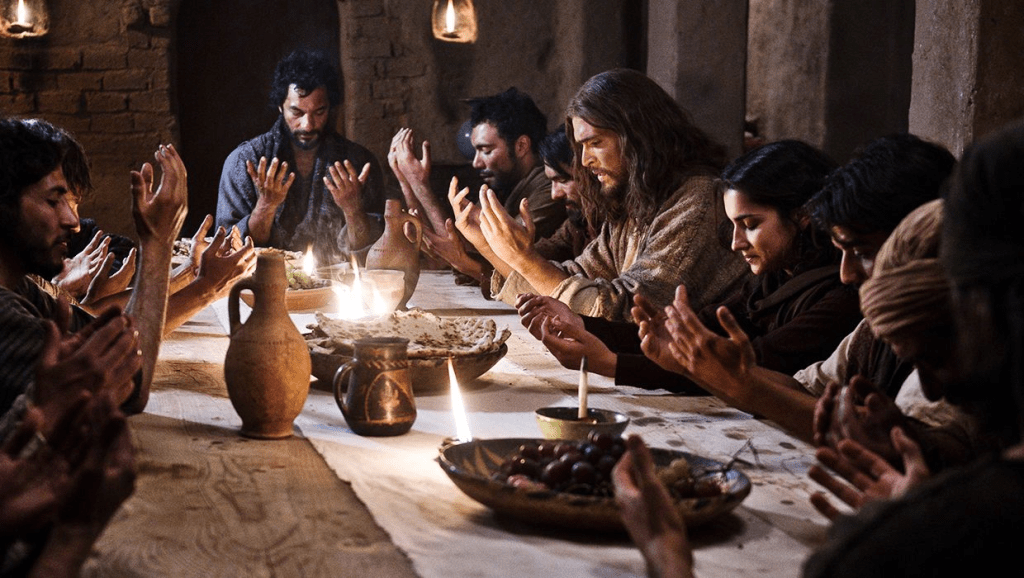
Chosen

“Lord, hear my prayer! Listen to my plea! Don’t turn away from me in my time of distress. Bend down to listen, and answer me quickly when I call to You. For my days disappear like smoke, and my bones burn like red-hot coals. My heart is sick, withered like grass, and I have lost my appetite.” (Psalm 102:1-4 NLT)

Why do you think the Lord allows verses like the ones above in His Book? If you’ll take the time to read them there are 150 Psalms, 65 that deal with issues that trouble the heart and cause suffering to the soul. Read the rest of Psalm 102, which begins with lament, but ends in praise.

Charles H. Spurgeon, often referred to as “the Prince of Preachers,” suffered with bouts of severe depression. He wrote: “Doesn’t God’s Word come to us like a soft rain shower, dispelling the fury of the flames? Isn’t it like fireproof armor, against which heat is powerless? Then let afflictions come, for God has chosen me. Poverty, you may walk through my door, but God is already in my house, and He has chosen me. Sickness, you may intrude into my life, but I have a ready cure – God has chosen me. Dear Christian, don’t be afraid, for Jesus is with you. Through all your fiery trials, His presence is both your comfort and safety. He’ll never forsake those He has chosen for His own.”

Photo by Kindel Media on Pexels.com

Yes, of course, Jesus followers suffer many hardships, losses, and pain, but rightly seen, they become measures used to increase our faith and trust in our loving Father, not to push us away or cause our faith to waver. And like the caring, compassionate Father He is, He sits with us, stands with us, or walks with us through every one of them.

Will we always understand why He allows those things? Likely not, but if we’ll hold the course, He’ll teach us things though pain that we can learn in no other way. What has He taught me through suffering and loss?

He’s taught me when everyone else is walking out, He’s not budging! I’ve learned when my faith is too weak to walk, He’ll carry me. I’ve learned that I’d better never forget in the darkness what I know to be true in the light. I’ve learned that His love for me sees just as clearly without light as it does with light.

He taught me that loneliness is a state of mind, not a spiritual reality. I now know without question that His promises are true and need never be doubted, regardless of our circumstances. I’ve learned that the Bible is true from cover to cover, that His life in me is worth whatever I have to endure to see His holy face when I kiss this earth goodbye.

Are there things I can’t explain in terms of what goes on in this world? Without question! If I would let them, the evils of this world would rob me of whatever measure of joy I could muster, but I’ve learned not to focus on things I can’t change but cast my gaze on the One who can.

One day all wrongs will be made right. The crimes that were “unsolved” on earth will all be solved, and on the other side, punishment will be rendered. No one “gets by” with anything in eternity.

I think of the ones today who because of power, prestige, and position can rob children of their childhoods, create terror in the hearts and minds of parents and grandparents; their drugs ruin untold numbers of lives while their lawlessness cuts short the lives of millions. I think of those who believe their money can buy them privilege, which it might in this life, but certainly not in the next.

I’ve learned that sooner than any of us can imagine, this life will end and all that will matter then is to be God’s chosen.

Food for thought.

Blessings, Ed 😊

The Power of the Table (Part 2)

“For John didn’t spend his time eating and drinking, and you say, ‘He’s possessed by a demon.’ The Son of Man, on the other hand, feasts and drinks, and you say, ‘He’s a glutton and a drunkard, and a friend of tax collectors and other sinners!’ But wisdom is shown to be right by its results.” (Matthew 11:18-19 NLT)

When I was in college, I didn’t have two pennies to rub together, so I jumped at the chance to go to a friend’s for dinner. It was a young couple with a small child, and it quickly became apparent they were stretching to include me. The wife had fixed mac and cheese, which I loved, but there was only enough for me because they skimped on their portions. As poor as I was, I felt honored to have been invited. The Lord gave me insight into the power of the table through that sacred experience.

In the above verses the Pharisees were judging John the Baptist and Jesus for exact opposite reasons. In the verses just preceding these Jesus compares them with children playing who couldn’t agree even on how to play together.

Photo by fauxels on Pexels.com

In the context of the power of the table, it reminds me of how distracting Satan can be to us when we’re seeking to do God’s will. We get entangled in the details rather than seeing the “big picture.” Some who read yesterday’s post may be in a quandary trying to decide: “Should we invite __________ over or take them to a restaurant? Oh my, what would I serve? Oh my, where would we go?” And my response would be – it doesn’t really matter! YOU are the draw, not your food or the restaurant.

Jesus summarized the scenario above in the last sentence: “But wisdom is shown to be right by its results.” William Barclay wrote: “The Jews might criticize John for his lonely isolation, but John had moved men’s hearts to God as they had not been moved for centuries; the Jews might criticize Jesus for mixing too much in ordinary life and with ordinary people, but in him people were finding a new life and a new goodness and a new power to live as they ought and a new access to God..” (Barclay, W., ed. (1976). The Gospel of Matthew (Vol. 2, p. 10). The Westminster John Knox Press).

Since we’re talking about food and how it can aid us in moving people closer to God, it’s appropriate to say: “The proof is in the pudding!” If the Lord prompts you to invite 10 people to a brunch at your house or a thousand people to a celebration in a public facility, that’s between you and the Lord. The event isn’t the issue, your openness to the Lord’s directives and the effectiveness of whatever you do on the lives of lost people is.

C.S. Lewis wrote: “I need Christ, not something that resembles Him.” Those who don’t yet know Jesus aren’t looking for a “show” from us, they want what’s real, authentic, something that’s God-inspired, that paints a clear picture of who God is and why they so desperately need Him. You don’t have to chase the extravagant, open your heart to what’s simple, but thoughtfully prepared and shows whoever you’re seeking to reach, a clear portrait of the heart of God.

The power of the table isn’t found in the table itself; it’s revealed in and through the hearts of the people around the table. It can be as simple as mac and cheese in a very humble setting, or grilling dinner in a yard overlooking the city. Just make sure Jesus is invited and He gets the chair at the head of the table.

It’s all and only about Him and what can be accomplished in the lives of those who are seeking Him. Live well. Love well. And He will honor your efforts to reach those in your spheres of influence.

Food for thought.

Blessings, Ed 😊
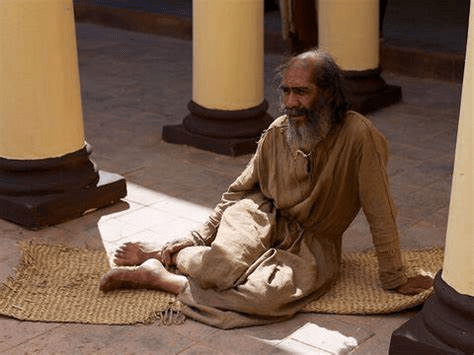
The Power of the Table

“As Jesus was speaking, one of the Pharisees invited Him home for a meal. So He went in and took His place at the table.” (Luke 11:37 NLT)

Do you like to eat? Is the Pope Catholic? Of course, most everyone loves to eat, even Jesus, as we can see in the above verse.

Growing up in West Virginia I didn’t acquire a taste for “fine dining.” My favorite “go to” meals were pinto beans and cornbread, spaghetti, and hot dogs and burgers on the grill. Yeh, I know, you can’t beat those choices!

We rarely ate “out,” except to go to someone’s house, usually a relative, and, on occasion, we would host. I always looked forward to those times – going to my grandparents’ house or having my uncles and their families visit. There’s something special about eating together that’s just plain fun.

As I read in Scripture about the many times Jesus and His disciples would eat together, it causes me to wonder how many conversations they had while eating, resulting in insights, and understanding about the things Jesus taught. “Oh, so THAT’s what that means!” Can you hear them laughing and trying to talk over each other? We’ll get to do that someday. I can’t wait!

In the verse above, did you notice the sequence of events. “As Jesus was speaking…” Pharisees could be rude and abrasive, but I wonder how that went down. Did he quietly gesture? Walk up close, get Jesus’ attention, then whisper his invitation? Did he wait for a break? We don’t know. All we know is Jesus said yes. But the context suggests He didn’t stop teaching.

What’s my point? Eating together can be a very effective evangelistic tool for reaching the lost, but it can also be helpful in meeting with other believers. David and Meg Robbins wrote: “But the table is not just for ‘us’; we join God by welcoming others too. Setting a place for guests communicates love, acceptance, and grace. To the hungry it says, eat. To the lonely it says, welcome. To the needy it says, receive. To all it says, God loves you. We used to think: What do we really have to offer the people God has placed around us?” 

Some are hesitant to invite others to their home because, like the Robbins, we tend to think that we have nothing to offer anyone. We also can get very introspective about our house, furniture, dishes, etc. What will they think of __________, and besides, we have two obnoxious dogs. And, of course, this is a two-way street.

Maybe the friend or family you’re seeking to reach is experiencing rough times, so to invite them into your very nice house could be intimidating or discouraging to them. I suppose that’s possible, but my experience has been that YOU are the attraction, not your house. A lot of ground can be covered through hospitality and kindness.

My rule of thumb is treat them like family and they’ll feel like family! You put on an heir of superiority and make them think you’re really doing them a favor by inviting them and, I assure you, they’ll get the picture. But if you be yourself and treat them with respect and they’ll not just see you, they’ll see the Christ who lives in and through you.

Let’s look at this from another angle in tomorrow’s post.

Blessings, Ed 😊

On Whom Does God Look with Favor?

“This is what the Lord says: ‘Heaven is My throne, and the earth is My footstool. Could you build Me a temple as good as that? Could you build Me such a resting place? My hands have made both heaven and earth; they and everything in them are Mine. I, the Lord, have spoken! I will bless those who have humble and contrite hearts, who tremble at My word.’” (Isaiah 66:1-2 NLT)

Would you like the Lord to bless you? What’s it worth to you?

It’s no accident that the verses above begin with God’s explanation of who He is as Owner and Ruler of everything He created – including you and me. There’s nothing we can do to make God’s life any better or any worse, but there’s a lot He can do to benefit us.

There’s a part of us, as human beings, that have this sometimes-subtle expectation, whether we’ve submitted to His authority or not, that God owes us. By virtue of our existence, we believe our lives should be better than they are. And the irony is, it doesn’t matter if our annual income is 10 thousand dollars or 10 million.

Photo by Polina Tankilevitch on Pexels.com

When we get a cold or flu, we feel abused, as if God is punishing us, even if that’s the only time we give Him a thought. And it seems it’s compounded when we profess faith in Him. It’s as if our expectations increase; God’s debt to us really climbs after we profess faith in Him. Yes, of course, I’m exaggerating, but, unfortunately, not by much.

Think with me about the 12 disciples in a couple of scenarios – first, in the boat when the winds and waves were threatening. They awakened their Master with these words: “Teacher, don’t You care that we’re going to drown?” Might they have said: “Master, wake up! We’re fearing You might drown.” Where was the center of their primary concern? Yep, same as ours – themselves.

Then I think of the feeding of the five thousand men and their families. Who initiated the inquiry about eating? The disciples did, but in what context? The disciples’ plan was to send to everyone home hungry, but Jesus said to them: “That isn’t necessary – you feed them.” And immediately, rather than saying: “Okay, Lord, what’s Your plan?” They looked at their measly five loaves and two fish and concluded, it’s not enough!

“Little is much when God is in it!” It doesn’t matter the size of the need as long as you’re comparing it to the size of your Savior. So, who does God look upon with favor? The word that’s translated “humble” in the verse above, can also be translated “poor, weak, afflicted, needy.” The implication to me is, the less we have the more dependent we are on the Lord, but that’s not always the case, is it?

Humility isn’t tied to income any more than being contrite or respectful in the presence of Jesus or His written Word. These qualities have more to do with the posture of our heart than the position of our bank ledger. It has more to do with how we view God than how we view ourselves.

God favors those who see their need of Him, value His friendship, and depend on His blessing. Blessing and love are two separate categories of concern. God loves everyone equally; He has no favorites, but He blesses those whose heart and mind are in tune with His. He doesn’t waste His blessings on discontents, complainers, and those who have no regard for His authority.

And, yes, I’m aware that His sun shines on the just and the unjust, but that’s not what the verses above are talking about. I believe Isaiah has heard the Lord declare to whom His heart is bent, not for favor, but for friendship; not simply expecting God to be the proverbial “genie in the bottle,” but being His child in desperate need of a Father. My desperation for God isn’t growing less as I age, it’s increasing exponentially. How about yours?

Food for thought.

Blessings, Ed 😊

For Whom Would You Die?

“When we were utterly helpless, Christ came at just the right time and died for us sinners. Now, most people would not be willing to die for an upright person, though someone might perhaps be willing to die for a person who is especially good. But God showed His great love for us by sending Christ to die for us while we were still sinners.” (Romans 5:6-8 NLT)

Would you be willing to die for someone who murdered your spouse or kidnapped your child and sold them into slavery? Forgive me for the shocking examples, but unless and until you realize that, given the right circumstances, you are capable of anything anyone else in history has done and worse, you won’t fully appreciate the sacrifice Jesus made when He gave His sinless life in your place on the Cross.

David Jeremiah wrote: “It’s a hypothetical question with no fixed answer, and in Romans 5:6-7 Paul raised the question to set up a stark contrast. He said that hypothetically someone might die so that a righteous person might live—though it would be rare for someone to do that. If it would be rare to die for a righteous person, it would be unheard of for someone to die for a sinful, evil person. And yet that is what Christ did.”

Photo by Pixabay on Pexels.com

Think about that for a minute! I’m writing this post on a Sunday afternoon. I left for church a little after 7:00 a.m. so that I could serve as a Greeter at one of our entrances. After the message the Pastor invited people to come forward for prayer. There was an elderly woman who was making her way down the stairs to go forward, but it was apparent she was struggling. Being the observant and caring specimen that I am I ignored her, but my wife noted that she needed help, so I “volunteered.” I helped her to the front of the church, then waited and walked with her back to her family.

Some people who saw me do that would conclude that I was a kind and selfless person, not knowing if it hadn’t been for my wife’s “suggestion” I would likely have let her struggle on her own. What’s my point? We tend to think of others we see at church, in small group meetings, etc. as better than they really are. Men that I consider good “men of God,” struggle with lust, porn, alcohol, drugs, and other debilitating addictions – not so much in their behavior, but in their minds.

There are people in my life who might die for me, but they’d be making a mistake – I don’t deserve their sacrifice. Neither do you deserve the sacrifice of someone who loves you dying in your place. None of us do, that’s the point. Yet, Jesus, not when He saw us at our best, but at our worst, laid down His life to give us a shot, not simply at a “better life,” but a perfect life with Him in heaven – the absolute LAST place we ever deserve to be!

My gratitude to Jesus doesn’t emanate from my goodness, it shouts forth from my wretchedness. The Lord said to the Church in Laodicea in Revelation 3:17: “You say, ‘I am rich. I have everything I want. I don’t need a thing!’ And you don’t realize that you are wretched and miserable and poor and blind and naked.”

My purpose isn’t to tear you down, it’s to build you up in Jesus. Unless and until you see Jesus for the magnificent Savior He is you can’t and won’t give Him the adoration, praise, and worship He alone deserves. You’ll feel confident you’re a good person who doesn’t really need much from Him, not the blatant sinner who is capable of atrocities your mind can’t even imagine.

Never forget you are a sinner saved by grace, not because you deserve it, but because you don’t!

Food for thought.

Blessings, Ed

What Is Sin?

“The man didn’t know, for Jesus had disappeared into the crowd. But afterward Jesus found him in the Temple and told him, ‘Now you are well; so stop sinning, or something even worse may happen to you.’” (John 5:13-14 NLT)

Do you realize that every time you choose your will over God’s you sin? Sin isn’t simply doing something wrong, in terms of an activity or action. No, sin begins in the mind, it starts with how we think. Right actions follow right thinking and vice versa.

The verses above are referring to the man who had laid by the pool of Bethesda for 38 years and was healed by Jesus. Because Jesus had instructed him to: “Stand up, pick up your mat, and walk!” the Pharisees were all over the healed man to give them information about Jesus. At first, the man didn’t know, because Jesus had blended into the crowd, but don’t miss this, even before the man went to the Pharisees to rat Jesus out, Jesus spoke to him the words in the above verse.

What does that tell us? Jesus doesn’t need to hear his words or ours in order to know what’s in our heart. But it also tells us that we can have a serious and obvious encounter with Jesus and still not know who He is. Can you even begin to imagine what it would have been like to lie on a mat for 38 years hoping to be able to get into a pool you are hoping will heal you?

In my mind’s eye I envision the man over time just losing heart and giving up. At first he no doubt remained positive, assuring himself: “I’ll be first the next time. I’ve got this. For sure the next time.” But the next time comes and goes, and the next time, and the next for 38 years. How do you spell “HOPELESS?”

Then one day Jesus shows up. It’s a day like any other, but for some reason everything is different. This Rabbi, this smiling, gentle Teacher isn’t going to someone else, He’s standing over ME! It’s hard to make out His features because of the sun and the glare of the water, but it’s true! He’s asking me “Would you like to be well?”

You’d think the first word out of his mouth would be “YES! A THOUSAND TIMES YES!” but it isn’t. His words reflect, not only what in his mind is his hopeless physical condition, but his deteriorated mental and emotional state: “I can’t, sir.” But that doesn’t deter Jesus one bit. He tells the man to pick up his mat and walk, then continues on his way.

Do you find that odd? I think of the leper, the blind man, and others whom Jesus hugged and with whom He celebrated. Why did He walk away? Remember, this area was literally flooded with sick people, but Jesus wasn’t there for all of them, just this man. Did He love the others less? Of course not, but they weren’t His mission in this instance.

Jesus’ focus was this specific man and his specific need. And I’m convinced healing his body was secondary to His real mission – to see this man become His follower; to allow the Spirit of the living God to invade his heart and change his life, but that, from all outward indications, didn’t happen. Was his sin too great for Jesus to forgive? Of course not, but that has to be the man’s desire. Jesus doesn’t make us follow Him or force us to receive forgiveness.

What about you? Have you been “healed” in some significant way, but you’re still following the dictates of your own heart and mind? Have you had an encounter with Jesus, but your life is still the same? Please don’t make the same mistake the man in the story made. Don’t let Jesus walk away before you grab Him and confess your need of Him and yield your life and allegiance to Him.

If you’re not certain you’re walking with Jesus, please click this link and let your heart know for sure: Ron Huchcraft’s Bridge to God.

Unforgiven sin is the cancer that will eat you alive – in this life and the next!

Blessings, Ed 😊

A Holy Nation

“But you are not like that, for you are a chosen people. You are royal priests, a holy nation, God’s very own possession. As a result, you can show others the goodness of God, for He called you out of the darkness into His wonderful light.” (1 Peter 2:9 NLT)

Is it safe to say that many professing “Christians” in America have little to no real understanding of who the Church is and what her role is? What do you think of when you hear the terms “holy nation” used together? Perhaps the children of Israel?

What first comes to mind when you hear the word “holy?” Do you see and understand it in a behavioral sense? Do you equate perfection with holy or holiness? Do you envision a particular lifestyle or style of dress? Perhaps like the Amish or Quakers?

Photo by Simon Hurry on Pexels.com

The term “holy” literally means “to be separated to God,” but in its highest application it has reference to God’s holiness, “His purity, majesty, and glory.” (Strong’s). When you think about it, isn’t that our goal as Jesus followers?

Jesus was the embodiment of all truth, the visible presence of the invisible God. As He lived His life as a human being, His goal was to be perfect as His Father in heaven was perfect; to be holy – completely and without reservation to be set apart for sacred purpose. Jesus’ goal was to let the Father live His life out through Him. Do you realize that’s His desire for you and me as His followers?

“Yeh, but we can never be perfect like Jesus, at least not on this earth, while we’re in these bodies.” And you’re right, but that’s not the point. We are already flawless and perfect when seen by the Father through the lens of Jesus’ perfection. So, to the extent our lives, individually and corporately, reflect the purity, majesty, and glory of Jesus, we will be a holy nation, separated to fulfill God’s purposes.

Jackie Hill Perry wrote: “We must show the next generation what it means to be a holy nation. This holy nation isn’t America. It’s the church of God.” Yes, and amen! But how? How can we most positively and powerfully impact a whole generation of young people to follow after the heart of God? I believe it begins in our heart and mind.

We must, by God’s grace and with His guidance, live lives above reproach. What might that look like? We will be people who model our lives after Jesus – finding strength and guidance in our love for and devotion to His Holy Word, the Bible; we will be truth-tellers in the broadest and best sense – NEVER lying, and seeking to never allow ourselves to get into compromising situations.

We must pursue holiness of heart, mind, soul, and body, by seeing ourselves as God’s sacred instruments, set apart for His exclusive use. And we must learn to love one another as brothers and sisters – as family – in the Body of Christ. What does that mean? It means we must be more “inclusive” and less “exclusive.” And, honestly, I realize that can be scary, but we’ve got to find a way to share our lives with our blood-bought brothers and sisters. None of us are specimens of human perfection, but we can strive together to be better.

While serving a small church in Kentucky there were 8-10 churches in our little community. We, as Pastors, began to meet together and formed a co-op ministry to address the needs of the community. It brought us together as men and women of God. We loved each other and helped each other in practical ways. Our common bond wasn’t doctrine, it was Jesus. We preached in one another’s churches, celebrated one another’s victories, and suffered with one another in our defeats. I loved those Pastors, and they loved me.

Let’s work, soul by soul, church by church, to be a holy nation united to the glory and honor of our Savior and to live a positive example worthy of following for those who are watching, both young and old.

Food for thought.

Blessings, Ed 😊

What Is Forgiveness and Why Is It So Vital?

“He is so rich in kindness and grace that He purchased our freedom with the blood of His Son and forgave our sins.” (Ephesians 1:7 NLT)

Have you ever done or said something that literally at the second the words passed through your lips, or the deed was done, you knew it was a major mistake? How we wish we could have do-overs for those instances! Gratefully, that’s exactly what happens when we seek God’s forgiveness!

The word Paul uses in the verse above that’s translated “forgiveness” means: “remission, deliverance, liberty.” It means: “letting them go as if they had never been committed” (Strong’s). That’s why when we come to Jesus and ask for forgiveness of our sins, He can view us as if we’d never sinned, just like Him. We’re liberated from our sin debt, and it’s never remembered against us again. Wow! What a Savior!

Photo by RDNE Stock project on Pexels.com

That’s what the Lord wants to see happen between us when we forgive one another. And your knee-jerk response might be: “That’s impossible!” And you’d be exactly right, it is. But do you remember what Jesus said from the Cross in reference to those who had just put nails through His holy hands and feet? “Father, forgive them, for they don’t know what they are doing.” Jesus never expects anything from us that He doesn’t model in His own life.

You may wonder how you’d ever muster the strength to forgive the person who did __________ to you (and you can fill in the worst thing that’s ever happened to you). You may not believe me but think about this for a minute. Jesus was sinless, we’re not, but He voluntarily bore the penalty for every sin we’d ever commit. How did He do that?

Colossians 1:19-22 says: “For God in all His fullness was pleased to live in Christ, and through Him God reconciled everything to Himself. He made peace with everything in heaven and on earth by means of Christ’s blood on the cross. This includes you who were once far away from God. You were His enemies, separated from Him by your evil thoughts and actions. Yet now He has reconciled you to Himself through the death of Christ in His physical body. As a result, He has brought you into His own presence, and you are holy and blameless as you stand before Him without a single fault.”

Though it’s impossible for us to understand, think about this: Jesus bore the weight of our sin in His body on the cross. Have you ever had someone walk on your back? Have you ever had an emotional trauma weigh on your soul? Think about the weight of the sin of billions of people upon your heart, mind, soul, and body. That’s what Jesus did to make it possible for us to be forgiven – and for us to forgive those who sin against us!

There are atrocities that my mind can’t comprehend that are committed every day in our world. Children are murdered in their mother’s womb; millions are kidnapped, raped, tortured, and murdered at the whim of the rich and powerful; lies are stated as truth from the mouths of the government and media, from those we should be able to trust; and we defile each other in ways that were unimaginable only a few years ago.

We live in a world that is circling the proverbial drain. Isn’t it time for those of us who profess the holy name of Jesus to get over ourselves and forgive each other? Can’t we muster the grace to obey the One who forgave us and lay down our “rights” to be heard? I hate the sin of others, but what makes me sick to my stomach and keeps me awake at night is the sin that lurks in my own soul.

The world will never come to Jesus unless and until they see a clear picture of Him in and through the lives of those of us who bear His Name. O God, help us!

Food for thought.

Blessings, Ed

The Way Forward

“So if you are presenting a sacrifice at the altar in the Temple and you suddenly remember that someone has something against you, leave your sacrifice there at the altar. Go and be reconciled to that person. Then come and offer your sacrifice to God.” (Matthew 5:23-24 NLT)

What has the Lord laid on your heart to do for Him? Is there a family member, friend, neighbor, stranger you just met, a co-worker, or a long, lost friend who has come to your remembrance and the Lord is asking you to reach out to them?

Is there a specific reason He’s prompting you to reach out? Is there an opportunity to be a witness for Jesus, to be a friend or advocate, guiding them in what they’re seeking to do or be? Perhaps you have experience in dealing with something with which they’re struggling? Whatever the reason for His prompting, pray carefully before you move forward.

In my experience and, as I understand Scripture, it’s not uncommon for us to receive mixed messages when it comes to the voice of God, not because He doesn’t make Himself clear, but because Satan is often seeking to mix God’s signals with his own. As a Jesus follower we are never immune to Satan’s interruptions, especially when we’re wanting to hear the Lord clearly and precisely.

Photo by Maria Pop on Pexels.com

Spiritual warfare is real, and Satan and his devilish emissaries are alive and active. That is not to say that we need to be fearful or alarmed. Satan is subject to the authority of Christ Jesus just like we are, so the good news is, while Satan can harass and tempt us, neither he, nor his evil spirits, can indwell us. If you are filled with God’s Spirit, you never have to be afraid of evil controlling you or forcing you to do something against your will.  

Nothing can enter your life except it passes through the filter of God’s permission, so, if you’re dealing with temptations, ungodly habits, or a lifestyle you know is dishonoring to the Lord, run to the Lord, seek His forgiveness and be certain you’re filled with God’s Spirit. Every born-again believer in Jesus is filled with the Holy Spirit upon repentance and conversion.

If you’re not certain you belong to Jesus, please check out Ron Hutchcraft’s Bridge Illustration by clicking this link.

Okay, so what does all of this have to do with moving forward? Everything! Until you know with certainty that Jesus is your Lord, you’ll be groping in spiritual darkness, and guess who loves the darkness? Satan and his demons. If you’re trusting your feelings or receiving conflicting answers to your inquiries of God or others, the only way forward is to look back and make sure you don’t have any “skeletons” in your closet. What does that mean?

It means that if you have unforgiveness in your heart for someone, that you’re trying to cover up with good deeds or by being more “spiritual,” you’ve got to take a step back and make that relationship or those relationships right before you can move forward. If you’ve hurt someone or someone has hurt you, you need to ask forgiveness or offer forgiveness before you’re going to make progress moving forward.

Forgiveness is a multi-dimensional process, so let’s look at it more closely in tomorrow’s post.

Blessings, Ed 😊

Why Does Christianity Work?

“In the beginning the Word already existed. The Word was with God, and the Word was God.” (John 1:1 NLT)

Christianity, as I understand it, isn’t a religion, as much as it’s a relationship. So, the question above could also be asked, as with any relationship, “Why does a relationship with the God of the Bible work?”

I’ve mentioned in previous posts that when I first came to know the Lord, at age 15, my adventure with prayer began when I sat an empty chair across from me and believed Jesus was sitting in it. So, I began talking with Him as if He was exactly who He claimed to be – God in human form.

An invisible God is a mystery, one with whom it’s very difficult to have any kind of meaningful relationship. Perhaps that’s why so many other religions tie their belief systems to a human being, now dead, of course, but who once lived. Buddha, Muhammed, Joseph Smith, to name a few.

Photo by David Bartus on Pexels.com

Their religions work for them because they tie their beliefs to a person who taught what they now believe. On some levels they saw their beliefs embodied in and revealed in and through that person. Even though, in most cases, their religions were only helpful in this life, it sustained them and gave them something to hold onto while on this earth.

The second issue that is troublesome about other world religions is that they are incomplete. For the most part they create an environment that demands loyalty defined by “good works.” These good works can, and often do, result in some very pious and, from all outward appearances, good people, but their performance on earth leaves them wondering whether they will ever qualify for life after death, if indeed there is life after death in their belief system.

The third element that calls to question the validity of a founder of a religion is honesty – is the proponent of all the good things they taught truthful about their own adherence to their expectations of those who follow them? Is what they taught true?

Lee Stobel was an atheist who used his investigative skills learned as a journalist to seek the truth about Christianity. Lee wrote: “Christianity isn’t true because it works. It works because it’s true.” Christianity is the only world religion where God came to man. Every other world religion has some means of man working their way to God.

God poured Himself into human flesh, becoming a man who gave visibility to the invisible God. He not only taught well, He lived what He taught, so much so He was killed for claiming to be God, whom He of course was, but not many believed Him – until He walked out of His grave under His own authority.

Christianity works for me because the “invisible” person in the chair to whom I prayed was and is real, alive, and actively involved in my life. You can go to the tomb of every other founder of a world religion and find their remains, only Jesus’ tomb is empty. Only Jesus is alive and interacting with His followers every day and in ever detail of our lives.

Who are you following? If it’s not the God of the Bible, revealed in and through the person of Jesus, you’re wasting your time and effort. Jesus is the only way to heaven. Not your goodness, personal merit, and not your efforts to prove you’re worthy. The blood of Jesus alone is payment for sin and the only way anyone can “deserve” heaven is by placing their faith and trust in the only One who paid for their admission.

If you don’t yet know Him, yield your life and allegiance to Jesus today. Click on the link below if you’re not certain how to give your life to Jesus. You are loved beyond measure. You’re the reason Jesus was willing to give His life on the Cross. If you’d been the only person on earth who needed a Savior, He would have still died, just for you! Please go to Ron Hutchcraft’s Bridge illustration so you can be certain your sins are forgiven and you have new life in Jesus.

Blessings, Ed 😊