A Good Father

“You fathers – if your children ask for a fish, do you give them a snake instead? Or if they ask for an egg, do you give them a scorpion? Of course not! So if you sinful people know how to give good gifts to your children, how much more will your heavenly Father give the Holy Spirit to those who ask Him.” (Luke 11:11-13 NLT)

In all my years I’ve never met, nor even heard of any father saying that they didn’t want to be a good father. When I was growing up in the late 40’s and 50’s it was quite rare for families to be separated by divorce, but, like today, there were a lot of absentee fathers. They hadn’t necessarily “left” the family, but they were nonetheless, “absent.”

My dad was a very good father to me. He worked a lot, and we didn’t have much interaction during the week, but he made it a point to include us kids in whatever was going on over the weekend. He didn’t serve the Lord and we didn’t attend church except for Easter and maybe Christmas, but when I became a Christ-follower, he and my mom began attending church and soon began to follow the Lord as well.

Photo by Josh Willink on Pexels.com

The esteemed Evangelist Dr. Billy Graham wrote: “A good father is one of the most unsung, unpraised, unnoticed, and yet one of the most valuable assets in our society.” Although these words were spoken many years ago, they ring truer today than ever before.

If you’re a father today, your role in your wife and children’s lives is invaluable. Due to my divorce, I feel I’ve lost a lot of ground in my kids lives, but I continue to seek involvement and participation in their lives as much as they’ll allow. If you’re a father today, where are you in terms of your activity in your children’s lives? Are they a top priority or an afterthought? A blessing or a burden? A delight or a disappointment?

Have you ever wondered why Jesus connected fatherhood to the availability of and access to the Holy Spirit? I’m confident He had reasons that I will likely never understand, but the obvious implication for me is that on many levels, the value of our investment in our kid’s lives is in direct proportion to our dependence upon the Holy Spirit to guide and advise us.

Because of that we can’t ignore our role as a dad. We can’t excuse ourselves from our current responsibilities because “I never knew my dad,” or “I blew my chance and now my kids are grown.” Maybe you, like my dad, weren’t a believer when your kids were growing up and you believe any opportunity for you to influence your kids for the Lord is passed, but I choose to believe the Holy Spirit can continue to work in your life and the life of your child or children to bear fruit to the Lord’s honor.

One of the most powerful and helpful things you can do for your child(ren) is to pray for them every day. Pray the Lord will draw them to Himself; pray for their friends, classmates, teachers, anyone in their lives who has any influence over them, that it would point them to Jesus. Pray for the protection of their body, mind, and soul; that the Lord would remind them, in ways only they would recognize, of their need of Him.

One of our greatest temptations as fathers is to believe we’ve failed and there’s nothing we can do about it; that our opportunity to influence our children has passed; that the course of their lives is set and there’s no way they’ll ever change. I don’t believe that, but even if it was so, what about your grandchildren?

The role of a father never expires, even beyond the grave. The Lord has laid it on my heart to write my children and grandchild a letter they will receive upon my death. I want to tell them things in death they wouldn’t hear in life and let the Holy Spirit do what only He can in their lives.

It’s an honor to be called “dad,” so, regardless of how well you’ve fulfilled that role to date, determine today, right now, to do something positive to bless your kids and exalt your heavenly Father.

Food for thought.

Blessings, Ed 😊

Have You Been Raised from the Dead?

“For we died and were buried with Christ by baptism. And just as Christ was raised from the dead by the glorious power of the Father, now we also may live new lives.” (Romans 6:4 NLT)

What comes first to your mind when you think of resurrection? As a rule, it seems, we tend to think first of the resurrection of the Lord Jesus, then of our resurrected life coming when Christ returns. But Paul speaks, in the context of explaining baptism, that we are lowered into a watery grave, then resurrected to new life in Christ when we’re born again.

In Philippians 3:10-11 Paul addresses his desire to experience intimacy and oneness with Christ, not only in His death, but in His resurrected life, not only after he (Paul) dies physically, but in this life. He explains this more clearly in Galatians 5:24 when he wrote: “Those who belong to Christ Jesus have nailed the passions and desires of their sinful nature to His cross and crucified them there.” But how is that even possible?

Photo by ArtHouse Studio on Pexels.com

He goes on to explain in the next verse: “Since we are living by the Spirit, let us follow the Spirit’s leading in every part of our lives.” And as if to anticipate what that could easily become, he adds in verse 26: “Let us not become conceited, or provoke one another, or be jealous of one another.”

Having received my pastoral training in a holiness tradition, it wasn’t uncommon for us younger guys to marvel at the “holiness” of some of the older pastors. And I’m not being facetious. I remember a retired pastor in his 80’s praying at one of our general assembly meetings and I sensed God’s presence so powerfully I felt that if I opened my eyes, I’d see Jesus standing with us.

Unfortunately, over the years, we seemed to be guided less by the Spirit and more by our own ambition, so, “holiness” became more about “what” we knew, than Who, but Paul is still right. Whatever hope we have of living a “resurrected” life, depends on our intimacy with and dependence upon the Spirit of the living God.

If you’re born again of the Spirit, you have been resurrected from death to yourself, to your old Adamic nature, that was nailed to the Cross with Jesus; and you’ve been filled with His Holy Spirit, enabling you to make decisions and begin to behave in ways that illustrate and give visibility to the life of Christ in you. If that’s not the case, you have to wonder why not?

Pastor John Piper wrote: “Being raised from the dead is never boring. Therefore every Christian has a stunning testimony.” But one of the key ingredients of “a stunning testimony” isn’t perfection in this life, but consistency. Paul wrote in Philippians 3:12: “I don’t mean to say that I have already achieved these things or that I have already reached perfection. But I press on to possess that perfection for which Christ Jesus first possessed me.”

We must, as Paul envisioned for his own life, so pursue, long for, and eagerly anticipate our union with Jesus in heaven, that every dimension and arena of our lives is being conformed by God’s Spirit to the likeness of our Savior.

As I view my own life, I have nothing about which to brag, except Jesus, and I hesitate to be as bold as Paul in suggesting others follow me as I follow Him. But what I can say is, I’m making progress. I’m moving in the right direction. Every day I wrestle with my old nature, but every day I’m seeing Jesus and hearing His voice more clearly. I pray that’s true for you as well as you seek to give visibility to your resurrected life.

Food for thought.

Blessings, Ed 😊

Are You Squandering God’s Greatest Gift?

“However, He has given each one of us a special gift through the generosity of Christ.” (Ephesians 4:7 NLT)

When Jesus died on the Cross, He sacrificed His sinless life for each one He knew would one day come to Him. Please think about that for a minute. While He certainly loves the whole world, His blood wasn’t spilled for the sins of the whole world. His precious blood drained from His holy body for YOU, and for me! I’m convinced, by the authority of God’s Word and the heart of the God I’ve grown to know and love, that when He died, the face of every person who would one day yield their life and allegiance to Him, passed before Him.

He didn’t sacrifice for untold millions with blank faces and empty lives, He died for people with personalities, needs, fears, frustrations, friends, relatives, and needs that He saw clearly before we were ever born, but most importantly, He died for each one who one day would recognize their overwhelming need for . . . HIM! And in anticipation of that day, He hand-picked gifts – grace gifts designed and given – specifically for each of us who now know Him personally.

Photo by Pixabay on Pexels.com

What kinds of gifts did He give us? Every believer, without exception, is given at least one spiritual gift. You can get ideas of some of them from Romans 12, 1 Corinthians 12-14, and Ephesians 4, but these are not exhaustive lists. But aside from spiritual gifts, the greatest gift given to every believer is the gift of the Holy Spirit.

In the context of prayer, Jesus said this in Luke 11:13: “So if you sinful people know how to give good gifts to your children, how much more will your heavenly Father give the Holy Spirit to those who ask Him.” Couple that with Ephesians 1:13 where Paul writes: “And now you Gentiles have also heard the truth, the Good News that God saves you. And when you believed in Christ, He identified you as His own…” How did God do that? “by giving you the Holy Spirit, whom He promised long ago.”

Every believer in Christ is filled with the Holy Spirit when they are saved. So, why in Luke 11 did Jesus encourage His listeners to ask the Father for the Spirit? And I understand this is pre-Pentecost where the Holy Spirit came in power, but I also believe we squander God’s greatest gift by assuming because He resides in us, we don’t have to “ask” for Him to work powerfully and uniquely in our lives.

Years ago, I read a story of a young woman who upon leaving her workplace to walk home, asked the Spirit to be with her, to protect her. As she typically did, she took a shortcut down an alley that shortened her walk significantly. She was startled to see, about halfway down the alley, a man standing, staring at her, but he made no attempt to move in her direction.

The next day she heard that a young woman had been attacked in that same alley the night before. She heard that the man was in custody, so she went to the police station in her small town and asked what had happened. She told the officer that she’d walked down that same alley and she’d seen a man, so she asked if she might be able to identify him as the same man she saw.

Upon seeing him and recognizing that it was the same man she’d seen, she asked the officer if she could ask him why he hadn’t attacked her, to which he responded: “I wasn’t about to try to attack you with those two huge men who were walking with you!”

This is simply one of millions of scenarios where the Holy Spirit can assist us in ways, we might not even realize what He’s done. Please don’t squander the privilege of inviting the Holy Spirit to walk with you every step of your life.

Food for thought.

Blessings, Ed 😊
Cheerleader or Naysayer?

“Barnabas agreed and wanted to take along John Mark. But Paul disagreed strongly, since John Mark had deserted them in Pamphylia and had not continued with them in their work.” (Acts 15:37-38 NLT)

Have you ever done something wrong, and you knew you’d blown it? I have. You feel horrible already, but when someone brings it up and continues to berate you, what happens? You may pop them in the jaw, but I usually retreat and turn my anger and frustration inward, which is very unhealthy, and can lead to depression, among other things.

The Bible doesn’t tell us why John Mark deserted Paul and Barnabas on their missionary journey, but it was obviously something Paul didn’t quickly forget. In Acts 15, while we don’t know exactly how much time passed, the Bible says: “After some time…” However much time passed; it obviously wasn’t enough for Paul to get over Mark’s desertion. So, he and Barnabas had a falling out.

Why did Barnabas take up for Mark? It could have been because Mark was his cousin, but I think it’s more than that. Barnabas was a nickname that means “son of encouragement.” Joseph was his real name, but of the 28 times in Scripture his name is used, he’s always referred to as Barnabas. That tells me he was an encourager, not a criticizer. He earned his nickname by being the proverbial “cheerleader” for those who needed a supporter. Do you remember that is was also Barnabas that went to bat for Saul of Tarsus after he became a believer. Nobody trusted him, but Barnabas took a chance and we’re all richer because of it.

Photo by Amina Filkins on Pexels.com

How about you? Where do you fall in the “cheerleader” or “naysayer” camp? Are you the one who roots for the underdog? Defends the weak and powerless? Takes up for those being criticized, whether it’s deserved or not? Or are you a “kick ‘em while they’re down” kind of person? Do you tend to give people more than one chance to prove themselves?

What about your spouse or children? Ann Wilson, a writer for Family Life, wrote: “On the ride home I defensively asked, ‘You think I boo you? I’m not booing you—I’m helping you.’ ‘It doesn’t feel like help,’ Dave quietly said. ‘You are constantly critiquing the things I do or say.’ I began to ponder what things would be like if I were to constantly cheer for him. I was concerned this wouldn’t work, because he would think I was satisfied. And that wouldn’t be good, right?

So I prayed. ‘Father God, forgive me. I have not been respecting Dave; I’ve been nagging him and criticizing him. I give up my control of trying to change him.’ A few months later, our family sat down for dinner. I said, ‘I want to stop for a minute and say thanks to Dad for working so hard every single day to provide every meal for our home.’ Then I turned to Dave and continued, ‘It’s easy to take your hard work for granted. You are a really good man.’

Later that night, he told me that my words were the best thing that had happened to him all week. All he heard in that moment was applause. Over the next months, as I began looking for things in which I could encourage him, I began to see God changing me. This doesn’t mean I lost my voice and never criticized Dave. But my anger and bitterness started going away, replaced by a heart of peace and joy.”  

Realizing there are some of us who take notice when someone, even someone we love, does something that annoys us, we may not see ourselves as the “naysayers” that we are. We want to offer “constructive criticism,” but with our expression and our body language, we’re really saying: “You should do that my way. I do a better job at that than you do. I’m more trained, better suited, just plane better at that than you.”

And all of that may be well and good, perhaps even true, but what is gained by belittling your spouse, child, or good friend when everyone involved would be better off if you just kept your mouth shut. Practice being a cheerleader for those you love most. When they fail or do something stupid, as we all do, be the first to say: “No sweat, let me help you clean it up!” I know there are probably 2 or 3 things I could criticize my wife for, but I also know there are a thousand things she could criticize me for.

Why not ask the Lord to give you the courage to show those you tend to criticize the most, the grace He always shows you. It’s a lot more fun living with a cheerleader than a naysayer, wouldn’t you agree?

Food for thought.

Blessings, Ed 😊

Chosen

“Lord, hear my prayer! Listen to my plea! Don’t turn away from me in my time of distress. Bend down to listen, and answer me quickly when I call to You. For my days disappear like smoke, and my bones burn like red-hot coals. My heart is sick, withered like grass, and I have lost my appetite.” (Psalm 102:1-4 NLT)

Why do you think the Lord allows verses like the ones above in His Book? If you’ll take the time to read them there are 150 Psalms, 65 that deal with issues that trouble the heart and cause suffering to the soul. Read the rest of Psalm 102, which begins with lament, but ends in praise.

Charles H. Spurgeon, often referred to as “the Prince of Preachers,” suffered with bouts of severe depression. He wrote: “Doesn’t God’s Word come to us like a soft rain shower, dispelling the fury of the flames? Isn’t it like fireproof armor, against which heat is powerless? Then let afflictions come, for God has chosen me. Poverty, you may walk through my door, but God is already in my house, and He has chosen me. Sickness, you may intrude into my life, but I have a ready cure – God has chosen me. Dear Christian, don’t be afraid, for Jesus is with you. Through all your fiery trials, His presence is both your comfort and safety. He’ll never forsake those He has chosen for His own.”

Photo by Kindel Media on Pexels.com

Yes, of course, Jesus followers suffer many hardships, losses, and pain, but rightly seen, they become measures used to increase our faith and trust in our loving Father, not to push us away or cause our faith to waver. And like the caring, compassionate Father He is, He sits with us, stands with us, or walks with us through every one of them.

Will we always understand why He allows those things? Likely not, but if we’ll hold the course, He’ll teach us things though pain that we can learn in no other way. What has He taught me through suffering and loss?

He’s taught me when everyone else is walking out, He’s not budging! I’ve learned when my faith is too weak to walk, He’ll carry me. I’ve learned that I’d better never forget in the darkness what I know to be true in the light. I’ve learned that His love for me sees just as clearly without light as it does with light.

He taught me that loneliness is a state of mind, not a spiritual reality. I now know without question that His promises are true and need never be doubted, regardless of our circumstances. I’ve learned that the Bible is true from cover to cover, that His life in me is worth whatever I have to endure to see His holy face when I kiss this earth goodbye.

Are there things I can’t explain in terms of what goes on in this world? Without question! If I would let them, the evils of this world would rob me of whatever measure of joy I could muster, but I’ve learned not to focus on things I can’t change but cast my gaze on the One who can.

One day all wrongs will be made right. The crimes that were “unsolved” on earth will all be solved, and on the other side, punishment will be rendered. No one “gets by” with anything in eternity.

I think of the ones today who because of power, prestige, and position can rob children of their childhoods, create terror in the hearts and minds of parents and grandparents; their drugs ruin untold numbers of lives while their lawlessness cuts short the lives of millions. I think of those who believe their money can buy them privilege, which it might in this life, but certainly not in the next.

I’ve learned that sooner than any of us can imagine, this life will end and all that will matter then is to be God’s chosen.

Food for thought.

Blessings, Ed 😊

The Power of the Table (Part 2)

“For John didn’t spend his time eating and drinking, and you say, ‘He’s possessed by a demon.’ The Son of Man, on the other hand, feasts and drinks, and you say, ‘He’s a glutton and a drunkard, and a friend of tax collectors and other sinners!’ But wisdom is shown to be right by its results.” (Matthew 11:18-19 NLT)

When I was in college, I didn’t have two pennies to rub together, so I jumped at the chance to go to a friend’s for dinner. It was a young couple with a small child, and it quickly became apparent they were stretching to include me. The wife had fixed mac and cheese, which I loved, but there was only enough for me because they skimped on their portions. As poor as I was, I felt honored to have been invited. The Lord gave me insight into the power of the table through that sacred experience.

In the above verses the Pharisees were judging John the Baptist and Jesus for exact opposite reasons. In the verses just preceding these Jesus compares them with children playing who couldn’t agree even on how to play together.

Photo by fauxels on Pexels.com

In the context of the power of the table, it reminds me of how distracting Satan can be to us when we’re seeking to do God’s will. We get entangled in the details rather than seeing the “big picture.” Some who read yesterday’s post may be in a quandary trying to decide: “Should we invite __________ over or take them to a restaurant? Oh my, what would I serve? Oh my, where would we go?” And my response would be – it doesn’t really matter! YOU are the draw, not your food or the restaurant.

Jesus summarized the scenario above in the last sentence: “But wisdom is shown to be right by its results.” William Barclay wrote: “The Jews might criticize John for his lonely isolation, but John had moved men’s hearts to God as they had not been moved for centuries; the Jews might criticize Jesus for mixing too much in ordinary life and with ordinary people, but in him people were finding a new life and a new goodness and a new power to live as they ought and a new access to God..” (Barclay, W., ed. (1976). The Gospel of Matthew (Vol. 2, p. 10). The Westminster John Knox Press).

Since we’re talking about food and how it can aid us in moving people closer to God, it’s appropriate to say: “The proof is in the pudding!” If the Lord prompts you to invite 10 people to a brunch at your house or a thousand people to a celebration in a public facility, that’s between you and the Lord. The event isn’t the issue, your openness to the Lord’s directives and the effectiveness of whatever you do on the lives of lost people is.

C.S. Lewis wrote: “I need Christ, not something that resembles Him.” Those who don’t yet know Jesus aren’t looking for a “show” from us, they want what’s real, authentic, something that’s God-inspired, that paints a clear picture of who God is and why they so desperately need Him. You don’t have to chase the extravagant, open your heart to what’s simple, but thoughtfully prepared and shows whoever you’re seeking to reach, a clear portrait of the heart of God.

The power of the table isn’t found in the table itself; it’s revealed in and through the hearts of the people around the table. It can be as simple as mac and cheese in a very humble setting, or grilling dinner in a yard overlooking the city. Just make sure Jesus is invited and He gets the chair at the head of the table.

It’s all and only about Him and what can be accomplished in the lives of those who are seeking Him. Live well. Love well. And He will honor your efforts to reach those in your spheres of influence.

Food for thought.

Blessings, Ed 😊
The Power of the Table

“As Jesus was speaking, one of the Pharisees invited Him home for a meal. So He went in and took His place at the table.” (Luke 11:37 NLT)

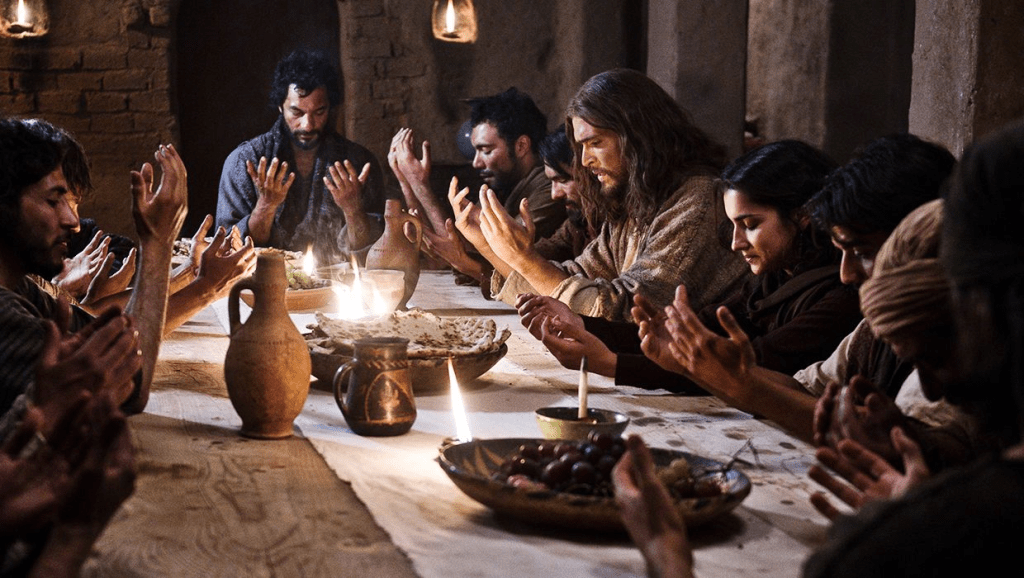
Do you like to eat? Is the Pope Catholic? Of course, most everyone loves to eat, even Jesus, as we can see in the above verse.

Growing up in West Virginia I didn’t acquire a taste for “fine dining.” My favorite “go to” meals were pinto beans and cornbread, spaghetti, and hot dogs and burgers on the grill. Yeh, I know, you can’t beat those choices!

We rarely ate “out,” except to go to someone’s house, usually a relative, and, on occasion, we would host. I always looked forward to those times – going to my grandparents’ house or having my uncles and their families visit. There’s something special about eating together that’s just plain fun.

As I read in Scripture about the many times Jesus and His disciples would eat together, it causes me to wonder how many conversations they had while eating, resulting in insights, and understanding about the things Jesus taught. “Oh, so THAT’s what that means!” Can you hear them laughing and trying to talk over each other? We’ll get to do that someday. I can’t wait!

In the verse above, did you notice the sequence of events. “As Jesus was speaking…” Pharisees could be rude and abrasive, but I wonder how that went down. Did he quietly gesture? Walk up close, get Jesus’ attention, then whisper his invitation? Did he wait for a break? We don’t know. All we know is Jesus said yes. But the context suggests He didn’t stop teaching.

What’s my point? Eating together can be a very effective evangelistic tool for reaching the lost, but it can also be helpful in meeting with other believers. David and Meg Robbins wrote: “But the table is not just for ‘us’; we join God by welcoming others too. Setting a place for guests communicates love, acceptance, and grace. To the hungry it says, eat. To the lonely it says, welcome. To the needy it says, receive. To all it says, God loves you. We used to think: What do we really have to offer the people God has placed around us?” 

Some are hesitant to invite others to their home because, like the Robbins, we tend to think that we have nothing to offer anyone. We also can get very introspective about our house, furniture, dishes, etc. What will they think of __________, and besides, we have two obnoxious dogs. And, of course, this is a two-way street.

Maybe the friend or family you’re seeking to reach is experiencing rough times, so to invite them into your very nice house could be intimidating or discouraging to them. I suppose that’s possible, but my experience has been that YOU are the attraction, not your house. A lot of ground can be covered through hospitality and kindness.

My rule of thumb is treat them like family and they’ll feel like family! You put on an heir of superiority and make them think you’re really doing them a favor by inviting them and, I assure you, they’ll get the picture. But if you be yourself and treat them with respect and they’ll not just see you, they’ll see the Christ who lives in and through you.

Let’s look at this from another angle in tomorrow’s post.

Blessings, Ed 😊

On Whom Does God Look with Favor?

“This is what the Lord says: ‘Heaven is My throne, and the earth is My footstool. Could you build Me a temple as good as that? Could you build Me such a resting place? My hands have made both heaven and earth; they and everything in them are Mine. I, the Lord, have spoken! I will bless those who have humble and contrite hearts, who tremble at My word.’” (Isaiah 66:1-2 NLT)

Would you like the Lord to bless you? What’s it worth to you?

It’s no accident that the verses above begin with God’s explanation of who He is as Owner and Ruler of everything He created – including you and me. There’s nothing we can do to make God’s life any better or any worse, but there’s a lot He can do to benefit us.

There’s a part of us, as human beings, that have this sometimes-subtle expectation, whether we’ve submitted to His authority or not, that God owes us. By virtue of our existence, we believe our lives should be better than they are. And the irony is, it doesn’t matter if our annual income is 10 thousand dollars or 10 million.

Photo by Polina Tankilevitch on Pexels.com

When we get a cold or flu, we feel abused, as if God is punishing us, even if that’s the only time we give Him a thought. And it seems it’s compounded when we profess faith in Him. It’s as if our expectations increase; God’s debt to us really climbs after we profess faith in Him. Yes, of course, I’m exaggerating, but, unfortunately, not by much.

Think with me about the 12 disciples in a couple of scenarios – first, in the boat when the winds and waves were threatening. They awakened their Master with these words: “Teacher, don’t You care that we’re going to drown?” Might they have said: “Master, wake up! We’re fearing You might drown.” Where was the center of their primary concern? Yep, same as ours – themselves.

Then I think of the feeding of the five thousand men and their families. Who initiated the inquiry about eating? The disciples did, but in what context? The disciples’ plan was to send to everyone home hungry, but Jesus said to them: “That isn’t necessary – you feed them.” And immediately, rather than saying: “Okay, Lord, what’s Your plan?” They looked at their measly five loaves and two fish and concluded, it’s not enough!

“Little is much when God is in it!” It doesn’t matter the size of the need as long as you’re comparing it to the size of your Savior. So, who does God look upon with favor? The word that’s translated “humble” in the verse above, can also be translated “poor, weak, afflicted, needy.” The implication to me is, the less we have the more dependent we are on the Lord, but that’s not always the case, is it?

Humility isn’t tied to income any more than being contrite or respectful in the presence of Jesus or His written Word. These qualities have more to do with the posture of our heart than the position of our bank ledger. It has more to do with how we view God than how we view ourselves.

God favors those who see their need of Him, value His friendship, and depend on His blessing. Blessing and love are two separate categories of concern. God loves everyone equally; He has no favorites, but He blesses those whose heart and mind are in tune with His. He doesn’t waste His blessings on discontents, complainers, and those who have no regard for His authority.

And, yes, I’m aware that His sun shines on the just and the unjust, but that’s not what the verses above are talking about. I believe Isaiah has heard the Lord declare to whom His heart is bent, not for favor, but for friendship; not simply expecting God to be the proverbial “genie in the bottle,” but being His child in desperate need of a Father. My desperation for God isn’t growing less as I age, it’s increasing exponentially. How about yours?

Food for thought.

Blessings, Ed 😊

For Whom Would You Die?

“When we were utterly helpless, Christ came at just the right time and died for us sinners. Now, most people would not be willing to die for an upright person, though someone might perhaps be willing to die for a person who is especially good. But God showed His great love for us by sending Christ to die for us while we were still sinners.” (Romans 5:6-8 NLT)

Would you be willing to die for someone who murdered your spouse or kidnapped your child and sold them into slavery? Forgive me for the shocking examples, but unless and until you realize that, given the right circumstances, you are capable of anything anyone else in history has done and worse, you won’t fully appreciate the sacrifice Jesus made when He gave His sinless life in your place on the Cross.

David Jeremiah wrote: “It’s a hypothetical question with no fixed answer, and in Romans 5:6-7 Paul raised the question to set up a stark contrast. He said that hypothetically someone might die so that a righteous person might live—though it would be rare for someone to do that. If it would be rare to die for a righteous person, it would be unheard of for someone to die for a sinful, evil person. And yet that is what Christ did.”

Photo by Pixabay on Pexels.com

Think about that for a minute! I’m writing this post on a Sunday afternoon. I left for church a little after 7:00 a.m. so that I could serve as a Greeter at one of our entrances. After the message the Pastor invited people to come forward for prayer. There was an elderly woman who was making her way down the stairs to go forward, but it was apparent she was struggling. Being the observant and caring specimen that I am I ignored her, but my wife noted that she needed help, so I “volunteered.” I helped her to the front of the church, then waited and walked with her back to her family.

Some people who saw me do that would conclude that I was a kind and selfless person, not knowing if it hadn’t been for my wife’s “suggestion” I would likely have let her struggle on her own. What’s my point? We tend to think of others we see at church, in small group meetings, etc. as better than they really are. Men that I consider good “men of God,” struggle with lust, porn, alcohol, drugs, and other debilitating addictions – not so much in their behavior, but in their minds.

There are people in my life who might die for me, but they’d be making a mistake – I don’t deserve their sacrifice. Neither do you deserve the sacrifice of someone who loves you dying in your place. None of us do, that’s the point. Yet, Jesus, not when He saw us at our best, but at our worst, laid down His life to give us a shot, not simply at a “better life,” but a perfect life with Him in heaven – the absolute LAST place we ever deserve to be!

My gratitude to Jesus doesn’t emanate from my goodness, it shouts forth from my wretchedness. The Lord said to the Church in Laodicea in Revelation 3:17: “You say, ‘I am rich. I have everything I want. I don’t need a thing!’ And you don’t realize that you are wretched and miserable and poor and blind and naked.”

My purpose isn’t to tear you down, it’s to build you up in Jesus. Unless and until you see Jesus for the magnificent Savior He is you can’t and won’t give Him the adoration, praise, and worship He alone deserves. You’ll feel confident you’re a good person who doesn’t really need much from Him, not the blatant sinner who is capable of atrocities your mind can’t even imagine.

Never forget you are a sinner saved by grace, not because you deserve it, but because you don’t!

Food for thought.

Blessings, Ed

What Is Sin?

“The man didn’t know, for Jesus had disappeared into the crowd. But afterward Jesus found him in the Temple and told him, ‘Now you are well; so stop sinning, or something even worse may happen to you.’” (John 5:13-14 NLT)

Do you realize that every time you choose your will over God’s you sin? Sin isn’t simply doing something wrong, in terms of an activity or action. No, sin begins in the mind, it starts with how we think. Right actions follow right thinking and vice versa.

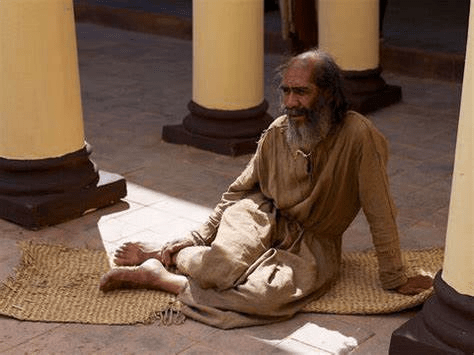
The verses above are referring to the man who had laid by the pool of Bethesda for 38 years and was healed by Jesus. Because Jesus had instructed him to: “Stand up, pick up your mat, and walk!” the Pharisees were all over the healed man to give them information about Jesus. At first, the man didn’t know, because Jesus had blended into the crowd, but don’t miss this, even before the man went to the Pharisees to rat Jesus out, Jesus spoke to him the words in the above verse.

What does that tell us? Jesus doesn’t need to hear his words or ours in order to know what’s in our heart. But it also tells us that we can have a serious and obvious encounter with Jesus and still not know who He is. Can you even begin to imagine what it would have been like to lie on a mat for 38 years hoping to be able to get into a pool you are hoping will heal you?

In my mind’s eye I envision the man over time just losing heart and giving up. At first he no doubt remained positive, assuring himself: “I’ll be first the next time. I’ve got this. For sure the next time.” But the next time comes and goes, and the next time, and the next for 38 years. How do you spell “HOPELESS?”

Then one day Jesus shows up. It’s a day like any other, but for some reason everything is different. This Rabbi, this smiling, gentle Teacher isn’t going to someone else, He’s standing over ME! It’s hard to make out His features because of the sun and the glare of the water, but it’s true! He’s asking me “Would you like to be well?”

You’d think the first word out of his mouth would be “YES! A THOUSAND TIMES YES!” but it isn’t. His words reflect, not only what in his mind is his hopeless physical condition, but his deteriorated mental and emotional state: “I can’t, sir.” But that doesn’t deter Jesus one bit. He tells the man to pick up his mat and walk, then continues on his way.

Do you find that odd? I think of the leper, the blind man, and others whom Jesus hugged and with whom He celebrated. Why did He walk away? Remember, this area was literally flooded with sick people, but Jesus wasn’t there for all of them, just this man. Did He love the others less? Of course not, but they weren’t His mission in this instance.

Jesus’ focus was this specific man and his specific need. And I’m convinced healing his body was secondary to His real mission – to see this man become His follower; to allow the Spirit of the living God to invade his heart and change his life, but that, from all outward indications, didn’t happen. Was his sin too great for Jesus to forgive? Of course not, but that has to be the man’s desire. Jesus doesn’t make us follow Him or force us to receive forgiveness.

What about you? Have you been “healed” in some significant way, but you’re still following the dictates of your own heart and mind? Have you had an encounter with Jesus, but your life is still the same? Please don’t make the same mistake the man in the story made. Don’t let Jesus walk away before you grab Him and confess your need of Him and yield your life and allegiance to Him.

If you’re not certain you’re walking with Jesus, please click this link and let your heart know for sure: Ron Huchcraft’s Bridge to God.

Unforgiven sin is the cancer that will eat you alive – in this life and the next!

Blessings, Ed 😊