Faith/Faithful

“You say you have faith, for you believe that there is one God. Good for you! Even the demons believe this, and they tremble in terror!” (James 1:19 NLT)

Yesterday, we looked at the word “Belief/Believe,” and talked about how vital it is to have solid, biblically based beliefs as it relates to Jesus.

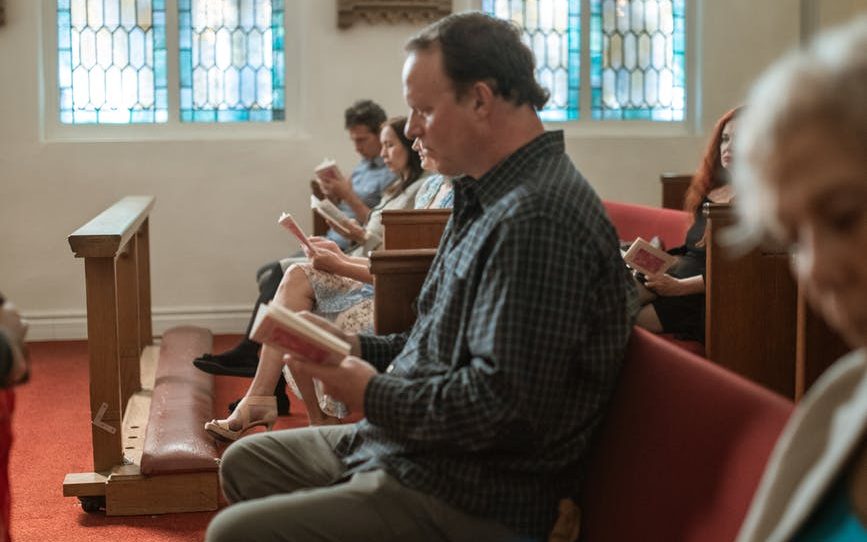
Faith is the application to my life what I believe in my heart and profess with my mouth. Rick Warren, Pastor of Saddleback Church in California says: “First, you believe. Then you get baptized. And it’s important that you choose a church family and participate in large group worship and small group fellowship.” Faith enables you to formulate disciplines like reading and studying the Bible, praying, giving a portion of your income to your local church and attending corporate worship faithfully.

Photo by Pixabay on Pexels.com

Pastor Warren continues: “God doesn’t want you to remain a spiritual baby. He wants you to become like Christ. He wants you to grow. But here’s the catch: You can’t do it on your own. Babies don’t just grow up on their own. They need a family of some kind. And you need a spiritual family, just like you needed someone to help you grow up when you were young physically. The Bible says, “He makes the whole body fit together perfectly. As each part does its own special work, it helps the other parts grow, so that the whole body is healthy and growing and full of love” (Ephesians 4:16 NLT). 

Believing is a great first step, it’s just not enough. James writes: “You say you have faith, for you believe that there is one God. Good for you! Even the demons believe this, and they tremble in terror! How foolish! Can’t you see that faith without good deeds is useless?” (James 2:19-20 NLT)

Think of a house. Belief is the firm, rock solid, foundation upon which faith is built. If I have nothing solid on which to build my house/life, it may look impressive for a while, but when the hard winds of difficulties and troubles come, the house will fall. Jesus said in John 16:33: Here on earth you will have many trials and sorrows,” but for those who are anchored to the rock of Jesus, their faith will not be overcome.

Perhaps the easiest way to think of it is, “actions speak louder than words.” When it comes to the Christian faith, a person can learn to “talk the talk” in a short time. Think of that as what you believe. We can formulate a system of belief relatively quickly. But it takes a lifetime to learn to “walk the walk;” to put our words into action through the way we love God by loving others. That’s where faith kicks in. How do we do that?

Begin with your family – parents, spouse, children, and extended family; then spread the love to neighbors, co-workers, classmates, friends, acquaintances, anyone with whom you have contact from day to day. But among the most important people in your sphere of influence are those with whom you worship and share your beliefs.

Jesus, in His final hours with His disciples said in John 15:17: “This is My commandment: Love each other.” Belief that isn’t motivated by love is valueless. To say I love Jesus but have no use for the Church is like telling my best friend, “I love you and I want us to be close, I just can’t allow you to bring your kids when whenever we get together.” I realize that probably happens, but the point is, the Church is comprised of the children of God. When Jesus returns, He’s coming for His children, the Church. To believe we can be saved, but not be an active part of God’s family – His corporate/visible Body on earth, His children, is a huge misunderstanding of what the Body of Christ is and how God designed us to function.

Tomorrow we’ll look at how mature faith can’t develop in isolation, without active participation with a thriving fellowship of God’s people.

Blessings, Ed 😊

Belief/Believe

“For it is My Father’s will that all who see His Son and believe in Him should have eternal life.” (John 6:40 NLT)

A few days ago, we looked at the connection between the words: “love” and “relationship.” Today and tomorrow, we’ll look at two more words found in the Bible that are very interrelated and can often cause confusion: “faith/faithful” and “belief/believe.” Some of the confusion stems from the fact that both words are derived from the same Greek root word. So, how can we tell the difference?

Fortunately, Biblical scholars have done much of the work for us, but in practical terms, I think of “belief/believe” and “faith/faithful” as two sides of the same coin. We often use them interchangeably, thinking of them as having the same meaning; however, depending on the context, their meanings can have shades of difference that can determine where we’ll spend eternity. Today we’ll look at what “belief/believe” means and tomorrow we’ll look at “faith.”

Think of the difference between “foundation” and “application.” In Matthew 7:24 Jesus says: “Anyone who listens to My teaching and follows it is wise, like a person who builds a house on solid rock.” “Belief” is the foundation upon which our “faith” in Christ, who is the Rock, is built. What we believe about Jesus will be verified by the “application” of our belief in our day to day lives, but especially when the storms of life come. Jesus said in verse 25: “Though the rain comes in torrents and the floodwaters rise and the winds beat against that house, it won’t collapse because it is built on bedrock.”

Photo by Alexandre Bringer on Pexels.com

I know people who profess belief in Jesus, but whose lives aren’t giving evidence of the application of that belief, especially when they run into hard times. In Matthew 7:21, Jesus said: “Not everyone who calls out to Me, ‘Lord! Lord’ will enter the Kingdom of Heaven. Only those who actually do the will of My Father in heaven will enter.” Belief is static, in the sense it is something that is hidden in our heart and mind, not visible, unless and until we activate it by applying it to our daily lives. It then becomes visible to the extent we openly live in such a way as to give evidence of what we believe. If I believe in Jesus, my faith will be evidenced in my obedience to His directives in my life.

Some get confused because they think what they believe about God and Jesus should be “personal,” and it is, but it was never intended to be private. Quite to the contrary, Jesus said in John 9:5b: “I am the light of the world.” As Jesus-followers, we’re to let the light of our belief in Him shine out for all to see. How? Through our faith and our faithfulness, which is what makes our belief visible. Paul wrote in Ephesians 5:9: “For this light within you produces only what is good and right and true.”

Believing in Jesus means to center my trust in Him. I can believe what the Bible says about Jesus is true. I can believe what He did on the Cross, He did for me. I can confess my sins and believe Jesus will forgive me. I can invite the Lord to cleanse the temple of my life and fill me with His Spirit and I can believe He will. All those things focus on what God does for me that I could never in eternity do for myself. But all of these good and right beliefs have little value until they are activated by allowing the Holy Spirit to apply them to my life.

What we believe is critical, but unless and until we activate or apply our belief, it’s no more useful to us than prescription medication that sits on the counter and is never taken. We’ll dig into this a little deeper tomorrow.

Blessings, Ed 😊

My Contract with God (Part 2)

“For Abraham is the father of all who believe.” (Romans 4”16b NLT)

In yesterday’s post I wrote about my decision to create a contract with God. Today I’d like to share some ways I am able to verify what I’m discerning is from God.

  1. Prayer is the context in which I speak with God and share ideas and thoughts with Him. While I’ve never “heard” His audible voice, except as He speaks to me through another person, He speaks clearly through what I would describe as “impressions.” In Romans 8:15-16 Paul writes: “So you have not received a spirit that makes you fearful slaves. Instead, you received God’s Spirit when He adopted you as His own children. Now we call Him ‘Abba, Father.’ For His Spirit joins with our spirit to affirm that we are God’s children.” I believe the “affirmation” the Spirit gives us not only provides assurance that we’re God’s children, but also enables us to recognize God’s voice when He speaks to us. The Holy Spirit gives me confidence that what I’m discerning or “sensing” in my spirit is of God. Perhaps I’ll do another post on this subject, but you must be VERY CAREFUL when trusting your feelings as it relates to determining God’s will. Making decisions based on how we feel in any given moment can be disastrous.
  2. God will never direct me (or you) to do, say or think anything that isn’t in harmony with His written Word, the Bible. I have absolute confidence that the Bible is true and can be trusted. So, I test my thoughts, feelings, directives that I’m sensing from God with what the Bible says. This, too, can be a sensitive issue, because, as one of my Seminary Professors was fond of saying: “A text taken out of context becomes a pretext.” What does that mean? It essentially means you can make the Bible say almost anything you want it to say if you take the meaning of the verse(s) out of its (their) original context.
  3. Once I’m confident that what God is saying to me is Biblically sound, I have trusted brothers and sisters in Christ, beginning with my wife, with whom I can share what I believe the Lord is saying. I’ve given her/them permission to speak truth to me as they understand it. I sincerely want to know what God is saying, even if it contradicts what I’m thinking. I’ve walked with the Lord for many years, but I can still “miss” things that God makes crystal clear to someone without my emotional investment.

Perhaps a brief example will help. I’ve believed for many years God has enabled me to give expression to my thoughts much more effectively through writing than speaking, but I received no clear direction in finding an outlet or avenue to accomplish that end.

I sought the Lord for months, then, as a result of His clear leading, my wife and I moved to Las Vegas. Shortly after moving, the Lord led us to a church we both love and it was at that church I met a godly man who guided me in starting this blog. God’s clock keeps perfect time, so when it’s in His time, He’ll clearly give you the direction you need.

My contract with God is signed and ready to be activated by the Lord at any point He wishes. Have you signed your “Contract with God?”

Blessings, Ed 😊  

My Contract with God (Part 1)

“So Abram departed as the Lord had instructed…” (Genesis 12:4a NLT)

One of the most faith-filled verses in the Bible to me is Genesis 12:4 (above). In verse 1 of that same chapter, God had announced to Abram that He wanted Abram and his wife to leave their native country. God would later change Abram’s name to Abraham, which means “exalted father,” even though Abram and Sarai, were childless.  Then in verse 4 the Bible simply says: “So Abram departed as the Lord had instructed.” Abram was seventy-five years old.

If you’re married, can you even begin to imagine going to your spouse and announcing: “Honey, start packing. We’re moving.” This brief post doesn’t afford enough space to enumerate the list of questions that would ensue from your spouse.

In the verses that follow it becomes clear where God is leading them and why. But the fact Abram made the decision to leave his relatives, all he’d known for his whole life, to follow the Lord’s command without apparent question, is impressive. To me, it sheds a lot of light on why God chose him to be the father of our faith (see Romans 4:16).

As I’ve contemplated Abram’s absolute and total trust in God, it caused me to consider what that kind of faith might look like today. Several years ago, the Lord gave me the idea to formulate a contract with Him.

Photo by Pixabay on Pexels.com

So, I was thinking: “Okay, Lord, but remember, I’m from West Virginia. I’m a very simple person.” And the Lord said in a very comforting tone, “I know where you’re from, I made you. So, I’m going to make this simple. Get a piece a paper and at the top of the sheet write: ‘My Contract with God,’ and at the bottom sign your name.”

“Okay, Lord, but shouldn’t there be something I need to know or do?” To which He replied: “No, I’ll tell you what to do when you need to know and all you have to do is obey. Is that simple enough.” To which I responded, “Yes, Sir.”

My contract is very similar to what one of my Pastors, Vance Pitman, teaches. He uses the expression: “Put your ‘Yes’ on the table.” The implication being, before God ever asks you to do something, you’ve already put your “yes” on the table.

What is implied by those kinds of convictions? Signing a blank contract or putting your “yes” on the table without knowing what you’re agreeing to, implies total trust in the One giving the directives. It doesn’t matter to me what the Lord asks me to do. All I need is the assurance that it’s Him asking. Because I have full trust in the Lord, I know He’ll never ask me to do anything that won’t ultimately be for my good and His glory.

How can I be assured what I’m sensing as God’s direction is indeed from God? That’s a great question. We’ll look at that tomorrow.

Blessings, Ed 😊

Love and Relationship (Part 2)

“And while he was still a long way off, his father saw him coming.” (Luke 15:20b NLT)

In Luke 15 Jesus tells a story about a father who had two sons. Though his younger son took his inheritance and left home with no intention of ever returning, the father, who in the story represents God, never stopped loving him and never stopped watching for him to return. Though their relationship was broken, the father’s love never stopped.

The Bible says: “And while he was still a long way off, his father saw him coming. Filled with love and compassion, he ran to his son, embraced him, and kissed him.” (Luke 15:20b NLT) That’s how God feels about you. He’s watching from Heaven, lovingly waiting for you to come home. He wants you to have the relationship with Him you’ve been running from.

The Prodigal Returns

Yes, of course, our sin separates us from God, in terms of relationship, but not in terms of love. Paul declares in Romans 8:38: “And I am convinced that nothing can ever separate us from God’s love…” Those words are written to believers in Jesus, because nothing in all eternity will separate a person who loves and is committed to Christ, from God’s love. But there is one thing that will separate someone who doesn’t know Jesus from God’s love.

On earth, to not have a relationship with Jesus is to miss the fullness of life that only He can give. But God’s love is still present in the world, and, thus, anyone is a benefactor of His love. However, when we die without having a relationship with Jesus, by virtue of our rejection of or unwillingness to seek His forgiveness and receive new life through Him, we separate ourselves from God for all eternity.

Two things happen when we die without having a relationship with Jesus. We’re separated from His loving presence for all eternity, and we pay the penalty for our sin, the penalty for which Jesus died on the Cross in our place, to pay. What does that mean?

If a person dies without knowing Jesus, the Bible says they will go to hell. Hell, by its very nature, is separation, from the presence of God, who IS LOVE. So, the logical question becomes: “If God loves me so much, why would He separate Himself from me for all eternity?” He doesn’t separate Himself from you, you separate yourself from Him by your unwillingness to accept the only provision for your sin – His Son, the Lord Jesus.

God is holy and perfect and can’t even look upon sin. That’s the whole reason Jesus came to earth and gave Himself as a ransom (substitute) for us – to pay the penalty for our sin and to bridge the gap between us and God that no amount of good works can bridge.

We could never have been able to go to God, so He came to us in the Person of His Son, the Lord, Jesus, who did for us what we could never in eternity have done for ourselves. And He offers us eternal life with Him, if we’ll believe what He did when He died on the Cross, was for us and in our place, receive His sacrifice as a gift of grace, and begin to live for Him.

Whether or not you profess faith in Jesus and have a relationship with Him, you ARE LOVED period. But God’s love alone will not secure you a place in heaven. One of the most often quoted verses in Scripture says: “For God loved the world so much that He gave His one and only Son, so that EVERYONE WHO BELIEVES IN HIM will not perish but have eternal life.” (John 3:16 NLT)

Please know that God loves you and has made provision for you to have a relationship with Him that will last forever. But as with virtually any gift, you must receive it to benefit from it. I can open an account with a million dollars in your name and give you a debit card to enable you to access it, but if you don’t believe what I’m telling you is true and use the card to withdraw the money, it’s of no value to you.

God’s love for you, as valuable as that is, if ignored or rejected, will be of no eternal value unless and until you begin a relationship with Him through Jesus. PLEASE click on the link below and watch a brief video that will help you understand what it means to begin a relationship with Jesus. https://hutchcraft.com/the-bridge-to-god 

Blessings, Ed 😊

Love and Relationship (Part 1)

“Anyone who wanders away from this teaching has no relationship with God. But anyone who remains in the teaching of Christ has a relationship with both the Father and the Son.” (2 John 1:9 NLT)

A verse like the one above can raise some theological questions that are beyond the focus of this post. Whether someone who “wanders away” loses their salvation is not the issue I want to address today. What troubles me is the misunderstanding of the terms themselves  –  “love” and “relationship.”

God is love! What does that mean? It means He is the embodiment of everything that is good, right, and wholesome. Every kindness, every smile that is the result of something you see, hear or experience, is an act of love from God. God cannot not love.

In a recent post I shared a verse from John 17:23 where Jesus, in His prayer says: “..that You (God, the Father) love them (believers) as much as You love Me (Jesus).” When I first read that it was nearly impossible for me to process. How can God love a mess like me (and you 😊) the same as He loves His perfect, sinless Son?

As I’ve wrestled with that question, the Lord reminded me in Matthew 5:45, that God’s love is like the sunshine and rain. The sun shines and the rain falls on EVERYONE without discrimination. It’s the same with God’s love. God loves everyone the same, regardless of character or belief. How that love is received is a whole different issue.

A “relationship” with God through Jesus is essentially a positive response to His love. It begins when we say “yes” to Jesus’ invitation to follow Him, receive Him into our life by faith, and pledge our allegiance to Him. In much the same way as we learn to trust any other person, we place our trust in Jesus, and begin a lifelong journey of walking in relationship with Him.

Photo by Yuri Catalano on Pexels.com

Like with any relationship, there are ebbs and flows, times of intimacy and closeness, and times of doubt and, as the verse above mentions, wandering. The implication of the verse above suggests walking away and/or rejecting the teaching of Scripture that was foundational in one’s relationship with Jesus. When that happens, it is evidence that no relationship with God exists. Whether or not the relationship EVER existed is another question.

My point is simply this. No “relationship” does not mean no “love.” God doesn’t stop loving us no matter what. He loves the worst sinner who ever lived as much as He loves Jesus. He takes no delight in those who perish without Jesus. He loves each of us regardless of whether we’re faithful to Him or not. Love isn’t the issue with God. Relationship IS.

My concern centers on understanding, whether we have a relationship with Jesus or not, God always loves us. Perhaps you once had a meaningful relationship with the Lord, but due to difficult circumstances, you lost your way. Now, though you once felt close to God and dearly loved, God seems far away, and you fear He no longer loves you. On the authority of Scripture, I assure you, that is not the case. He loves you in this moment just as much as He ever did.

We’ll look at this further tomorrow.

Blessings, Ed 😊

Grappling With Grief (Part 3)

“You keep track of all my sorrows. You have collected all my tears in your bottle. You have recorded each one in your book.” (Psalm 56:8 NLT)

Two lessons I’ve learned and will pass on for your consideration. First, the truth upon which I’m seeking to build my life, which enables me to hold life and all that entails with open hands, is this: I believe God’s Word, the Bible, is true. The Bible teaches that God loves me unconditionally, allowing me to have full confidence that He is good, and I can trust Him.

The second lesson the Lord has taught me is that I am NEVER alone. Nothing enters my life except it passes through the filter of God’s permission. He guards my heart and life, so when something I don’t understand or don’t like enters my life – i.e. loss in whatever form, I know foundationally that God is good, and I can trust Him. While that doesn’t mean He has caused these things, it does mean that He allowed them, ultimately for my good and His glory. As a result, I can echo the words of David in Psalm 23:4: “Even when I walk through the darkest valley, I will not be afraid, for you are close beside me. Your rod and your staff protect and comfort me.” (NLT)

He Will Not Leave You “Used by permission, © Ray Majoran, GlimpseOfInfinity.com

Because God, by His grace, is allowing me to surrender to Him, He is enabling me to grow closer to Him through the many battles I face in this life. The Psalmist, in reference to the Lord, writes in Psalm 56:8 (NLT): “You keep track of all my sorrows. You have collected all my tears in your bottle. You have recorded each one in your book.” Sometimes I’m tempted to believe that God uses the tears of humanity to fill the oceans of the world. But I also believe He uses our tears to soothe our pain and “water” our futures.

If this is a difficult season for you – give up! Surrender yourself to God in ways you’ve never been willing before. Let Him wrap you in His arms and love you. Allow Him to release His healing virtue into your life. Embrace your pain by confronting it with the loving support of others the Lord has placed in your life for just such a time as this.

Believe in His goodness, trust His love and know He is with you in your heartache. Have confidence that He is working even in and through the difficult season you’re experiencing to bring good that is beyond anything you can presently imagine. There is morning after night, light after darkness, resurrection, and restoration after death for those who are willing to trust Him.

Blessings, Ed 😊

Grappling With Grief (Part 2)

“The Lord gave me what I had, and the Lord has taken it away. Praise the name of the Lord!” (Job 1:21b NLT)

In some ways, life is like driving a car. I may have trained for years and believe I have full knowledge and confidence that my vehicle is under my complete control, and on many levels, it may well be and should be. But think of all the variables over which I have little or no control – i.e. other drivers. But what if they, or I, get distracted, have a mechanical malfunction or a physical trauma that suddenly robs me of “my” control, resulting in a collision.

Grief is the arduous journey of dealing with life’s “collisions” (the reality of our inability to prevent death, disease, and many other forms of loss). Often the process begins with the “If onlys.” If only I’d been there. If only I’d known. If only I had or hadn’t _______________, and you can fill in the blank. But this path usually leads to the understanding that it wouldn’t have mattered, it was likely out of our control anyway.

Photo by Pixabay on Pexels.com

Grief is our heartbreaking effort to deal with our own inadequacies when it comes to healing ourselves, and half the battle is our willingness to recognize and admit we need help to get through it. I readily confess I continue to struggle with loss in my life, but by God’s grace and with His help I’m learning to let Him, and others walk with me on my healing journey.

Learning to live with open hands is a lesson the Lord taught me through grief. In Job 1:21b, after experiencing the loss of his possessions, family and later even his health, Job said: “The Lord gave me what I had, and the Lord has taken it away. Praise the name of the Lord!” (NLT).

Theologically we may wrestle with the implications of Job’s words, but the truth is, God is in control and we are not. The people and pets we love will get sick and die. Careers/jobs, opportunities, relationships, hopes, dreams, health and yes, life on earth, will ebb and flow, come and one day go.

Holding this fragile existence with open hands means to me that I recognize God gives and God takes away. Does that imply God causes all the catastrophes of life on earth? Of course not, but since the Fall of man the perfect life that was enjoyed in the Garden of Eden has been lost, and not until the return of Jesus will it be restored. In the meantime, while I don’t have to like or enjoy the losses I have to endure, they are a fact of life.

Tomorrow we’ll look at a couple of lessons the Lord has taught me that have helped.

Blessings, Ed 😊

Grappling With Grief (Part 1)

 “Even when I walk through the darkest valley, I will not be afraid, for you are close beside me. Your rod and your staff protect and comfort me.” (Psalm 23:4 NLT)

Let me say at the outset that the next few posts aren’t intended to be a discourse on how anyone should or shouldn’t grieve or even another explanation of the stages of grief. Rather this is my effort to share how God has walked with me through many valleys of sorrow.

In my more than seventy years on this planet I’ve experienced the literal deaths of family members and beloved pets, rejection, including the death of a marriage through divorce. I’ve lost jobs, failed miserably to fulfill dreams, had a child with cancer, struggled with a mountain of debt and at times begged God to let me die.

As I recount those experiences, in some ways I’m surprised to realize that though I’m the same person experiencing those losses, I grieved them in different ways. As I should have expected, the impact of loss is affected by many factors – i.e. age, station in life, connection with God, etc.

When my divorce was final, I lost much more than a relationship with someone with whom I expected to spend the rest of my life. Yet, in the aftermath of that loss came my greatest gain. I finally realized that God was not only my source of healing from the devastation I was experiencing emotionally and financially, but my Guide and Friend in ways I’d never imagined.

Photo by Ivan Samkov on Pexels.com

In an article I posted in October (Holding Life With Open Hands), I shared how painful it was for my wife and I to put down our Puggle, Lola. The pain of that sudden loss rocked my world and the emptiness I felt was tormenting. Yet, the assurance I had that God was near helped me turn my focus from what I’d lost, to what I had left. My grief was softened and became bearable by my almost overwhelming sense of gratitude to God for His presence with me and the reminder of the eleven+ happy years of memories Lola left us.

As I understand it, grief isn’t governed by how much I know, how disciplined or determined I am in controlling my life or emotions due to my loss, real or perceived. Grief is our personal response to the realization that much of life is beyond our control.

We’ll look at this more closely tomorrow.

Blessings, Ed 😊

Loving One Another Well

“This is My commandment: Love each other in the same way I have loved you.” (John 15:12 NLT)

If, in the closing hours of Jesus’ life, He commanded us to love each other, we must conclude it was foremost on His mind. He even told us how to do it: “in the same way I have loved you.” So, the logical question then becomes – How did Jesus love us?

Prayerfully, the Spirit will take these words and use them to light a fire in our hearts that will enable us to love each other, as the Body of Christ, more effectively. So, let’s look at a few ways Jesus loves us.

Photo by Andreas Wohlfahrt on Pexels.com
  1. Jesus loves us FREELY! What does that mean? He doesn’t force us to follow Him. His love for us isn’t contingent upon whether we continue to follow Him. In John 6 Jesus was teaching some very hard things to understand, and, as a result, many of His followers turned away. In verse 67 Jesus turned to the Twelve, His closest companions in ministry, and asked them: “Are you also going to leave?” implying they could leave if they chose. To which Peter wisely responded: “Lord, to whom would we go? You have the words that give eternal life. We believe, and we know you are the Holy One of God.” What’s my point? Love doesn’t demand its own way. Love doesn’t coerce or force allegiance. Love draws and lays down its life for others without any strings attached. Jesus didn’t love us “if” or “when.” He loves us period! That’s how we’re to love each other as His faithful followers.
  2. Jesus loves us FULLY! He loves us without reservation. He holds nothing back in His love for us. He gave His life. Then after He conquered the grave, He gave us His Spirit to dwell within us, giving us full access to everything Jesus is, and empowering us to do whatsoever He commands us to do (i.e. – “Love each other…”). We love each other only in the strength of the Spirit that indwells us. The Spirit gives us discernment to know when a brother or sister is genuinely born again (of the Spirit), thus inviting us to trust one another and give ourselves fully to one another.
  3. Jesus loves us FAITHFULLY! There were those who quit on Him, but He never quit on others, including you and me! Faithful means “trustworthy,” “reliable,” someone who’s word matters and is believable – just like the words of Jesus! Faithful love is “full-time” love. It isn’t on-and-off, it’s dependable. One of my Pastors likes to say we need to be “2 a.m.” friends, meaning, we can know that if someone I’m seeking to love like Jesus calls me at 2 a.m. and needs my help, I’m there. That’s one of the many ways loving faithfully can look.
  4. Jesus loves us FRUITFULLY! In John 15:5 Jesus said: “Yes, I am the vine; you are the branches. Those who remain in Me, and I in them, will produce much fruit. For apart from Me you can do nothing.” Then in verse 8 He says: “When you produce much fruit, you are My true disciples. This brings great glory to My Father.” The “fruit” of our love for one another will bring much glory to the Father. How so? “Fruit” in this context is speaking to the effectiveness of our collective obedience to the directives of the Spirit. It’s putting into action the gifts and abilities with which we’ve been given, to the honor and fame of our Savior. Spiritual gifts are never given for our personal edification or glory, but to be blended with the gifts of other believers so that collectively we can paint with our lives a picture of our living, loving Savior.

Just as Jesus revealed to His disciples, and us, the glory of the Father – He painted for us a “picture” of the Father. He WAS on earth the embodiment of the Father. Paul wrote in Colossians 1:19: “For God in all His fullness was pleased to live in Christ.” That’s what He’s asking us to be for Him. In John 17:22-23: “I have given them (us) the glory you gave Me (WHY?), so they may be one as we are one. I am in them and You are in me. May they experience such perfect unity that the world will know that You sent Me and that You love them as much as You love Me.”

How can the world possibly know that God the Father sent Jesus? When we begin to grasp the fact that God the Father loves us (YOU and ME) AS MUCH AS HE LOVES JESUS! To the extent we understand how much we’re loved, to that extent we’ll love one another well!

Blessings, Ed 😊